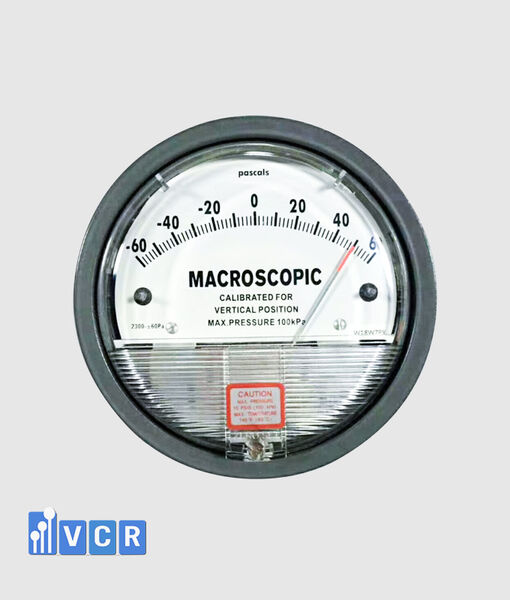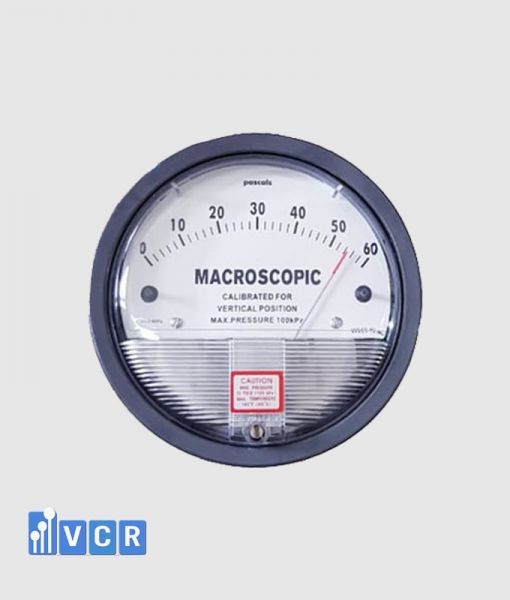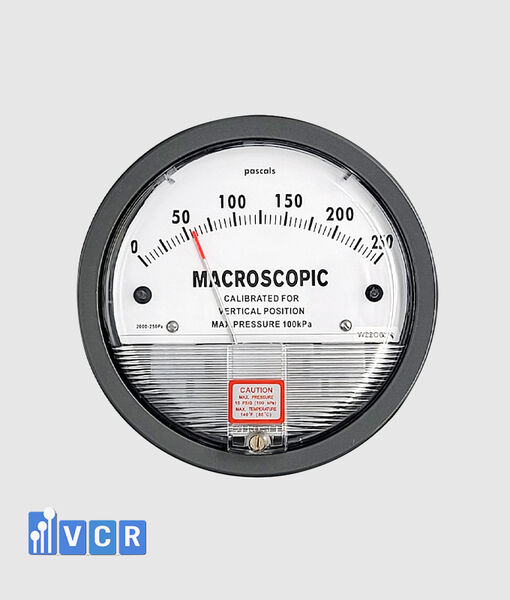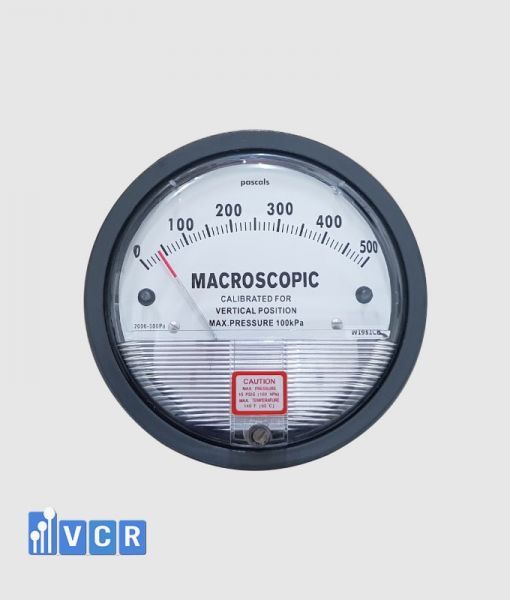

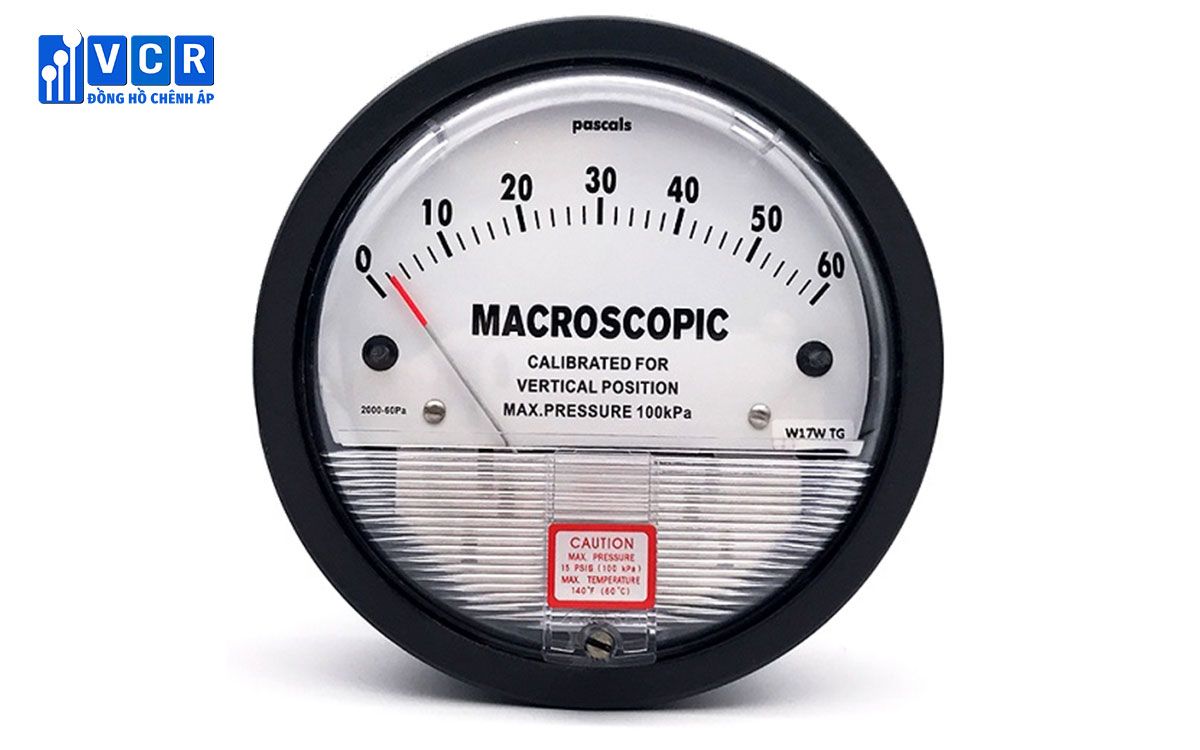
Learn how to choose a differential pressure gauge with 4-20mA signal for BMS/EMS to monitor cleanroom pressure continuously.
- How to Choose a Differential Pressure Gauge with 4-20mA Signal for BMS/EMS
- What Is a 4-20mA Signal?
- When Should a 4-20mA Differential Pressure Gauge Be Used?
- How to Select the Correct Measuring Range
- Output Signal and Power Supply Selection
- Accuracy and Stability Selection
- Display Type: Local Display or Transmitter Only?
- Alarm and Limit Setting
- Installation Position and Pressure Tapping Points
- Documentation, Calibration, and Acceptance
- Common Mistakes When Choosing a 4-20mA Differential Pressure Gauge
- Where to Buy 4-20mA Differential Pressure Gauges for BMS/EMS
- Frequently Asked Questions
- What Is a 4-20mA Differential Pressure Gauge Used For?
- When Should a 4-20mA Type Be Used Instead of a Mechanical Gauge?
- How Should the Measuring Range Be Selected for a 4-20mA Gauge?
- Does BMS/EMS Need Configuration When Installing a 4-20mA Gauge?
- Should a Device with Both Local Display and 4-20mA Output Be Selected?
- What Are the Benefits of Buying 4-20mA Differential Pressure Gauges from VCR?
- Conclusion
How to Choose a Differential Pressure Gauge with 4-20mA Signal for BMS/EMS
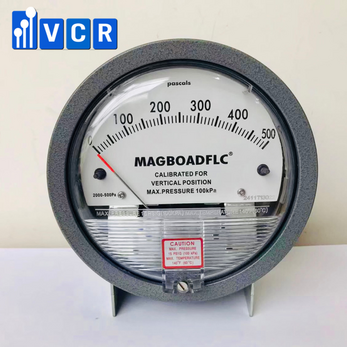
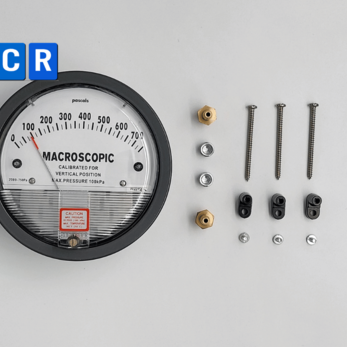
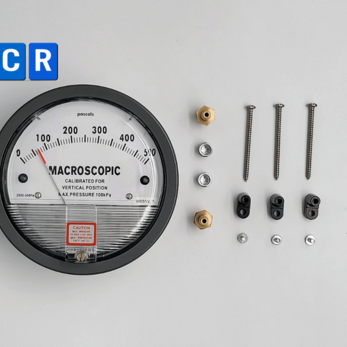
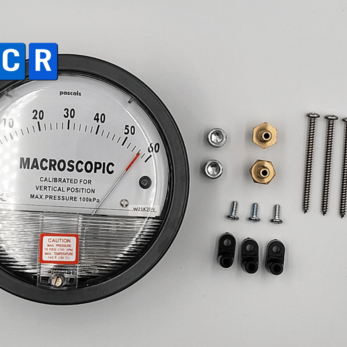
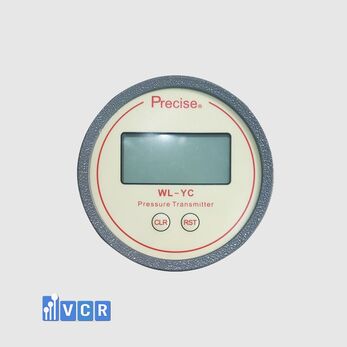
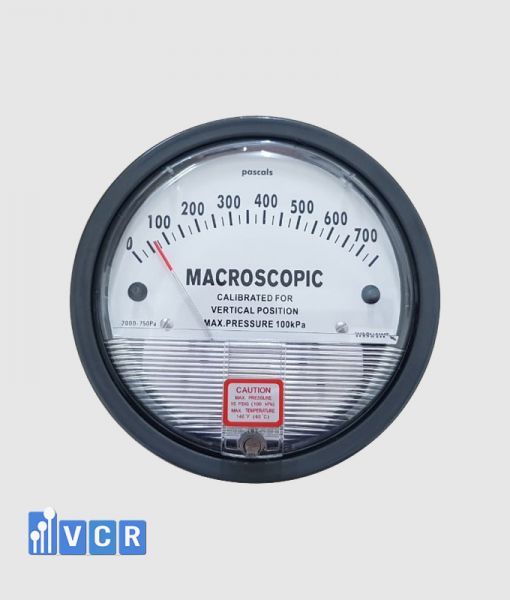
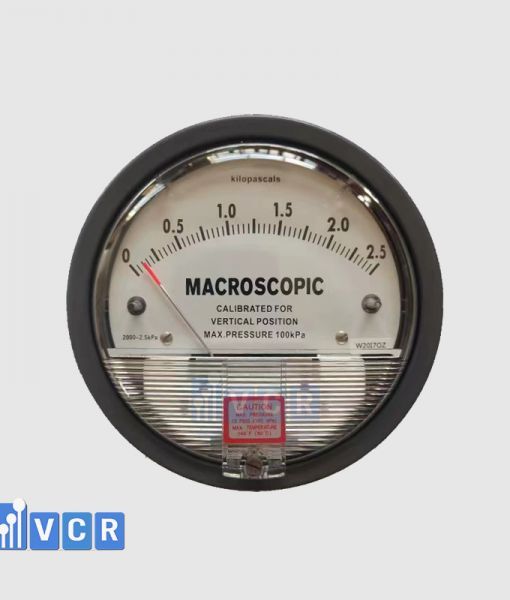
A differential pressure gauge with 4-20mA signal for BMS/EMS is a device used to measure pressure difference between two areas and transmit an analog signal to a central monitoring system. Instead of only reading the value locally, factories can monitor pressure in cleanrooms, buffer rooms, airlocks, clean corridors, negative pressure rooms, positive pressure rooms, or HEPA filter applications on a BMS/EMS screen.
BMS stands for Building Management System. EMS stands for Environmental Monitoring System. In GMP cleanrooms, pharmaceutical, cosmetic, food, electronics, semiconductor, hospital, and laboratory applications, BMS/EMS helps continuously monitor important parameters such as pressure, temperature, humidity, fan status, HEPA filter condition, and operational alarms.
When choosing a differential pressure gauge with 4-20mA signal, businesses should not select only by measuring range or price. They should consider measurement purpose, installation area, signal type, power supply, accuracy, alarm capability, BMS/EMS integration, calibration requirements, and technical documentation. VCR Cleanroom Equipment can advise on suitable solutions based on actual applications.
What Is a 4-20mA Signal?
A 4-20mA signal is an analog current signal commonly used in industrial control and monitoring systems. When the differential pressure device measures the lowest value in its range, it typically outputs around 4mA. When it measures the highest value, it outputs around 20mA. Values in between are converted proportionally according to the measuring range.
For example, if a sensor has a range of 0-100 Pa, 4mA may correspond to 0 Pa, while 20mA corresponds to 100 Pa. When the BMS/EMS receives a 12mA signal, the system can convert it into a pressure value in the middle of the range. This allows cleanroom pressure to be monitored continuously instead of being read only at the installation location.
The advantage of 4-20mA is stable signal transmission, suitability for industrial environments, and easy integration with PLC, BMS, EMS, or cleanroom monitoring systems. It is commonly selected when factories require continuous pressure monitoring, alarm setup, and data logging for operation or quality assessment.
When Should a 4-20mA Differential Pressure Gauge Be Used?
A differential pressure gauge with 4-20mA signal should be used when the area requires continuous monitoring, alarm notification when pressure exceeds limits, or operational data recording. This type is especially suitable for GMP cleanrooms, sterile rooms, filling rooms, weighing rooms, formulation rooms, negative pressure rooms, positive pressure rooms, laboratories, clean corridors, and airlocks.
If a factory only needs local observation, a mechanical gauge may be sufficient. However, if room pressure is directly related to product quality, operator safety, cross-contamination control, or audit documentation, a device with 4-20mA signal is more suitable. BMS/EMS can display, record, alert, and support data traceability when needed.
In critical areas, operators cannot always stand in front of the gauge to check readings. A 4-20mA signal sends pressure data to the control room or monitoring software. When pressure moves outside the limit, the system can generate an alarm so the engineering team can check doors, fans, dampers, HEPA filters, AHU - Air Handling Unit, FFU - Fan Filter Unit, or pressure tubing.
How to Select the Correct Measuring Range
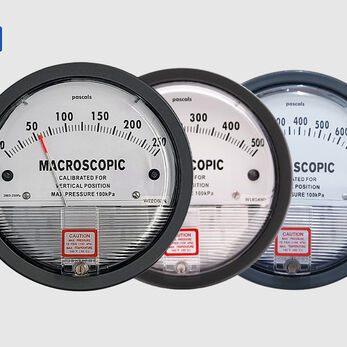
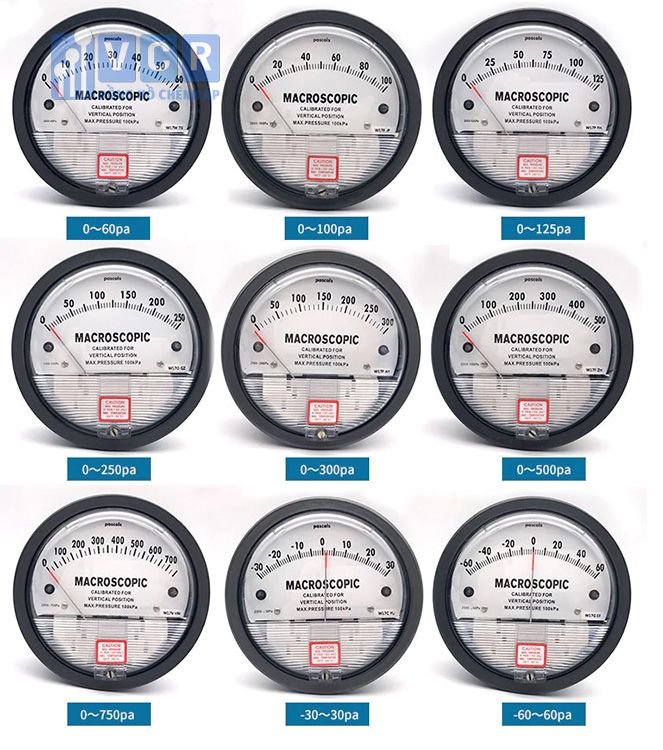
Measuring range is the most important criterion when choosing a differential pressure gauge with 4-20mA signal. The range must match the designed pressure difference and monitoring purpose. If the range is too large, the signal changes only slightly when pressure fluctuates, reducing display resolution on BMS/EMS. If the range is too small, the device may exceed scale when the system changes.
For room differential pressure monitoring, a sensitive range suitable for pressure difference between two areas should be selected. For HEPA filter, HEPA Box, FFU - Fan Filter Unit, or AHU - Air Handling Unit monitoring, a larger range is usually required because filter resistance is higher than room-to-room pressure difference.
If both positive and negative pressure need to be measured, a negative-positive range should be selected. For example, areas that may fluctuate in both directions or negative pressure rooms monitored against clean corridors should not use a one-direction-only range. When transmitting data to BMS/EMS, the lowest value, highest value, and pressure unit must be configured correctly to avoid incorrect display.
Output Signal and Power Supply Selection
When selecting a differential pressure gauge with 4-20mA, it is necessary to check whether the output is 2-wire or 3-wire, the required VDC power supply, and the input type accepted by the existing BMS/EMS. This is very important because the device may not connect properly to the monitoring system if the signal type or power supply is incompatible.
Some devices provide only 4-20mA output, while others may also provide 0-10V, alarm relay, Modbus RTU, or other communication options. If the factory requires deeper integration with the monitoring system, these requirements should be defined from the beginning to select the correct model.
Signal transmission distance, signal cable type, noise resistance, control cabinet connection points, and software scaling should also be checked. In GMP cleanrooms or critical areas, incorrect wiring or configuration may result in inaccurate displayed data and operational misunderstanding.
Accuracy and Stability Selection
The accuracy of a differential pressure gauge with 4-20mA signal should match the criticality of the area. General cleanrooms may have different requirements from sterile rooms, high-risk negative pressure rooms, testing laboratories, or critical GMP areas. The more critical the area, the more important stable performance, calibration capability, and clear technical specifications become.
In addition to accuracy, long-term stability, signal drift, response time, and performance under actual operating conditions should be considered. If the signal fluctuates too much, BMS/EMS may generate false alarms and disturb operation. If response is too slow, the system may not detect pressure changes in time.
A suitable device should balance sensitivity, stability, and operational requirements. A device that is too sensitive is not always better, because cleanroom pressure may naturally fluctuate due to door opening, interlock operation, airflow changes, or HVAC system behavior.
Display Type: Local Display or Transmitter Only?
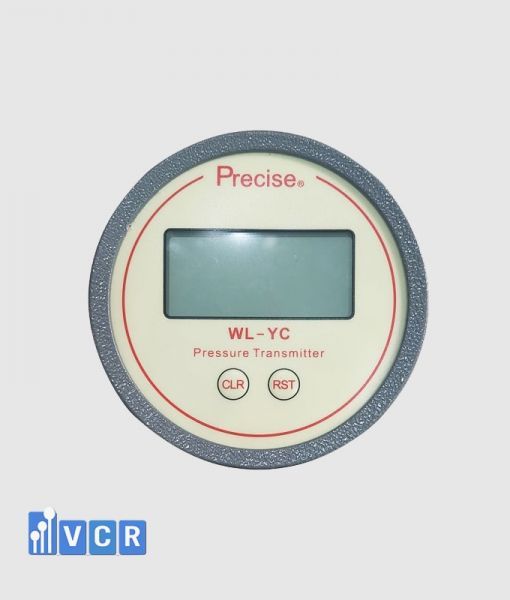
A differential pressure device with 4-20mA output may be a type that provides both local display and signal transmission, or it may be a transmitter without a direct display. If personnel need to check readings quickly at the room entrance, a model with a clear display should be selected.
If the device is installed in a technical cabinet, HVAC system, or location where local reading is not required, a differential pressure transmitter with 4-20mA output may be suitable. However, in GMP cleanrooms, local display helps operators quickly check pressure when passing through the area.
In many projects, the best solution is a device that provides both local display and 4-20mA signal to BMS/EMS. This combines direct observation with centralized monitoring and is suitable for factories that need clear pressure control.
Alarm and Limit Setting
If the area requires strict pressure control, the device or system should support alarm settings. Alarm functions may be handled directly by the device, through relay output, or through BMS/EMS after receiving the 4-20mA signal. Common limits include alert limits and action limits.
An alert limit informs operators that pressure is trending away from the normal range. An action limit indicates that pressure has exceeded the level requiring intervention. Separating these levels helps factories respond properly, avoiding both missed risks and excessive alarms.
When configuring alarms on BMS/EMS, delay time, confirmation time, and pressure fluctuation caused by door opening should be considered. If alarms are too sensitive, the system may alarm continuously during short door openings. If limits are too wide, issues may be detected too late.
Installation Position and Pressure Tapping Points
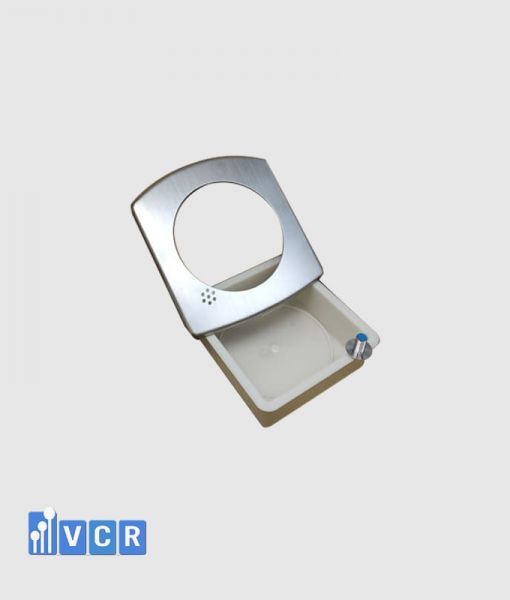
The installation position of a differential pressure gauge with 4-20mA signal should allow easy maintenance, suitable signal wiring, and correct representation of the measured area. If installed on a cleanroom panel, it should be easy to read, easy to clean, and not affect the wall structure.
Pressure tapping points should avoid locations near doors, supply air diffusers, return air grilles, fans, air slots, or disturbed airflow zones. If tapping points are placed incorrectly, even a precise 4-20mA device may transmit data to BMS/EMS that does not represent actual room pressure.
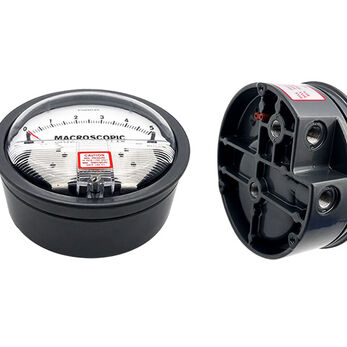
Pressure tubing should be securely installed, without bending, blockage, leakage, or reversed high-low pressure ports. In negative pressure rooms, reversed pressure ports may cause BMS/EMS to display the wrong pressure direction, creating operational risk.
Documentation, Calibration, and Acceptance
For a differential pressure gauge with 4-20mA signal for BMS/EMS, businesses should request datasheets, catalogues, wiring instructions, signal terminal diagrams, power supply specifications, measuring range, accuracy, output signal, and required documents. If the project requires, CO, CQ, calibration certificates, or acceptance documents may also be needed.
During acceptance, both local display and BMS/EMS values should be checked. These values must be correctly scaled according to the measuring range and 4-20mA signal. If BMS/EMS displays incorrect values, the cause may be scale configuration, wiring, power supply, signal interference, or software settings.
Calibration should follow the factory’s measuring equipment management plan. In GMP areas, laboratories, hospitals, or important cleanrooms, periodic inspection records should be maintained to ensure reliable pressure data during operation.
Common Mistakes When Choosing a 4-20mA Differential Pressure Gauge
The first mistake is selecting the wrong measuring range. If the range is unsuitable, data transmitted to BMS/EMS may lack resolution or exceed the display limit. This reduces the monitoring value of the entire system.
The second mistake is not checking the BMS/EMS input type. Some systems require 2-wire 4-20mA, while others require 3-wire or separate power supply. If this is not checked in advance, the device may not be compatible.
The third mistake is incorrect pressure port or signal wiring. This may cause reversed readings, unstable values, or no signal. In negative pressure rooms or critical GMP areas, this error may create significant operational risk.
The fourth mistake is buying only a transmitter without considering local display needs. In many cleanroom areas, operators still need to quickly read pressure at the room entrance. Therefore, the choice between transmitter-only and local-display devices should be considered carefully.
The fifth mistake is configuring alarm limits incorrectly. If alarms are too sensitive, the system may alarm continuously. If alarms are too wide, problems may be detected late. Alarm limits should be based on HVAC design, actual operation, and quality requirements.
Where to Buy 4-20mA Differential Pressure Gauges for BMS/EMS
Businesses should buy differential pressure gauges with 4-20mA signal for BMS/EMS from a supplier specializing in cleanroom equipment and environmental monitoring systems. This is not only a measuring device; it is part of the pressure control, alarm, and operational data logging system.
VCR Cleanroom Equipment can advise and supply differential pressure gauges with 4-20mA signal for GMP cleanrooms, positive pressure rooms, negative pressure rooms, buffer rooms, airlocks, clean corridors, laboratories, hospitals, pharmaceutical, cosmetic, food, electronics, and semiconductor facilities.
VCR also supports device selection for HEPA Boxes, AHU - Air Handling Unit, FFU - Fan Filter Unit, Pass Boxes, Air Showers, Clean Booths, Dispensing Booths, and Weighing Booths. When contacting VCR, businesses should provide the desired measuring range, signal type, power supply, BMS/EMS requirements, installation location, measurement purpose, alarm requirements, calibration needs, and documentation requirements for more accurate consultation.
Frequently Asked Questions
What Is a 4-20mA Differential Pressure Gauge Used For?
A 4-20mA differential pressure gauge is used to measure pressure between two areas or across a filter, then transmit an analog signal to BMS/EMS. This allows factories to monitor cleanroom pressure continuously, set alarms, record data, and detect abnormalities early. The device is suitable for GMP cleanrooms, buffer rooms, airlocks, negative pressure rooms, positive pressure rooms, and HEPA filter systems.
When Should a 4-20mA Type Be Used Instead of a Mechanical Gauge?
A 4-20mA type should be used when the factory needs continuous pressure monitoring, automatic alarms, data logging, or BMS/EMS integration. A mechanical gauge is suitable when only local reading is required. In critical GMP areas, sterile rooms, negative pressure rooms, or areas requiring data traceability, a device with 4-20mA signal is usually more suitable.
How Should the Measuring Range Be Selected for a 4-20mA Gauge?
The measuring range should be selected according to the designed pressure difference and measurement purpose. Room pressure monitoring usually requires a more sensitive range, while HEPA filter or HVAC monitoring often requires a higher range. If both positive and negative pressure are measured, a negative-positive range should be selected. For BMS/EMS integration, the low and high values corresponding to 4mA and 20mA must be configured correctly.
Does BMS/EMS Need Configuration When Installing a 4-20mA Gauge?
Yes. When installing a 4-20mA differential pressure gauge, BMS/EMS must be configured with the correct range, unit, values corresponding to 4mA and 20mA, alarm limits, and alarm delay if needed. If the configuration is incorrect, the monitoring screen may display wrong pressure values even if the measuring device works properly.
Should a Device with Both Local Display and 4-20mA Output Be Selected?
Yes, if the area requires both direct observation and centralized monitoring. Operators can quickly read pressure at the room entrance, while BMS/EMS continuously records data. This is a suitable solution for many GMP cleanrooms, buffer rooms, airlocks, clean corridors, and critical areas.
What Are the Benefits of Buying 4-20mA Differential Pressure Gauges from VCR?
When buying from VCR Cleanroom Equipment, customers receive advice based on measuring range, output signal, power supply, installation position, BMS/EMS requirements, and actual operating purpose. VCR can support 4-20mA differential pressure gauges for GMP cleanrooms, negative pressure rooms, positive pressure rooms, HEPA Boxes, AHU - Air Handling Unit, FFU - Fan Filter Unit, Pass Boxes, Air Showers, and related cleanroom equipment.
Conclusion
Choosing a differential pressure gauge with 4-20mA signal for BMS/EMS requires consideration of measuring range, output signal, power supply, accuracy, alarm settings, installation position, pressure tapping points, calibration, and system integration capability. Selecting the right device helps factories monitor cleanroom pressure continuously, detect abnormalities early, and improve operational control.
If your business needs differential pressure gauges with 4-20mA signal for BMS/EMS, contact VCR Cleanroom Equipment for suitable solutions for GMP cleanrooms, laboratories, hospitals, pharmaceutical, cosmetic, food, electronics, semiconductor facilities, and related cleanroom equipment.