
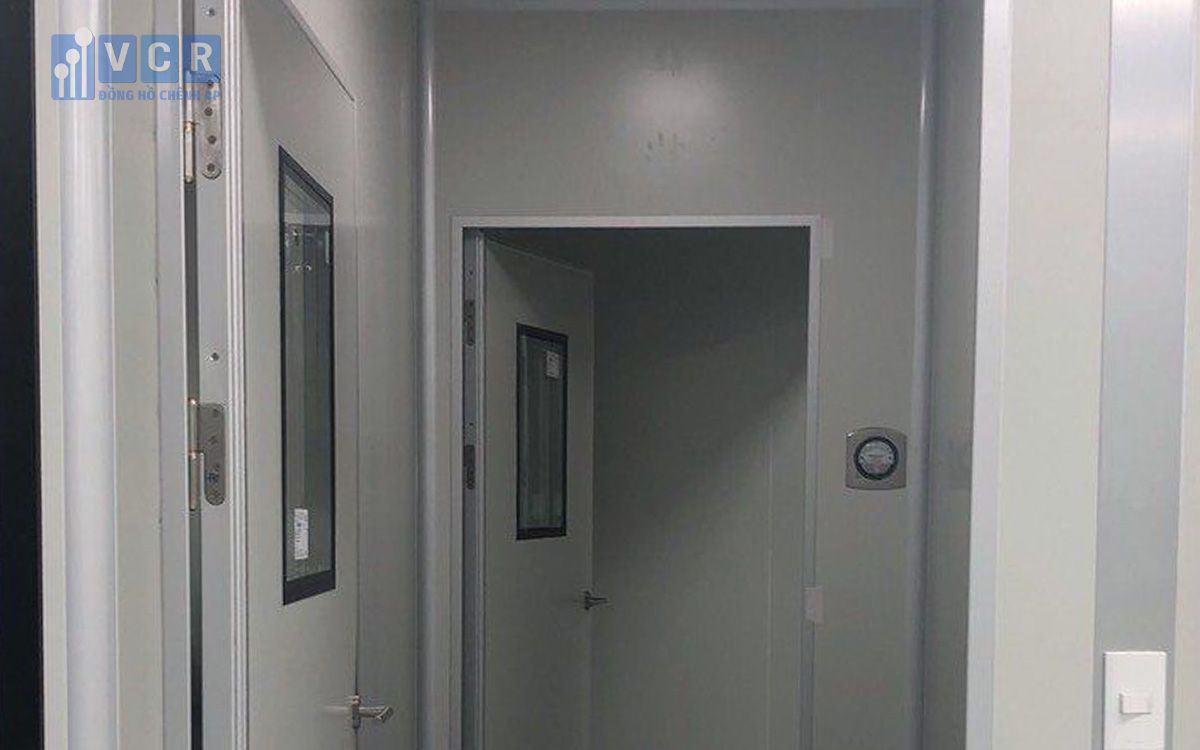
Learn how to choose a differential pressure gauge for positive and negative pressure rooms to control airflow, cross-contamination, and cleanroom safety.
- How to Choose a Differential Pressure Gauge for Positive and Negative Pressure Rooms
- What Is a Positive Pressure Room?
- What Is a Negative Pressure Room?
- Key Differences When Choosing Gauges for Positive and Negative Pressure Rooms
- How to Select the Right Measuring Range
- Mechanical or Electronic Differential Pressure Gauge?
- Pressure Tapping Points for Positive and Negative Pressure Rooms
- Common Mistakes When Selecting Differential Pressure Gauges
- Where to Buy Differential Pressure Gauges for Positive and Negative Pressure Rooms
- Frequently Asked Questions
- What Type of Differential Pressure Gauge Should Be Used for a Positive Pressure Room?
- How Should a Differential Pressure Gauge Be Selected for a Negative Pressure Room?
- Can the Same Gauge Be Used for Positive and Negative Pressure Rooms?
- Does a Negative Pressure Room Need an Alarm Function?
- How Should the Measuring Range Be Selected for Positive and Negative Pressure Rooms?
- What Are the Benefits of Buying from VCR Cleanroom Equipment?
- Conclusion
How to Choose a Differential Pressure Gauge for Positive and Negative Pressure Rooms
Choosing a differential pressure gauge for positive and negative pressure rooms should be based on the control objective of each area. A positive pressure room is usually used to protect products, samples, or clean areas from air entering from the surrounding environment. In contrast, a negative pressure room is used to keep dust, chemical vapors, microorganisms, biological agents, or hazardous materials from escaping to surrounding areas.
In cleanrooms, a differential pressure gauge helps operators monitor pressure difference between the room and adjacent areas, between a cleanroom and a corridor, between an airlock and a production area, or between a negative pressure room and a support area. If the wrong measuring range is selected, pressure tapping points are installed incorrectly, or an unsuitable gauge is used, the displayed reading may not accurately reflect the room’s control status.
VCR Cleanroom Equipment can recommend suitable differential pressure gauges for positive pressure rooms, negative pressure rooms, GMP cleanrooms, hospitals, laboratories, pharmaceutical, food, cosmetic, electronics, and semiconductor facilities. Selecting the right device helps the system operate more stably, improves monitoring, and reduces cross-contamination risks.
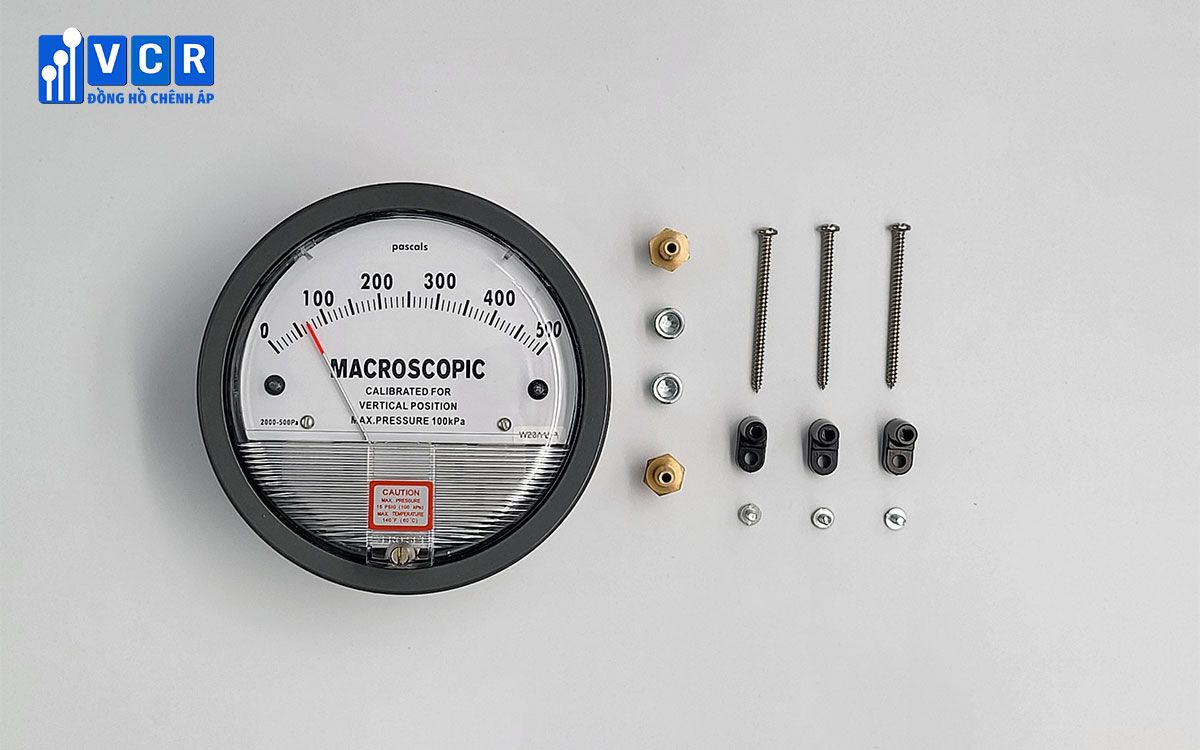
What Is a Positive Pressure Room?
A positive pressure room is a room with higher pressure than the surrounding area. When the door opens or small gaps exist, air tends to flow from inside the room to the outside. The main objective is to prevent air from less clean areas from entering the cleanroom.
Positive pressure rooms are commonly used in areas that require protection of products, samples, materials, or clean operations. Typical examples include pharmaceutical cleanrooms, filling rooms, clean packaging rooms, testing laboratories, electronics manufacturing rooms, sterile rooms, clean laboratories, or areas that need protection from dust and microorganisms.
When choosing a differential pressure gauge for a positive pressure room, the gauge should be easy to read, have a measuring range suitable for the designed pressure difference, and help operators detect abnormal pressure drops. If positive pressure is not maintained, air from surrounding areas may enter the room and increase contamination risk.
What Is a Negative Pressure Room?
A negative pressure room is a room with lower pressure than the surrounding area. When the door opens or small gaps exist, air tends to flow from outside into the room. The main objective is to prevent contaminants inside the room from escaping to surrounding areas.
Negative pressure rooms are commonly used in areas with risks of dust, powder, chemical vapors, microorganisms, biological agents, or potent active ingredients spreading outward. Examples include isolation rooms, microbiology laboratories, high-risk sample handling rooms, powder weighing rooms, potent compound handling rooms, formulation rooms with dispersion risk, or areas requiring operator and environmental protection.
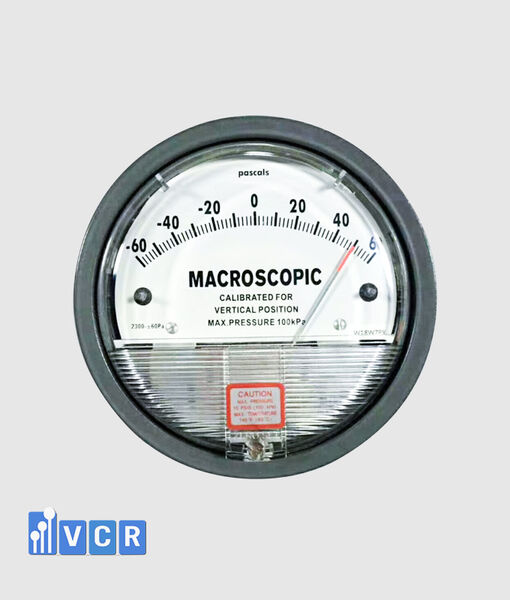
When choosing a differential pressure gauge for a negative pressure room, the gauge should clearly display negative values or use a negative-positive range if needed. The gauge must help operators identify when negative pressure is insufficient, because this may increase the risk of contaminant release to surrounding areas.
Key Differences When Choosing Gauges for Positive and Negative Pressure Rooms
The most important difference is pressure direction. For a positive pressure room, the gauge should confirm that the room pressure is higher than the surrounding area. For a negative pressure room, the gauge should confirm that the room pressure is lower than the surrounding area. Therefore, the display, measuring range, and connection of high and low pressure ports must be selected correctly.
For positive pressure rooms, the gauge should monitor a stable positive pressure difference. If the pointer or value gradually moves toward zero, the room may be losing pressure, doors may not be sealed properly, supply airflow may be reduced, HEPA filters may be dust-loaded, or the HVAC system may be imbalanced.
For negative pressure rooms, the gauge should monitor a stable negative pressure difference. If the negative value moves close to zero or becomes positive, the exhaust system may be weak, exhaust fans may be reduced, dampers may be incorrectly positioned, the room may be leaking, or supply and exhaust airflow may no longer be balanced.
Therefore, when selecting a differential pressure gauge, businesses should not only ask for the measuring range. They should first determine whether the room requires positive or negative pressure, which two areas are being measured, what the alert limits are, and how operators need to read the values.
How to Select the Right Measuring Range
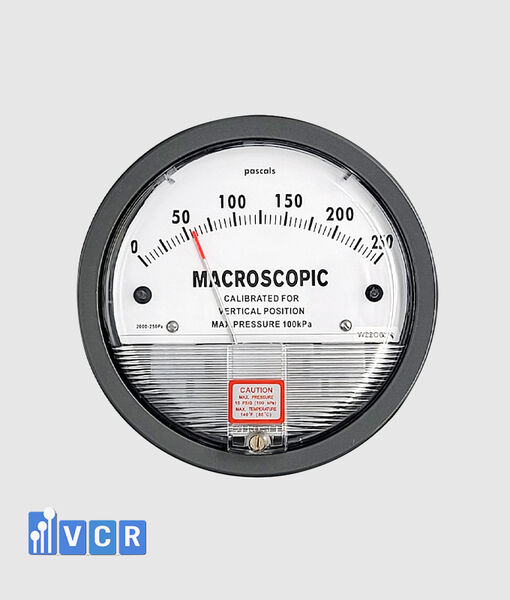
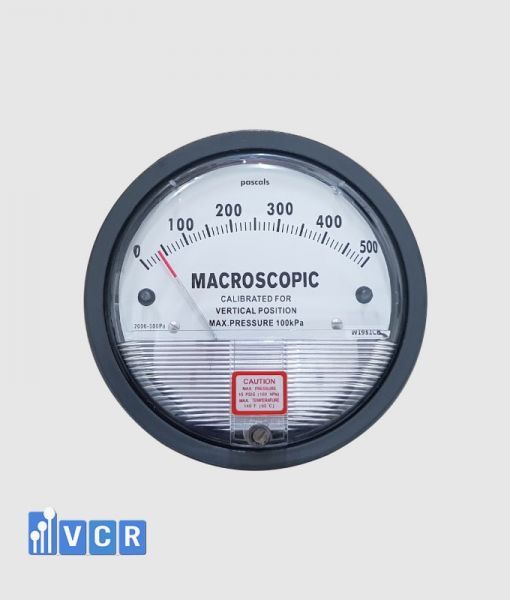
The measuring range of a differential pressure gauge should match the designed pressure difference of the room. For positive or negative pressure rooms, the range should be sensitive enough to detect small changes. If the range is too large, the pointer may move very little, making it difficult to observe. If the range is too small, the gauge may exceed its scale when the system changes.
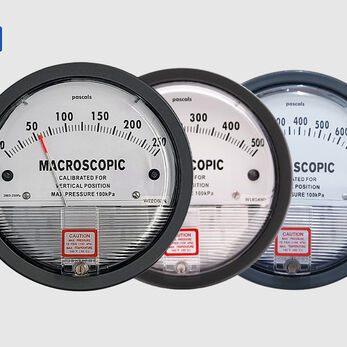
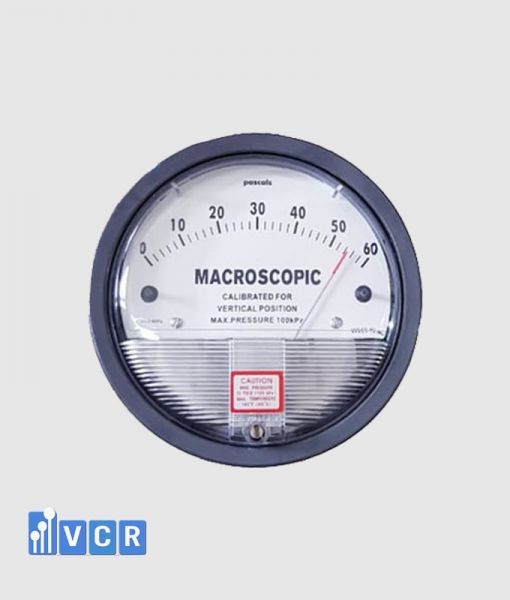
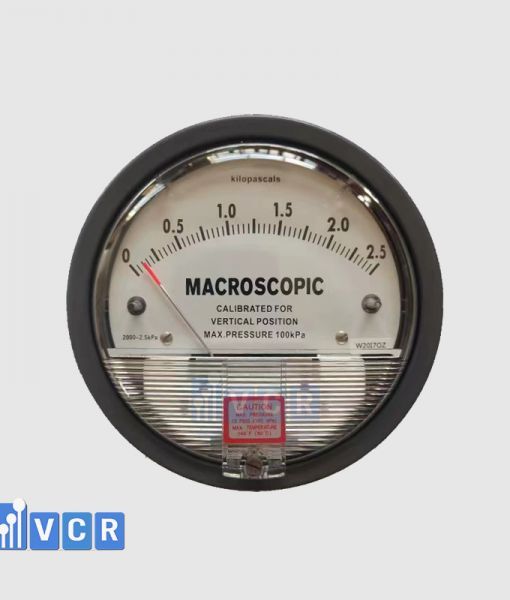
For positive pressure rooms, a positive range may be selected if only one pressure direction needs to be monitored. For negative pressure rooms, a negative range or negative-positive range is recommended so operators can easily observe pressure lower than the surrounding area. In areas where operating modes may change or both directions need to be monitored, a negative-positive range is more flexible.
A practical principle is that the normal operating range should fall within an easy-to-read zone on the gauge face, not too close to the beginning or the end of the scale. If HVAC design documents, pressure zoning diagrams, or alert limits are available, they should be used to select the measuring range more accurately.
Mechanical or Electronic Differential Pressure Gauge?
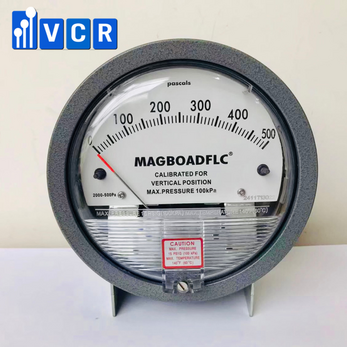
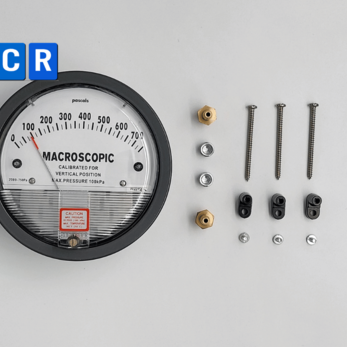
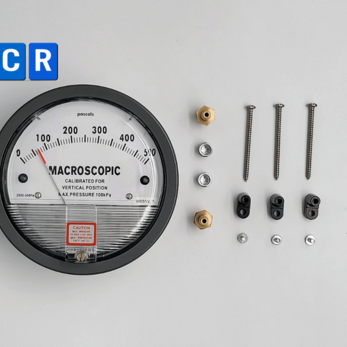
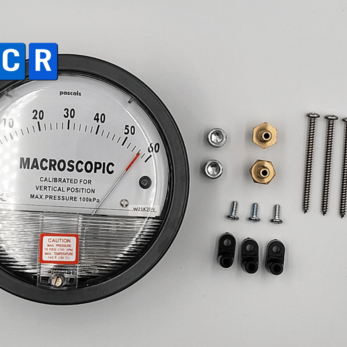
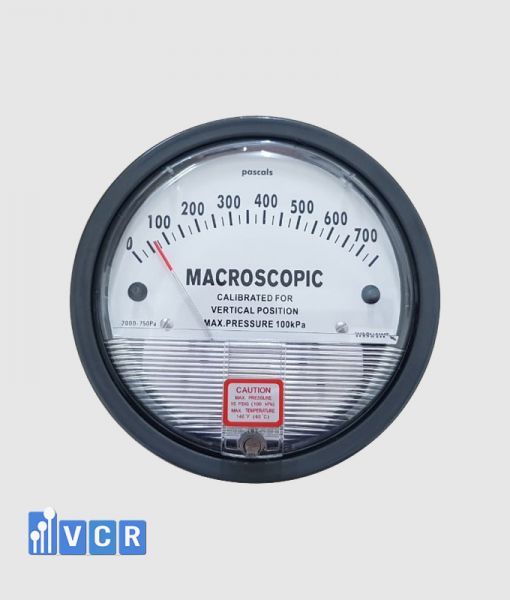
A mechanical differential pressure gauge is suitable for locations that require direct on-site observation, no automatic alarm, and no signal transmission to a monitoring system. It is commonly used in cleanrooms, buffer rooms, airlocks, clean corridors, weighing rooms, formulation rooms, or areas that require visual pressure indication.
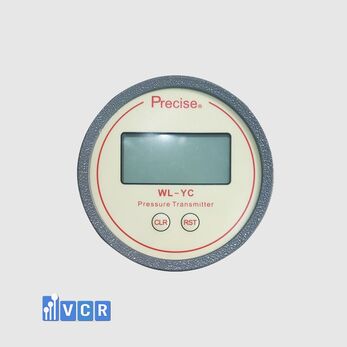
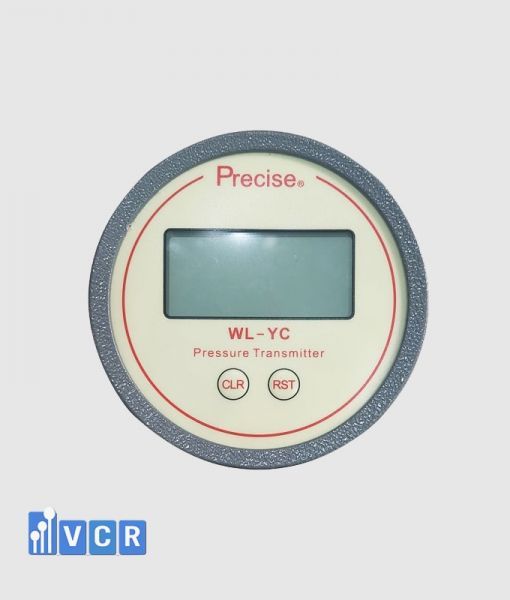
An electronic differential pressure gauge or differential pressure sensor is suitable for areas requiring alarms, continuous monitoring, signal transmission, data logging, or connection to BMS, EMS, and cleanroom monitoring systems. This option is more suitable for critical GMP areas, sterile rooms, isolation rooms, high-risk negative pressure rooms, or areas requiring data traceability.
The choice between mechanical and electronic gauges should not depend only on budget. It should also depend on the risk level of the area. If pressure deviation can directly affect product quality, operator safety, or contaminant release risk, a gauge with alarm or monitoring connection should be considered.
Pressure Tapping Points for Positive and Negative Pressure Rooms
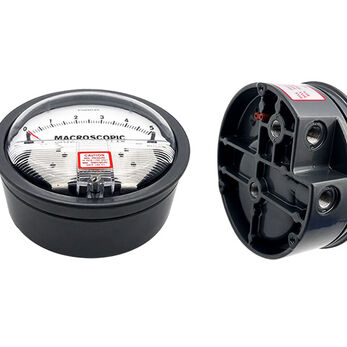
Pressure tapping points must be arranged correctly so the displayed reading has operational value. For a positive pressure room, one pressure port is usually connected to the controlled room, while the other is connected to a reference area such as a corridor, buffer room, or adjacent space. For a negative pressure room, the connection method is similar, but the display direction must be checked so the negative or positive value reflects the actual condition correctly.
Pressure tapping points should avoid locations near doors, supply air diffusers, return air grilles, fans, direct airflow, or areas with pressure disturbance. If tapping points are placed incorrectly, readings may fluctuate, become difficult to interpret, or fail to represent the true room pressure.
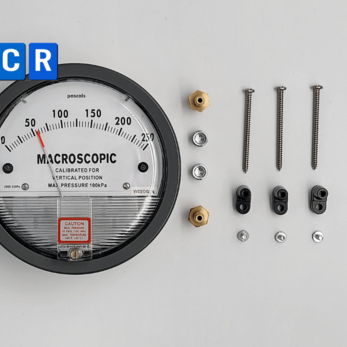
Pressure tubing should also be inspected. Bent, blocked, loose, leaking, or reversed high-low pressure ports can distort readings. In negative pressure rooms, incorrect connections may cause operators to misunderstand the pressure status, increasing operational risk.
Common Mistakes When Selecting Differential Pressure Gauges
The first mistake is choosing a differential pressure gauge only by price or available model. In cleanrooms, the most important question is whether the device matches the measurement purpose, pressure range, installation position, and operating requirements.
The second mistake is using the same measuring range for positive pressure rooms, negative pressure rooms, and HEPA filter monitoring. These are three different applications. Room pressure monitoring requires a more sensitive range, while HEPA filter monitoring usually requires a range that matches filter resistance.
The third mistake is not distinguishing between high and low pressure ports. If the ports are connected incorrectly, the gauge may display the opposite value or cause operators to misunderstand the room status. This is especially risky in negative pressure rooms, isolation rooms, or areas handling high-risk agents.
The fourth mistake is ignoring calibration or periodic inspection. A gauge may still display readings but no longer be accurate after long-term use. In GMP areas, laboratories, hospitals, or strictly controlled areas, proper inspection and calibration plans are important.
Where to Buy Differential Pressure Gauges for Positive and Negative Pressure Rooms
Businesses should buy differential pressure gauges for positive and negative pressure rooms from a cleanroom equipment specialist. The device must not only have the correct measuring range but also match the pressure zoning design, HVAC system, GMP requirements, ISO 14644 classification, cross-contamination control, and operational safety requirements.
VCR Cleanroom Equipment can advise on differential pressure gauges for positive pressure rooms, negative pressure rooms, GMP cleanrooms, isolation rooms, laboratories, hospitals, pharmaceutical, food, cosmetic, electronics, semiconductor, and other air-controlled areas. VCR also supports gauge selection for AHU - Air Handling Unit, FFU - Fan Filter Unit, HEPA Boxes, Pass Boxes, Air Showers, Clean Booths, and Weighing Booths.
When requesting consultation, businesses should provide the room type, positive or negative pressure objective, reference area, designed pressure difference, desired measuring range, alarm requirement, calibration requirement, and documentation needs. From there, VCR Cleanroom Equipment can recommend a solution that matches each actual installation point.
Frequently Asked Questions
What Type of Differential Pressure Gauge Should Be Used for a Positive Pressure Room?
A positive pressure room should use a differential pressure gauge with a measuring range suitable for the designed pressure difference, clear readability, and stable performance. If only local observation is needed, a mechanical gauge is suitable. If alarms, continuous monitoring, or data transmission are required, an electronic gauge or differential pressure sensor should be considered. VCR Cleanroom Equipment can advise based on each actual application area.
How Should a Differential Pressure Gauge Be Selected for a Negative Pressure Room?
A negative pressure room should use a gauge that can clearly display negative values or a negative-positive range so operators can easily identify room status. The device should be sensitive enough to detect when negative pressure decreases or approaches zero. For isolation rooms, testing laboratories, powder handling areas, or high-risk agent areas, a gauge with alarm capability should be considered for better safety.
Can the Same Gauge Be Used for Positive and Negative Pressure Rooms?
The same gauge series may be used in some cases, but the measuring range and display type must be selected correctly. If the room only requires positive pressure, a positive range may be used. If the room requires negative pressure or may fluctuate in both directions, a negative-positive range should be selected. Correct high and low pressure port connection and proper tapping point placement are essential.
Does a Negative Pressure Room Need an Alarm Function?
For important areas such as isolation rooms, microbiology laboratories, potent compound handling rooms, powder weighing rooms, or contamination-risk areas, an electronic gauge or sensor with alarm capability should be considered. Alarm functions help operators detect early when negative pressure is not achieved, reducing the risk of contaminant release to surrounding areas.
How Should the Measuring Range Be Selected for Positive and Negative Pressure Rooms?
The measuring range should be selected based on the designed pressure difference, alert limits, action limits, and the control objective of each room. A range that is too large makes small changes difficult to observe, while a range that is too small may exceed its scale when the system changes. If uncertain, businesses should provide design information so VCR Cleanroom Equipment can recommend the appropriate range.
What Are the Benefits of Buying from VCR Cleanroom Equipment?
When buying from VCR Cleanroom Equipment, customers receive advice based on positive or negative pressure objectives, installation position, measuring range, calibration requirements, and actual operating conditions. VCR can support differential pressure gauges for GMP cleanrooms, hospitals, laboratories, isolation rooms, HEPA Boxes, AHU - Air Handling Unit, FFU - Fan Filter Unit, Pass Boxes, Air Showers, and related cleanroom equipment.
Conclusion
Choosing a differential pressure gauge for positive and negative pressure rooms should be based on airflow control objectives. A positive pressure room protects clean areas from outside air, while a negative pressure room prevents contaminants from escaping. Therefore, measuring range, display type, pressure tapping points, and gauge type must be selected correctly from the beginning.
If your business needs differential pressure gauges for positive pressure rooms, negative pressure rooms, GMP cleanrooms, hospitals, laboratories, or cleanroom equipment, contact VCR Cleanroom Equipment for support in selecting the right solution for actual operating needs.