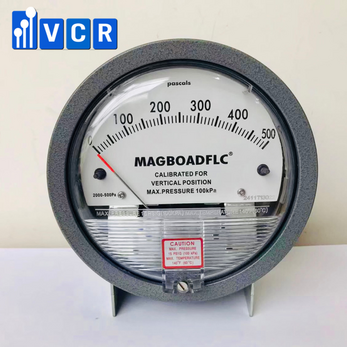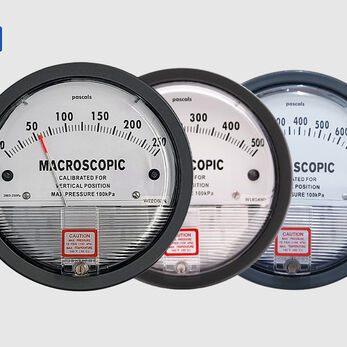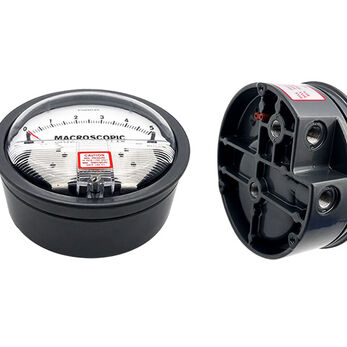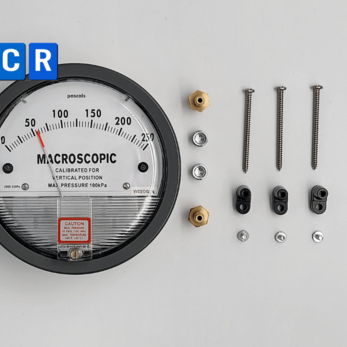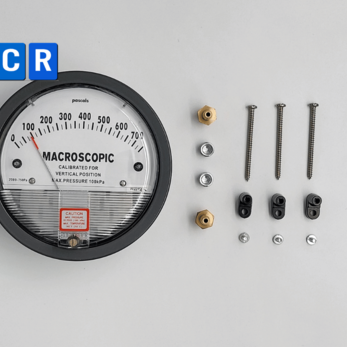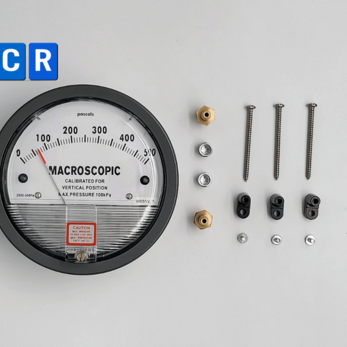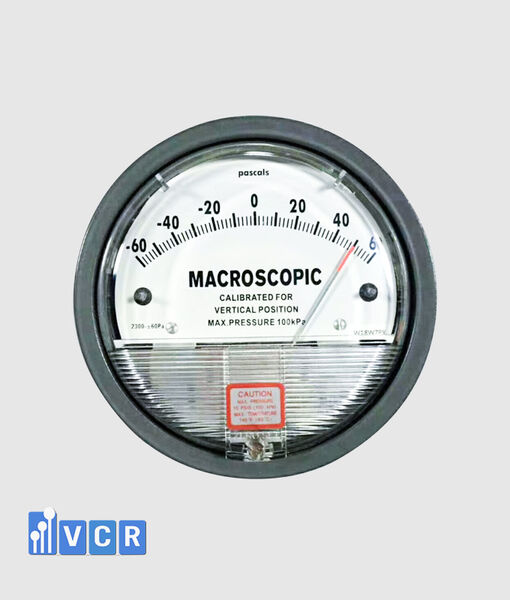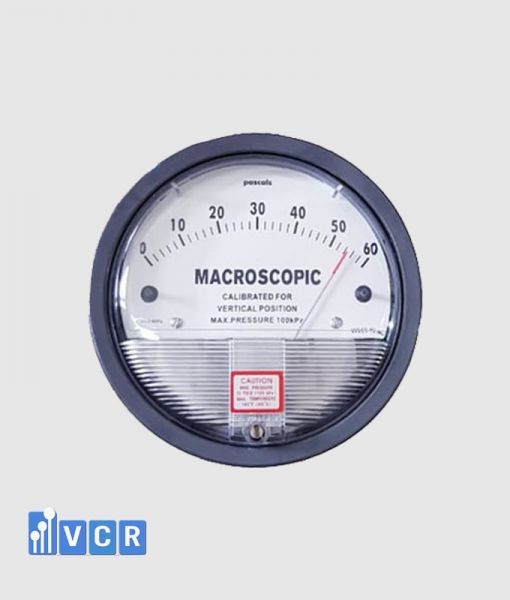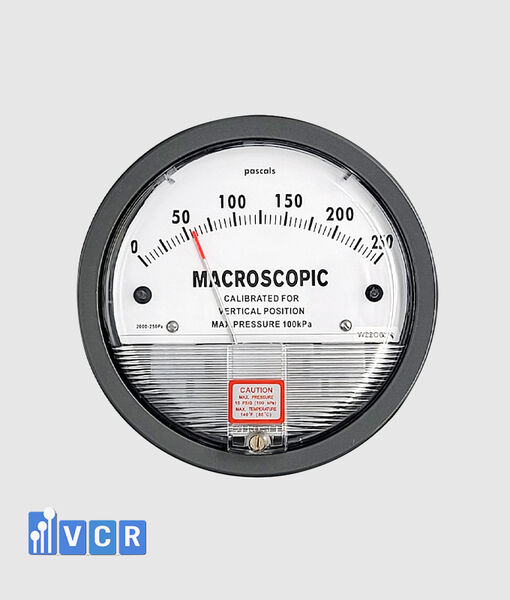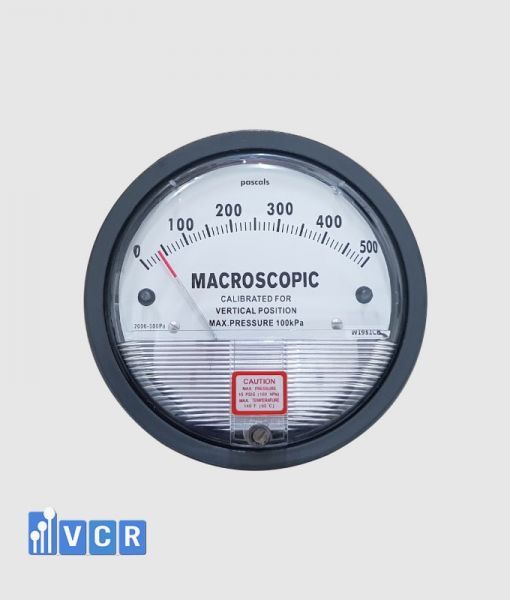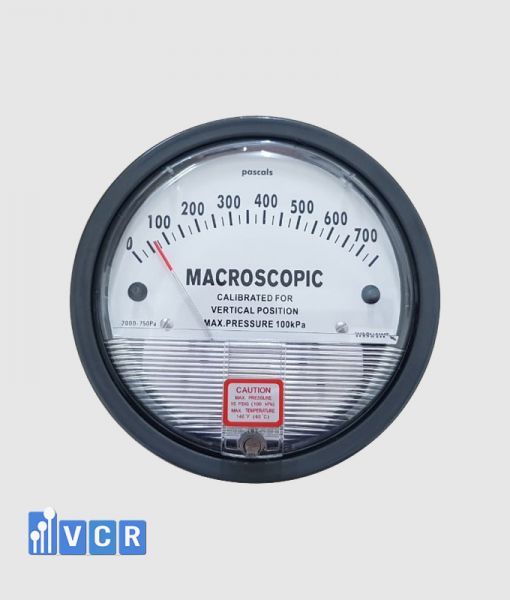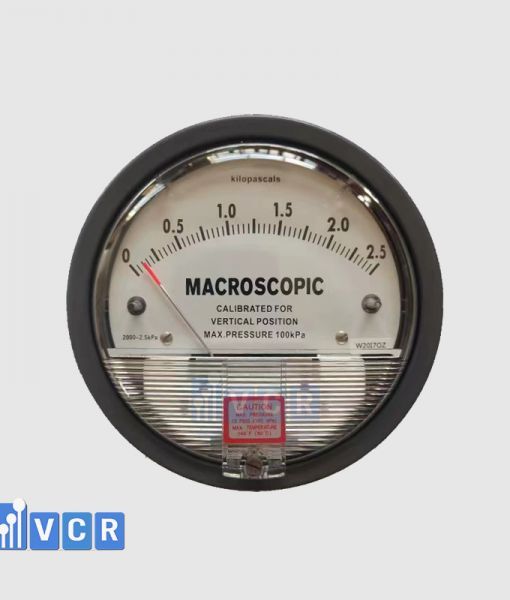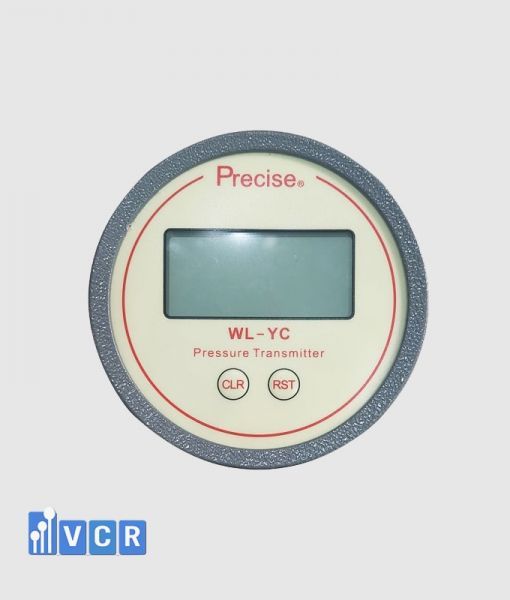

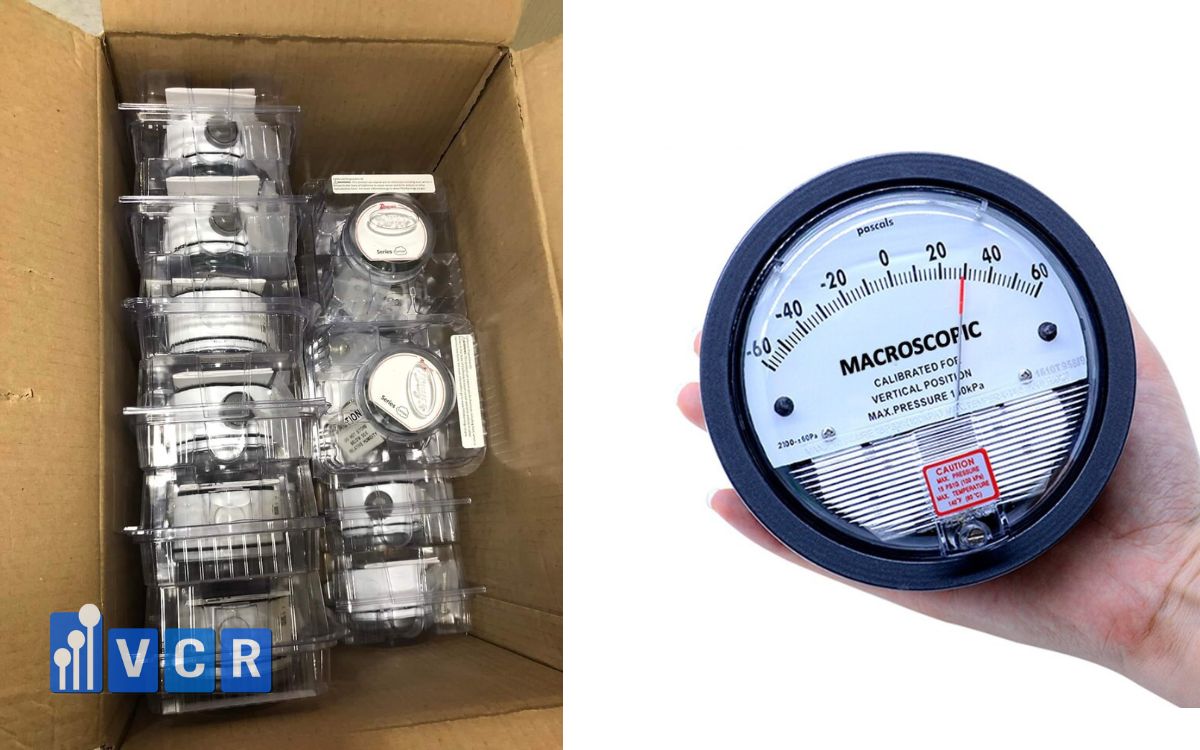
Differential pressure gauges and sensors both measure the pressure difference between two points, but they are not exactly the same. A gauge focuses on local indication, while a sensor usually converts the measurement into a signal for a PLC, HMI or BMS.
- Are they the same device?
- What is differential pressure?
- What is a differential pressure gauge?
- What is a differential pressure sensor?
- Are sensors and transmitters the same?
- Comparison table
- Similarities
- Display differences
- Output signal differences
- Alarm capability
- Data logging
- Automatic control
- Power supply requirements
- Calibration differences
- When should a differential pressure gauge be selected?
- When should a differential pressure sensor be selected?
- Can gauges and sensors be used together?
- Difference from a differential pressure switch
- Common selection mistakes
- Frequently asked questions
- Is an electronic differential pressure gauge also a sensor?
- Must a differential pressure sensor have a display?
- Can a mechanical gauge provide a 4–20 mA output?
- Which device is suitable for HEPA filter monitoring?
- Which device is suitable for a GMP cleanroom?
- Can a differential pressure sensor directly control a fan?
- Conclusion
Are they the same device?
Differential pressure gauges and differential pressure sensors serve the same basic purpose: determining the pressure difference between two locations. However, the two terms are not completely interchangeable.
A differential pressure gauge primarily provides a visible local indication. It may use an analogue pointer or a digital display.
A differential pressure sensor primarily detects the pressure difference and converts it into an electrical signal. The signal can then be transmitted to a PLC, HMI, BMS, controller or monitoring system.
One device may perform both functions. An electronic instrument with a local display and signal output can act as both a gauge and a differential pressure sensor or transmitter.
The distinction therefore relates mainly to the device’s function and configuration rather than its physical appearance.
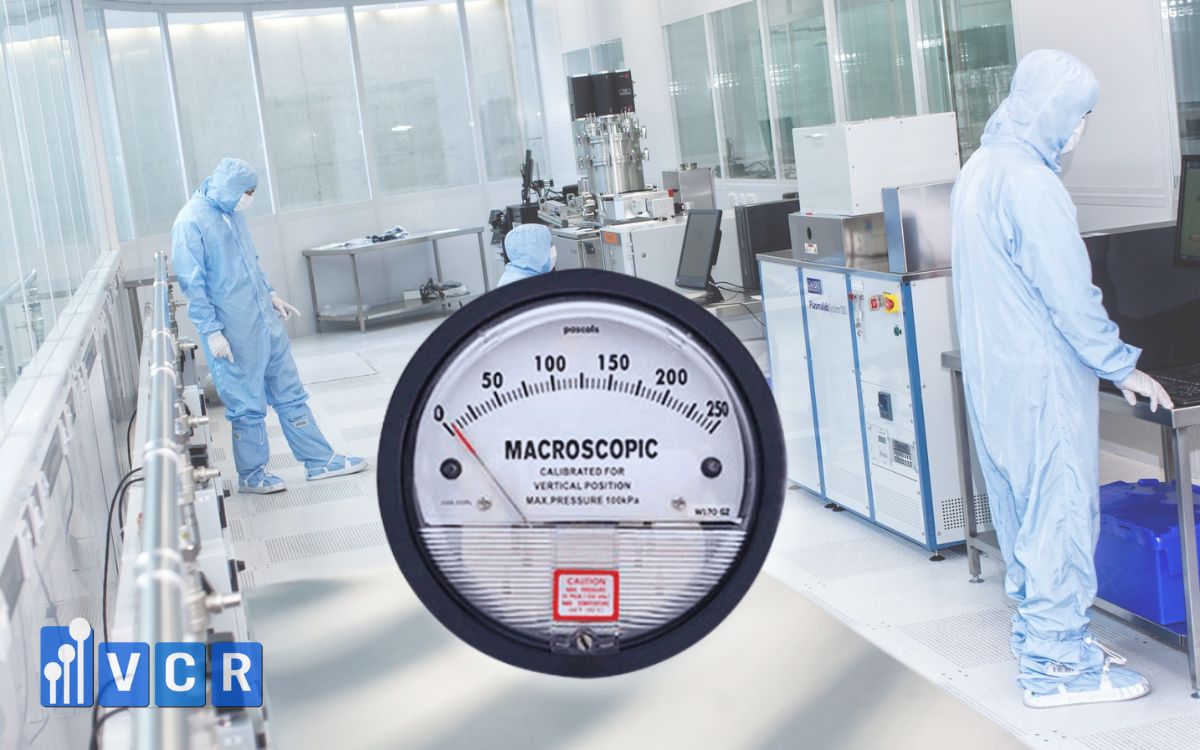
What is differential pressure?
Differential pressure is the difference between the pressures at two locations.
The basic equation is:
Differential pressure = High-port pressure − Low-port pressure
A differential pressure device normally has two connections:
-
High, Positive or “+” port.
-
Low, Negative or “−” port.
For room-pressure monitoring, the High port is connected to the room with the higher design pressure and the Low port to the lower-pressure room or corridor.
For filter monitoring, the High port is connected upstream of the filter and the Low port downstream. The resulting value indicates the pressure loss across the filter.
Common units include:
-
Pa.
-
kPa.
-
mmH₂O.
-
in.w.c.
-
mbar.
Pascals are widely used for cleanroom pressure measurements.
What is a differential pressure gauge?
A differential pressure gauge measures and directly displays the pressure difference between two points.
It may also be described as:
-
DP gauge.
-
Pressure-difference gauge.
-
Differential pressure indicator.
-
Cleanroom pressure gauge.
-
HEPA filter pressure-drop gauge.
-
Filter clogging gauge.
-
AHU differential pressure gauge.
Differential pressure gauges are generally divided into two categories.
Mechanical differential pressure gauge
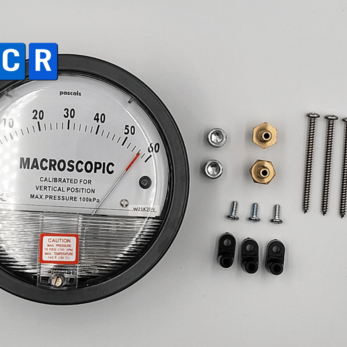
A mechanical gauge uses an analogue pointer and a graduated dial. Most models operate through a mechanical or magnetic sensing mechanism and do not require an external power supply.
This type is suitable for local inspection of cleanroom pressure, HEPA filter loading or AHU filter resistance.
Electronic differential pressure gauge
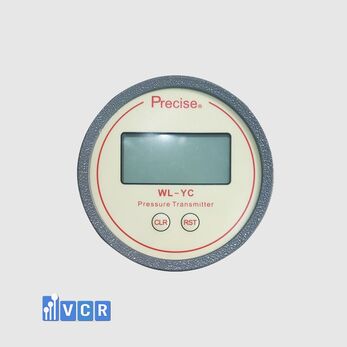
An electronic gauge uses an internal pressure sensor and displays the result numerically.
Some electronic gauges only provide a local display. Others include relay contacts, 4–20 mA, 0–10 V or Modbus communication.
When signal outputs are included, the device performs both indication and sensor or transmitter functions.
What is a differential pressure sensor?
A differential pressure sensor receives pressure from two points and converts the difference into an electrical signal.
The signal can be used by a control system to:
-
Display a value on an HMI.
-
Generate an alarm.
-
Store historical data.
-
Create trend graphs.
-
Control fan speed.
-
Operate dampers.
-
Monitor filter loading.
-
Maintain room pressure.
-
Create equipment interlocks.
A sensor does not necessarily have a local display. Some models are installed above ceilings, inside control panels or in technical areas and only provide an output signal.
Are sensors and transmitters the same?
In commercial use, the terms differential pressure sensor and differential pressure transmitter are often used interchangeably. Technically, they may be distinguished.
A sensing element directly reacts to the pressure difference and may produce a small electrical signal requiring additional processing.
A differential pressure transmitter normally includes:
-
A pressure-sensing element.
-
Amplification electronics.
-
Temperature compensation.
-
Linearisation.
-
Signal conversion.
-
A standard output such as 4–20 mA or 0–10 V.
In practical projects, the term differential pressure sensor often refers to the complete field device that provides a usable output signal.
Comparison table
| Criterion | Differential pressure gauge | Differential pressure sensor |
|---|---|---|
| Main function | Measurement and local indication | Measurement and electrical output |
| Display | Pointer or digital screen | Optional |
| Power supply | Mechanical types normally require none | Normally required |
| Output signal | Often unavailable on basic models | 4–20 mA, 0–10 V, RS485 or Modbus |
| PLC/HMI integration | Limited | Suitable |
| Automatic alarms | Limited | Can be configured through the controller |
| Data logging | Normally unavailable | Can transmit data for storage |
| Automatic control | Normally unsuitable | Suitable |
| Direct local reading | Convenient | Depends on whether a display is included |
| Power-loss operation | Mechanical indication remains if pressure exists | Signal is normally lost |
| Cost | Usually lower | Usually higher |
| Typical purpose | Local monitoring | Central monitoring and control |
Similarities
Both device types measure the difference between two pressures and require High and Low pressure connections.
They may be used for the same applications, including:
-
Cleanroom pressure monitoring.
-
HEPA filter pressure-drop measurement.
-
Pre-filter and bag-filter monitoring.
-
AHU monitoring.
-
FFU monitoring.
-
Air shower control.
-
Dynamic pass box monitoring.
-
Laminar airflow units.
-
Dispensing booths.
-
Coil pressure-drop measurement.
Both gauges and sensors can give incorrect results when pressure tubing is leaking, kinked, blocked or filled with condensation.
They must also be selected with the correct range, accuracy and measurement unit.
Display differences
A differential pressure gauge is designed to make the value visible at the installation location.
An analogue pointer makes increases and decreases easy to recognise, although the reading may be affected by parallax when viewed from an angle.
A digital gauge provides a numerical indication and may also show alarm status, units and relay conditions.
A differential pressure sensor does not have to include a display. A sensor installed in a technical ceiling or control panel may provide only an output signal.
The sensor may therefore be operating correctly even though no local value is visible without an HMI or external display.
Output signal differences
A basic mechanical gauge does not normally produce an electrical output. Operators must inspect and record the value manually.
Differential pressure sensors commonly provide one of the following signals.
4–20 mA
This is widely used in industrial control. Four milliamps normally represents the lower measurement limit, while 20 milliamps represents the upper limit.
Current signals are suitable for relatively long cable distances and generally provide good resistance to electrical interference.
0–10 V
Voltage output is compatible with many controllers but may be more sensitive to voltage drop and electrical interference when cables are long or poorly installed.
RS485 or Modbus
Digital communication can transmit the measurement, alarm status, configuration and diagnostic data.
Multiple sensors can share a communication network, reducing the number of analogue input channels required by the PLC.
Alarm capability
A standard mechanical gauge normally does not generate an automatic alarm. An operator must be present to observe an out-of-limit condition.
Certain gauges may include electrical contacts or adjustable setpoint pointers, but their configuration is usually limited.
A differential pressure sensor can send its signal to a PLC or controller to create:
-
Low alarms.
-
High alarms.
-
Low-low alarms.
-
High-high alarms.
-
Alarm delays.
-
Hysteresis.
-
Open-circuit alarms.
-
Sensor-fault alarms.
-
Audible and visual warnings.
These functions are useful in negative-pressure rooms, isolation areas, dispensing booths and pharmaceutical cleanrooms.
Data logging
Mechanical gauges do not automatically store data. Readings must be entered manually into a logbook or operating form.
A differential pressure sensor can continuously transmit data to a monitoring system. Historical records can help operators:
-
Review room-pressure trends.
-
Identify increasing filter resistance.
-
Investigate faults.
-
Determine when an alarm occurred.
-
Evaluate HVAC performance.
-
Support qualification and audits.
For GMP systems, electronic records may also require access control, timestamps, event traceability, security and data-integrity controls.
Automatic control
A basic differential pressure gauge provides information for a person but does not provide a continuous signal for a control algorithm.
A differential pressure sensor can provide feedback for closed-loop control.
For example, a PLC may use the sensor signal to adjust fan speed through a variable-frequency drive. When room pressure falls below the setpoint, the controller can modify fan speed according to its programmed logic.
The control system may also adjust dampers to maintain pressure or airflow.
Automatic control should include suitable safeguards, such as:
-
Fan-speed limits.
-
Alarm delays.
-
Anti-oscillation logic.
-
Sensor-fault detection.
-
Manual operating mode.
-
Safe output values during signal failure.
An unverified sensor signal should not directly control critical equipment without protective logic.
Power supply requirements
A mechanical differential pressure gauge normally does not require electrical power. This is useful when only local indication is required.
An electronic sensor normally requires 24 VDC, 24 VAC or another specified power supply.
If power is lost, the sensor output stops. The control system must distinguish between a genuine zero-pressure condition and a failed or unpowered sensor.
Critical sensors, PLCs and monitoring systems may require UPS-backed power.
Calibration differences
Both device types may require calibration when they are used at critical measurement points.
Mechanical gauge testing normally includes:
-
Zero check.
-
Application of reference differential pressure.
-
Comparison at several scale points.
-
Repeatability.
-
Return to zero.
Sensor calibration should additionally verify:
-
4–20 mA output.
-
0–10 V output.
-
HMI indication.
-
Alarm relays.
-
Modbus communication.
-
Range configuration.
-
Response to signal loss.
Zero adjustment is not a substitute for calibration. Calibration compares the device with a suitable reference at multiple pressure values.
When should a differential pressure gauge be selected?
A gauge is generally suitable when:
-
Local indication is sufficient.
-
Continuous records are not required.
-
Remote alarms are unnecessary.
-
The measurement is not used for automatic control.
-
Lower installation cost is preferred.
-
Independence from electrical power is useful.
-
A simple instrument is required.
-
A backup local indication is needed.
Mechanical gauges are suitable for local monitoring of HEPA filters, AHU filters, HEPA boxes, pass boxes and other non-critical pressure points.
When should a differential pressure sensor be selected?
A sensor is generally preferred when:
-
PLC, HMI or BMS integration is required.
-
Automatic alarms are required.
-
Historical records are needed.
-
Remote monitoring is required.
-
Fan or damper control is required.
-
Multiple alarm levels are needed.
-
Trend graphs are required.
-
The measurement point is critical.
-
Operational traceability is required.
-
Qualification requirements apply.
Differential pressure sensors are particularly suitable for GMP cleanrooms, isolation rooms, negative-pressure rooms, dispensing booths and central monitoring systems.
Can gauges and sensors be used together?
Yes. This is a common arrangement in critical systems.
A mechanical gauge provides a direct local value, while an electronic sensor sends data to the PLC or BMS.
This arrangement provides:
-
Local indication.
-
Automatic alarms.
-
Historical records.
-
Cross-checking of two readings.
-
A visible value when the HMI fails.
-
Easier identification of sensor or communication faults.
If the two devices use different pressure tapping points, their readings may not be identical. The tapping points should be representative, and acceptable differences should be defined.
Difference from a differential pressure switch
A differential pressure switch is not the same as a continuous gauge or sensor.
Its main function is to change an electrical contact state when differential pressure crosses a configured threshold.
It is commonly used to:
-
Indicate a clogged filter.
-
Confirm fan operation.
-
Detect loss of airflow.
-
Create an interlock signal.
-
Activate a warning light or buzzer.
A pressure switch may not display the actual pressure value and does not normally provide a proportional output signal.
When the actual measurement value is required, a gauge or continuous sensor should be used.
Common selection mistakes
Assuming gauges and sensors are always identical
A basic mechanical gauge cannot automatically transmit data to a PLC.
Purchasing a sensor without a local display
When local reading is required, a sensor with a display or a separate indication device must be selected.
Selecting the wrong output signal
A PLC analogue input configured for 4–20 mA cannot directly accept 0–10 V without a suitable module or converter.
Selecting an excessively wide range
An unnecessarily wide range reduces the ability to detect small cleanroom pressure changes.
Ignoring signal-loss conditions
The system must distinguish between genuinely low differential pressure and a sensor that has lost power or has a broken signal wire.
Testing only the local display
Commissioning should verify the output signal, HMI value, relay state and alarm message.
Frequently asked questions
Is an electronic differential pressure gauge also a sensor?
When it uses an internal sensor and provides an output signal, it can function as both a gauge and a differential pressure sensor or transmitter. If it only provides local indication, its main function remains that of a gauge.
Must a differential pressure sensor have a display?
No. Many sensors only transmit data to a PLC, BMS or remote display.
Can a mechanical gauge provide a 4–20 mA output?
A basic model cannot. Certain specialised models include an integrated transmitter or electrical contacts, so the exact specification must be checked.
Which device is suitable for HEPA filter monitoring?
A mechanical gauge may be sufficient for local inspection. A sensor or electronic gauge with an output is preferable when alarms, records or remote monitoring are required.
Which device is suitable for a GMP cleanroom?
Local points may use mechanical gauges. Critical points requiring alarms and records should use electronic sensors or a combination of both.
Can a differential pressure sensor directly control a fan?
The sensor normally only provides a signal. A PLC, PID controller or variable-frequency drive processes that signal to control the fan.
Conclusion
Differential pressure gauges and differential pressure sensors measure the same physical parameter but are not exactly the same device.
A gauge primarily provides a visible local indication. A sensor primarily converts the measurement into an electrical signal for alarms, data logging and control-system integration.
An electronic device can combine both functions when it includes a local display and 4–20 mA, 0–10 V or Modbus output.
Selection should be based on the measurement purpose, pressure range, alarm requirements, data-recording needs, point criticality and control architecture.
VCR Cleanroom Equipment supplies mechanical differential pressure gauges, electronic indicators and differential pressure sensors with 4–20 mA, 0–10 V or Modbus outputs for cleanrooms, AHUs, HEPA boxes, pass boxes, air showers, FFUs, laminar airflow units and dispensing booths. VCR also supports range selection, signal configuration, calibration, installation and project commissioning.