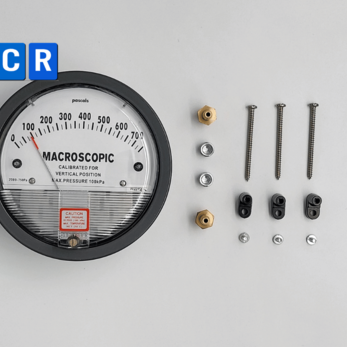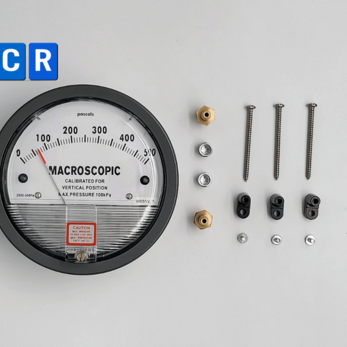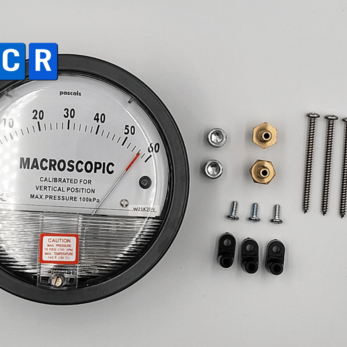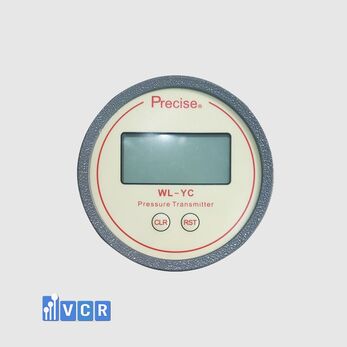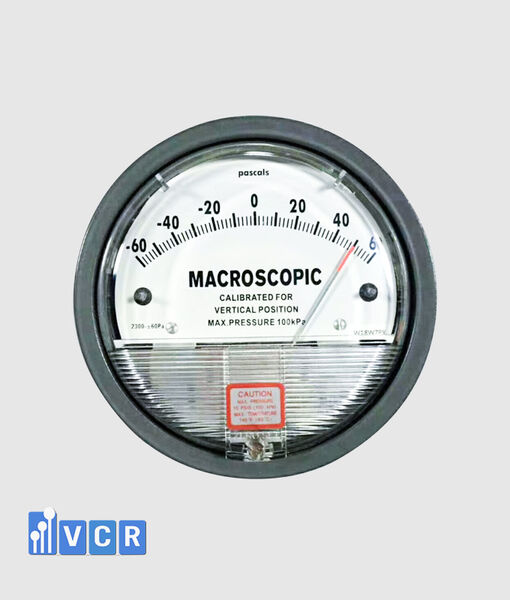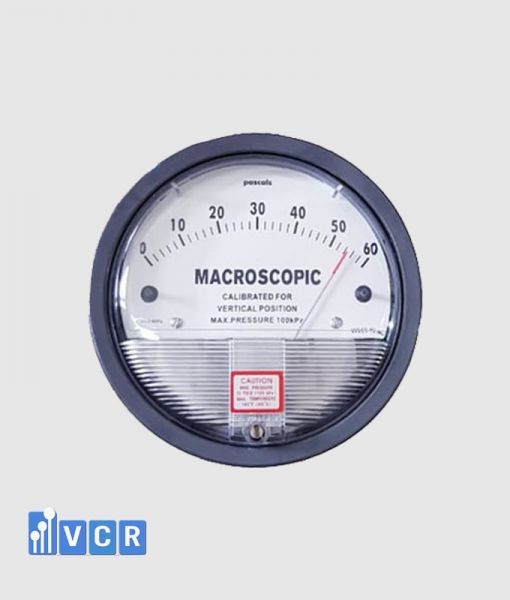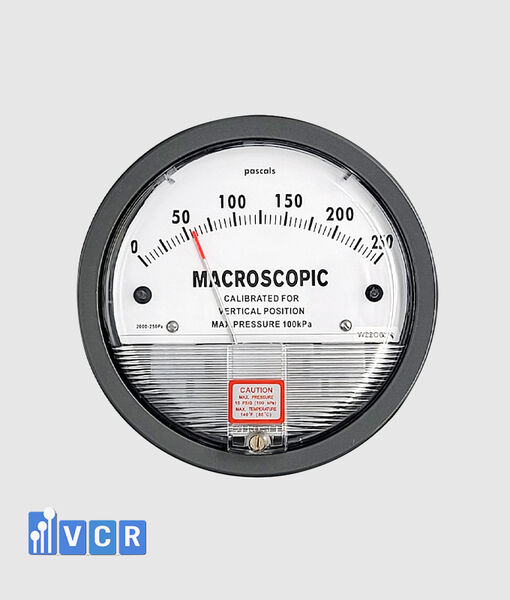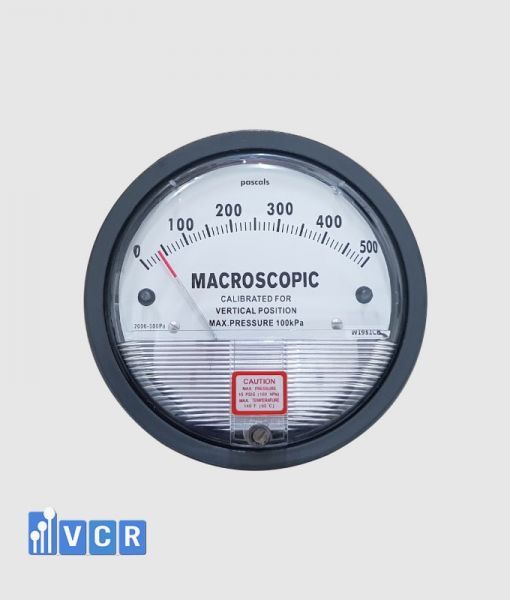

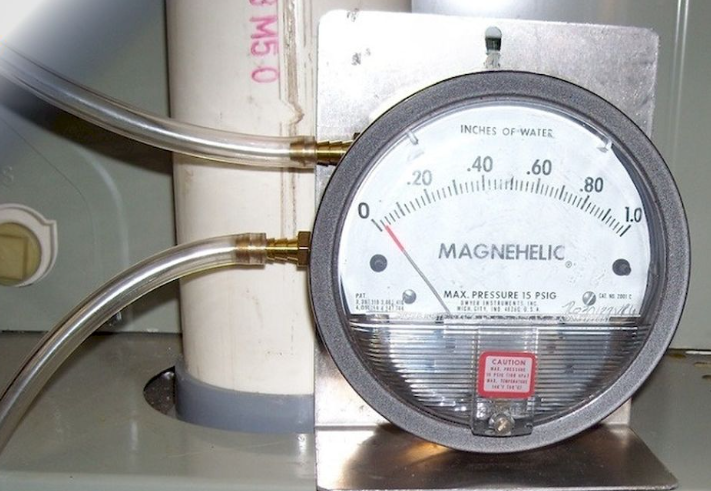
A differential pressure gauge does not always need to connect to a BMS or EMS. Integration depends on area criticality, alarm requirements, continuous monitoring, data retention and the facility’s quality-management strategy.
- Is BMS or EMS integration mandatory?
- What is the difference between BMS and EMS?
- Can a mechanical gauge connect to a BMS or EMS?
- When is local indication sufficient?
- When should BMS integration be used?
- When should EMS integration be used?
- Which measuring points should be prioritised?
- Should 4–20 mA or Modbus be used?
- How should alarms be configured?
- Can differential pressure automatically control fans?
- What are the data requirements for EMS?
- Do gauges and sensors require calibration?
- Is UPS power required?
- Should mechanical and electronic devices be combined?
- Common integration mistakes
- What does integration cost include?
- How should the decision be made?
- Frequently asked questions
- Conclusion
Is BMS or EMS integration mandatory?
A differential pressure gauge does not have to be connected to a BMS or EMS in every application.
A mechanical gauge installed between two rooms may be sufficient when the purpose is only to provide a local visual indication. Similarly, a gauge installed on an AHU, HEPA box, pass box or air shower may only need to show filter pressure drop for periodic maintenance inspection.
However, local indication may not be sufficient when differential pressure directly affects contamination control, product quality, biological safety or the ability to maintain cleanroom conditions.
In these situations, an electronic differential pressure sensor or transmitter should be considered for connection to a BMS, EMS, PLC or central monitoring system.
The decision should be based on risk assessment, the user requirement specification, contamination-control strategy, area criticality and the facility’s data-management requirements.
What is the difference between BMS and EMS?
BMS stands for Building Management System. It commonly monitors and controls technical utilities such as HVAC, temperature, humidity, fans, dampers, electrical systems and chilled water.
In a cleanroom, the BMS may receive differential pressure signals, display room conditions, generate alarms and control fan speed or damper position.
EMS stands for Environmental Monitoring System. It normally focuses on environmental parameters that can affect manufacturing conditions and product quality, including temperature, humidity, differential pressure and airborne particles.
The main distinction is the intended use of the data.
A BMS normally supports facility operation and equipment control. An EMS normally supports environmental monitoring, alarm management, data retention, deviation investigation and audit requirements.
Some facilities maintain separate BMS and EMS platforms. Others combine both functions or exchange data between the systems.
Can a mechanical gauge connect to a BMS or EMS?
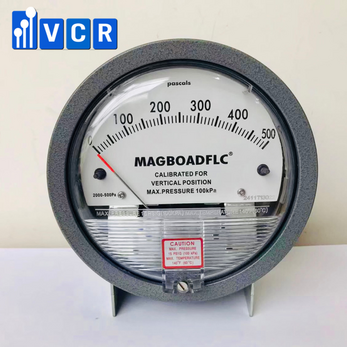
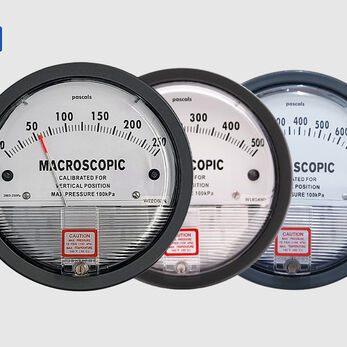
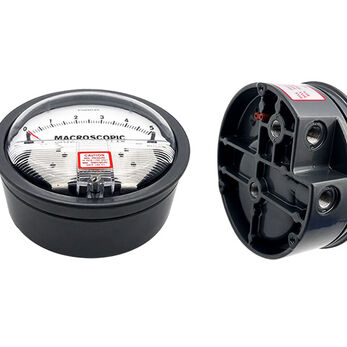
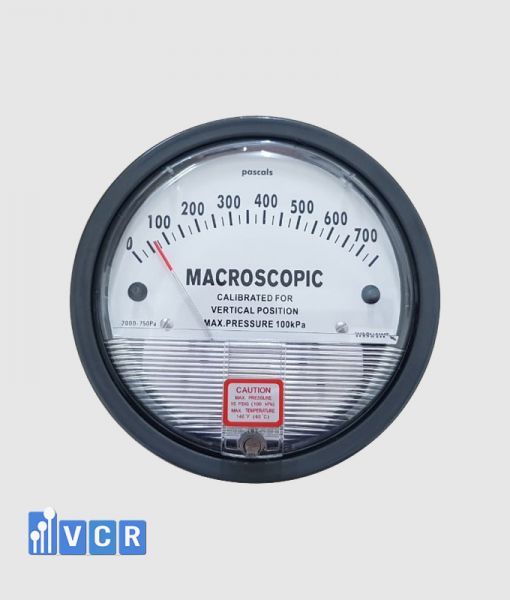
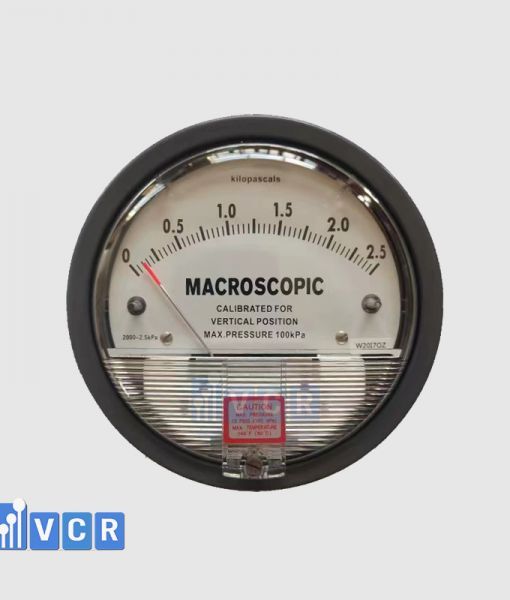
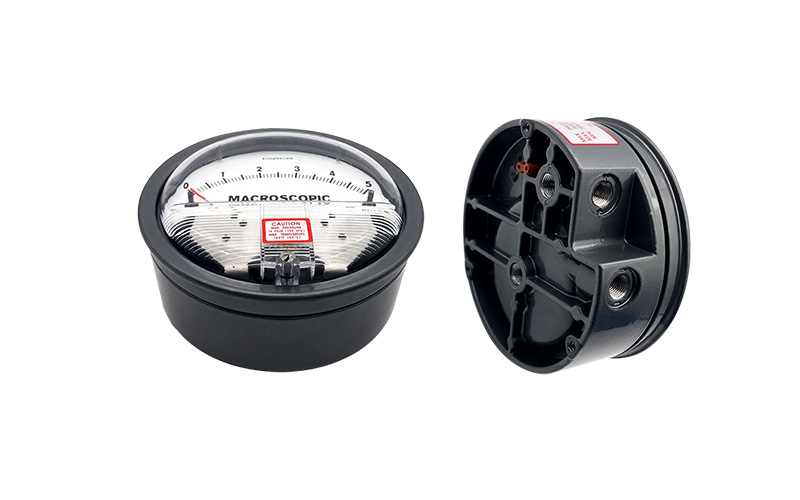
A standard mechanical differential pressure gauge cannot normally connect directly to a BMS or EMS because it only provides an analogue pointer indication.
Data transmission requires one of the following:
-
A separate electronic differential pressure sensor.
-
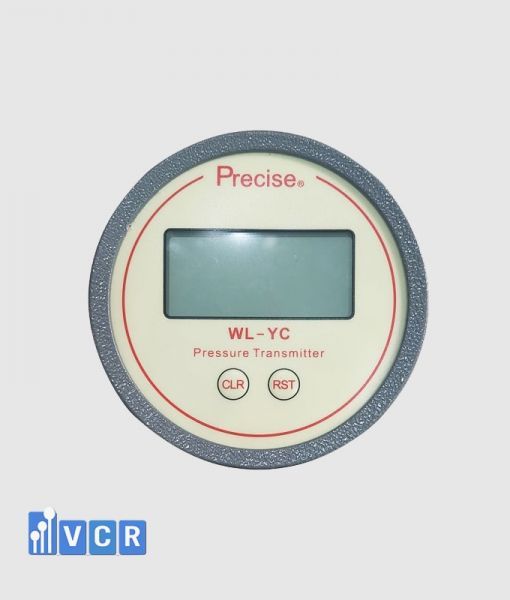
A digital gauge with 4–20 mA or 0–10 V output.
-
A transmitter with RS485 or Modbus communication.
-
A mechanical gauge with an integrated transmitter or electrical contact.
-
A differential pressure switch when only a threshold signal is needed.
Many projects retain a mechanical local gauge and install an electronic transmitter in parallel.
This arrangement provides a visible local reading while also generating alarms and historical data. If the BMS or EMS value becomes abnormal, the mechanical gauge can help determine whether the issue is a real pressure change or a signal and communication fault.
When is local indication sufficient?
Local indication may be adequate when the measurement is not a critical quality parameter and continuous monitoring is unnecessary.
A mechanical gauge on an AHU pre-filter, for example, may be inspected according to a preventive-maintenance schedule. When the pointer approaches the warning zone, maintenance personnel can clean or replace the filter.
A standalone HEPA box or air shower may also use a local gauge when regular inspection is practical and a short-term deviation does not create significant risk.
Local indication is generally suitable when historical data, remote alarms and automatic control are not required, and when personnel can inspect the point at an appropriate frequency.
Even without BMS or EMS integration, the measuring point may still require inspection, calibration and maintenance procedures.
When should BMS integration be used?
BMS integration is useful when differential pressure supports HVAC operation or automatic control.
A sensor can transmit its value to a PLC or BMS. The system may then adjust supply-fan speed, extract-fan speed or damper position to maintain the required pressure.
The BMS may also alarm when room pressure is low, filter resistance is high, a fan is operating without developing pressure, or a door remains open for too long.
Central monitoring is particularly useful in facilities with many rooms, AHUs and filter stages.
However, a BMS does not automatically become a quality-data system simply because it stores measurements. If the data is used for quality decisions or audit evidence, access control, timestamps, change history, backup and data integrity should be evaluated.
When should EMS integration be used?
EMS integration should be considered when differential pressure is a critical environmental parameter requiring continuous records and event traceability.
Typical applications include pharmaceutical cleanrooms, aseptic areas, microbiology rooms, dispensing areas, isolation rooms and negative-pressure spaces.
An EMS can store real-time values, create trend graphs, manage multiple alarm levels, record alarm duration and support deviation investigations.
If pressure falls for several minutes and later recovers, a mechanical gauge inspected after the event provides no evidence of what happened. An EMS preserves the complete event history.
Which measuring points should be prioritised?
Not every gauge in the facility must be connected to a central system.
Priority should be given to pressure differences between areas of different cleanliness levels, between exposed-product areas and corridors, and between containment spaces and adjacent areas.
Filter-pressure-drop points should also be considered when filter loading can directly affect airflow, room pressure, air velocity or critical equipment operation.
Routine maintenance points may remain local-only if the risk is low.
A useful approach is to create a measuring-point schedule defining each point’s purpose, risk, acceptable detection time and data-retention requirement.
Should 4–20 mA or Modbus be used?
The 4–20 mA signal is widely used because it is relatively simple, robust and easy to test.
Four milliamps normally represents the low end of the range, while 20 milliamps represents the high end. The live-zero signal also helps identify certain wiring and power faults.
Modbus can transmit more information over one network, including pressure value, alarm state, units and diagnostics.
It can reduce the number of analogue input modules in large projects, but it requires correct network addressing, baud rate, cabling and termination.
Critical points often use 4–20 mA because troubleshooting is straightforward. Modbus is useful when the facility has the technical capability to maintain the communication network.
How should alarms be configured?
One universal alarm setpoint should not be used for every room or filter.
Room-pressure monitoring may require low and high alarms together with an alarm delay. The delay prevents nuisance alarms during short door-opening events or system start-up.
Filter monitoring may use an early warning and an action limit. The early warning provides time to plan maintenance, while the action limit triggers an approved response.
Hysteresis should also be configured so the alarm does not repeatedly switch on and off near the setpoint.
Alarm messages should identify the exact room or filter and provide a clear response instruction.
Can differential pressure automatically control fans?
Yes, but the control strategy must be designed carefully.
A differential pressure sensor can provide feedback to a PID controller. The PLC or BMS then adjusts the fan variable-frequency drive to maintain room or duct pressure.
This allows the system to compensate for filter loading or changing operating conditions.
The logic should include fan-speed limits, delay, deadband, anti-oscillation control, manual mode, sensor-fault alarms and a defined safe output during signal failure.
A sensor that has not been calibrated or loop-tested should not directly control critical equipment.
What are the data requirements for EMS?
When differential pressure data forms part of the quality system, the facility must consider how the data is managed.
Important elements include the recording interval, timestamp, user access, alarm acknowledgement history, setpoint-change history, backup, retention period, report generation and response to communication loss.
If a BMS only stores temporary values and users can modify or delete them without traceability, the data may not be suitable as a quality record.
Do gauges and sensors require calibration?
Critical differential pressure points should be calibrated according to an approved programme.
Mechanical gauges require zero, multi-point accuracy and return-to-zero checks.
Electronic transmitters require verification of the complete measurement chain, including the applied pressure, sensor output, PLC input, HMI value and stored record.
A local sensor value may be correct while the HMI value is wrong because of incorrect scaling. For this reason, commissioning should verify the complete loop.
Is UPS power required?
If monitoring must continue during a power interruption, the sensor, PLC, communication network, server and alarm devices should be considered for backup power.
Providing UPS power only to the sensor does not maintain the complete monitoring function.
If HVAC stops during a power failure, room pressure may also be lost. The EMS should record the power event and the resulting loss of pressure control.
Backup-power requirements should be determined through risk assessment.
Should mechanical and electronic devices be combined?
Combining both technologies is valuable at many critical points.
The mechanical gauge provides an immediate local reading. The electronic sensor provides alarms, trends and control signals.
A significant difference between the two values helps maintenance personnel investigate the sensor, tubing, scaling or gauge condition.
Both devices should use representative pressure tapping points, appropriate ranges and compatible calibration conditions.
Common integration mistakes
A common mistake is connecting every measuring point without classifying criticality. This increases cost and alarm burden without improving risk control.
Another mistake is choosing an excessively wide sensor range. A 0–1,000 Pa sensor normally provides poor resolution for a room pressure of only a few tens of pascals.
Commissioning only the local sensor display without verifying the HMI and stored value is also inadequate.
Alarm delays may be set too short, causing alarms every time a door opens, or too long, allowing meaningful deviations to continue unnoticed.
Facilities may also incorrectly assume that any value stored in a BMS automatically meets quality-record requirements.
What does integration cost include?
The total cost is more than the price of the differential pressure sensor.
A complete point may include the sensor, local display, 24 VDC power supply, pressure tubing, pressure taps, signal cable, PLC module, control panel, HMI programming, alarm configuration, software licence and loop testing.
An EMS may also require servers, user management, reporting, backup, software qualification and IQ/OQ documentation.
The facility should compare lifecycle cost with the risk being controlled.
How should the decision be made?
Four questions are useful.
What is the impact if pressure moves outside the limit while nobody is observing the local gauge?
Does the facility need to know the exact time, duration and trend of the deviation?
Will the pressure value be used for fan, damper or interlock control?
Will the data support quality investigations, qualification or audits?
If one or more answers are yes, BMS or EMS integration should be seriously considered.
If the point supports routine maintenance only and does not create significant risk, a mechanical local gauge may be sufficient.
Frequently asked questions
Can a BMS replace an EMS?
Not always. A BMS may store pressure data, but its access control, audit trail, backup and data-integrity capability must be evaluated before the data is used as a quality record.
Can a mechanical gauge send an alarm to the BMS?
A basic model cannot. A pressure switch, electronic transmitter or gauge with electrical contacts is required.
Does every GMP cleanroom require an EMS?
No universal answer applies to every room. The requirement depends on area criticality, continuous-monitoring needs and the facility’s risk-based control strategy.
Should HEPA filter pressure drop connect to the BMS?
Local indication may be sufficient for periodic inspection. BMS integration is useful when filter loading can affect critical airflow, velocity or room pressure.
Should BMS or EMS store room differential pressure?
BMS is well suited to HVAC operation. EMS is generally more suitable when the data is managed as an environmental quality record. Some facilities use both.
Should signal loss be interpreted as zero pressure?
No. The system should distinguish a real low-pressure condition from power loss, broken wiring or sensor failure.
Conclusion
A differential pressure gauge does not always need BMS or EMS integration. Mechanical local indication may be sufficient for routine inspection and maintenance points.
When differential pressure affects contamination control, quality, safety or HVAC operation, electronic monitoring provides important benefits through alarms, data retention and event traceability.
BMS is primarily suited to technical operation and HVAC control. EMS is better suited to environmental monitoring and quality-data management. In many facilities, the two systems work together.
The decision should be risk-based. Not every point requires the highest level of integration, but critical rooms should not rely only on an occasional visual inspection.
VCR Cleanroom Equipment supplies mechanical gauges, digital indicators and differential pressure sensors with 4–20 mA, 0–10 V and Modbus outputs for cleanrooms, AHUs, HEPA boxes, pass boxes, air showers, FFUs, laminar airflow units and dispensing booths. VCR also supports range selection, BMS/EMS architecture, alarm configuration, calibration, loop checks and project commissioning.