
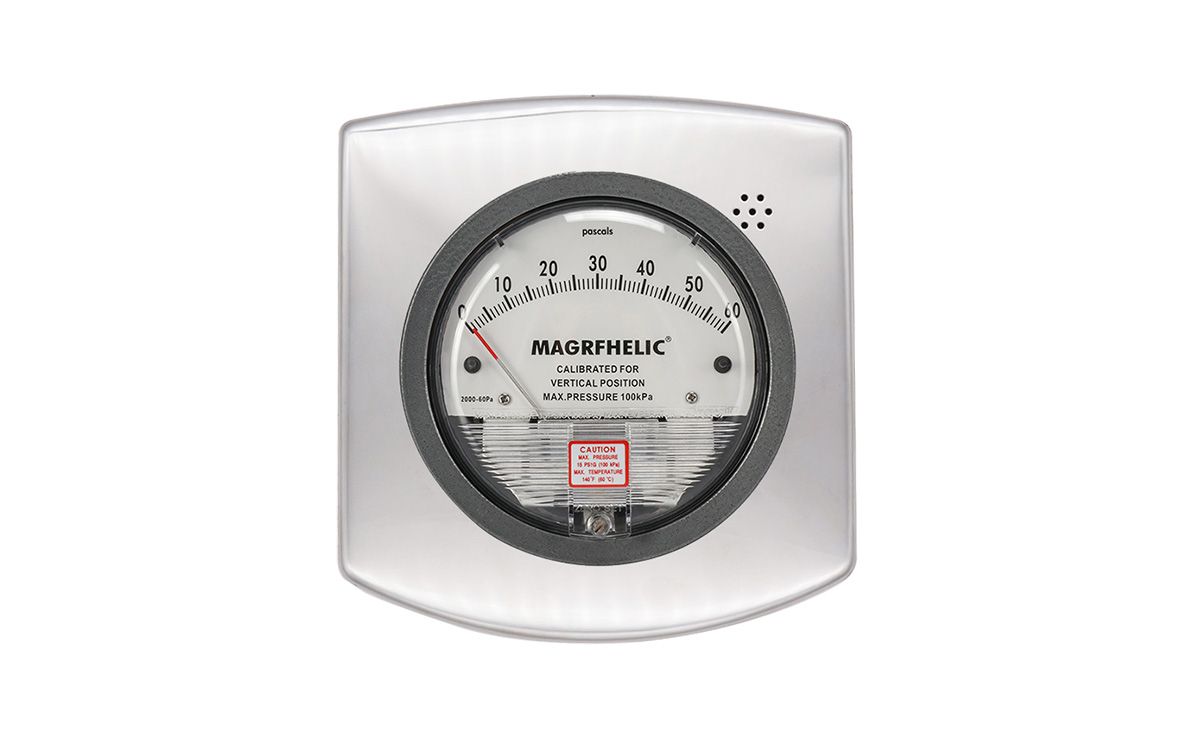
Learn how to choose a differential pressure gauge based on ISO 14644 cleanroom classification to control pressure, airflow, HEPA filtration, and contamination risks.
- How to Choose a Differential Pressure Gauge Based on ISO 14644 Cleanroom Classification
- Why Does ISO 14644 Classification Affect Gauge Selection?
- Choosing a Gauge for ISO 5 Cleanrooms
- Choosing a Gauge for ISO 6 Cleanrooms
- Choosing a Gauge for ISO 7 Cleanrooms
- Choosing a Gauge for ISO 8 Cleanrooms
- Choose the Gauge Based on Measurement Purpose, Not Only ISO Class
- How to Select the Measuring Range Based on ISO 14644
- Mechanical or Electronic Gauges for ISO Cleanrooms?
- Common Mistakes When Choosing Gauges Based on ISO 14644
- Where to Buy Differential Pressure Gauges for ISO 14644 Cleanrooms
- Frequently Asked Questions
- Does ISO 14644 Classification Determine the Gauge Measuring Range?
- What Type of Differential Pressure Gauge Should Be Used for ISO 5 Cleanrooms?
- Can ISO 7 and ISO 8 Cleanrooms Use the Same Gauge?
- Can Room Differential Pressure and HEPA Filter Differential Pressure Use the Same Range?
- Should Mechanical or Electronic Gauges Be Used for ISO 14644 Cleanrooms?
- What Are the Benefits of Buying ISO 14644 Differential Pressure Gauges from VCR?
- Conclusion
How to Choose a Differential Pressure Gauge Based on ISO 14644 Cleanroom Classification
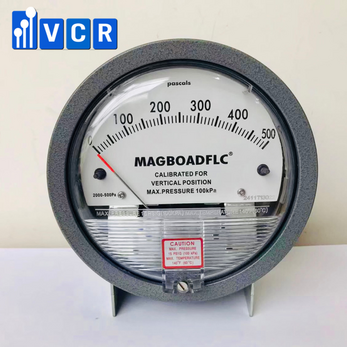
Choosing a differential pressure gauge based on ISO 14644 cleanroom classification should be based on the control purpose of each area, not only on whether the cleanroom is ISO 5, ISO 6, ISO 7, or ISO 8. In cleanrooms, the ISO class indicates the level of airborne particle control, while a differential pressure gauge helps monitor pressure difference between areas, airflow direction, and HVAC system operating status.
Therefore, when selecting a differential pressure gauge, businesses should first determine whether the device is used to measure pressure difference between two rooms, between a cleanroom and a corridor, between an airlock and a production area, or across a HEPA filter. Each measurement purpose requires a different measuring range, pressure tapping position, gauge type, and calibration requirement.
VCR Cleanroom Equipment can advise on suitable differential pressure gauges for ISO 14644 cleanrooms, GMP factories, hospitals, laboratories, pharmaceutical, food, cosmetic, electronics, and semiconductor facilities. Choosing the right gauge helps operators read values clearly, detect abnormalities early, and maintain a more stable controlled environment.
Why Does ISO 14644 Classification Affect Gauge Selection?
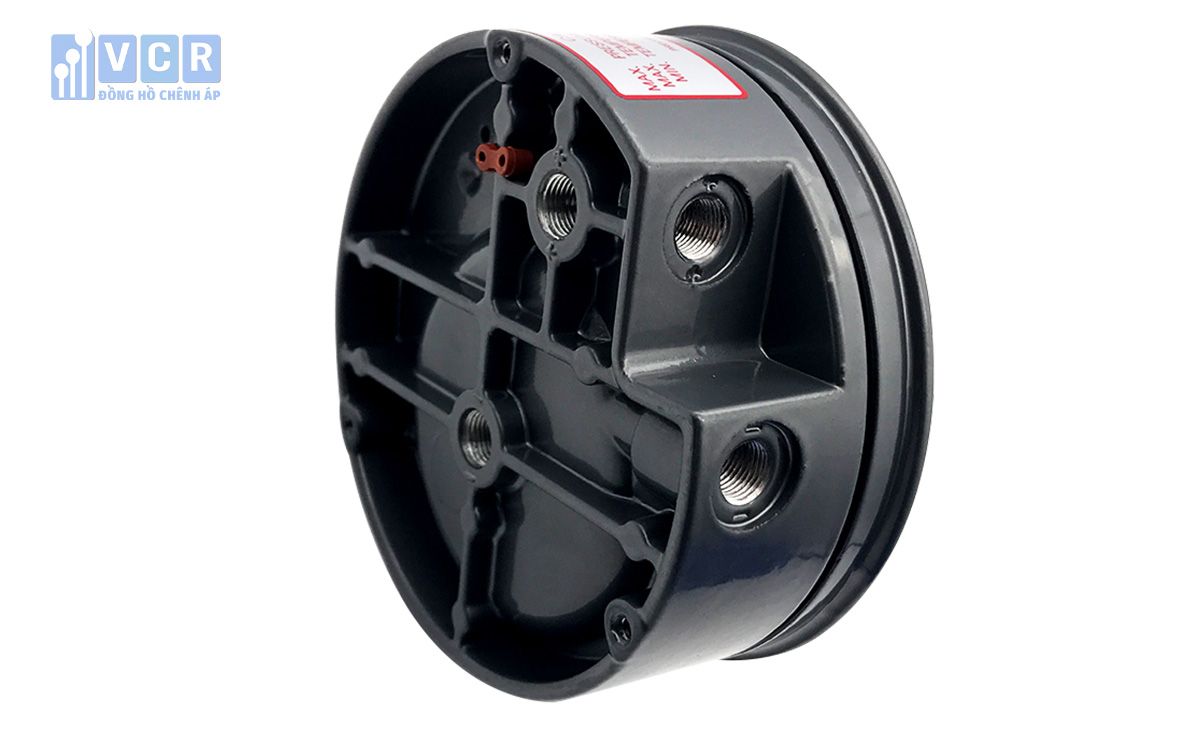
ISO 14644 cleanroom classification affects differential pressure gauge selection because each cleanliness level is usually associated with different environmental control requirements. Higher-grade cleanrooms often require stricter control of airflow, HEPA filtration, room pressure, air change rate, and cross-contamination risk. Therefore, gauges used in these areas should have a suitable measuring range, good sensitivity, and clear readability.
However, it should not be assumed that ISO 5 always uses one fixed measuring range, ISO 7 another fixed range, and ISO 8 another. In practice, the pressure difference to be monitored depends on HVAC design, pressure zoning, product type, contamination risk level, GMP requirements, and the function of each room.
For example, an ISO 7 room used for pharmaceutical production may require stricter pressure control than an ISO 7 support area. A negative pressure area handling potent ingredients, chemicals, or biological agents has different requirements from a positive pressure room designed to protect products. Therefore, the ISO class is only one reference factor; final selection should be based on system design and operational risk.
Choosing a Gauge for ISO 5 Cleanrooms
ISO 5 cleanrooms are usually high-control areas, often found in critical process zones, filling areas, LAF units, RABS, isolators, clean benches, or zones requiring strong product protection. For this class, the differential pressure gauge should be selected for suitable sensitivity, easy observation, and compatibility with the installation location.
If the gauge is used to monitor pressure difference between an ISO 5 area and the surrounding area, the measuring range should be sensitive enough to identify small changes. If the gauge is used to monitor HEPA filters or clean air supply equipment, the measuring range should match filter resistance and designed airflow volume.
For critical ISO 5 areas, businesses may consider electronic differential pressure gauges or sensors if alarms, signal transmission, or continuous monitoring are required. In GMP factories, pressure data in critical areas may need to be recorded for inspection and operational assessment.
Choosing a Gauge for ISO 6 Cleanrooms
ISO 6 cleanrooms are often positioned between highly controlled zones and general clean production areas. When choosing a differential pressure gauge for ISO 6, it is important to consider whether the area serves as a main production room, buffer room, clean corridor, or transition zone between cleanroom classes.
If ISO 6 is used to protect an ISO 5 area, the gauge should support stable pressure monitoring to ensure that airflow moves in the intended direction. If ISO 6 is part of a pharmaceutical, food, cosmetic, or electronics production line, the gauge should have a readable measuring range suitable for contamination control requirements.
For ISO 6 rooms, mechanical gauges may be suitable for on-site observation. However, if the area plays an important role in quality control, a gauge with alarm capability or monitoring system connection may be considered so operators can detect pressure deviation early.
Choosing a Gauge for ISO 7 Cleanrooms
ISO 7 cleanrooms are commonly used in pharmaceutical, food, cosmetic, medical device, electronics, and laboratory applications. Differential pressure gauges for ISO 7 are often used to monitor pressure between production rooms and corridors, between buffer rooms and main rooms, or between cleaner and less clean areas.
When selecting a gauge for ISO 7, the measuring range should be easy to observe within the actual operating range. If the range is too large, operators may find it difficult to detect small changes. If the range is too small, the gauge may exceed its scale when the HVAC system changes or when doors are opened frequently.
In many projects, mechanical gauges are commonly used for ISO 7 because they are easy to read, easy to install, and suitable for on-site monitoring. However, for important GMP areas, raw material handling areas, weighing rooms, formulation rooms, or areas requiring alarms, electronic differential pressure gauges or sensors may be more suitable.
Choosing a Gauge for ISO 8 Cleanrooms
ISO 8 cleanrooms are often used for clean support areas, clean corridors, gowning rooms, buffer rooms, packaging areas, material preparation areas, or certain production areas with moderate control requirements. Differential pressure gauges for ISO 8 should allow operators to monitor stable pressure status between areas.
For ISO 8, the measuring range should match the designed room pressure difference. A range that is too large should not be selected only to use one gauge type across many locations, because this reduces the ability to observe small changes. The gauge should be easy to read, easy to clean, and suitable for cleanroom panels.
In GMP factories, ISO 8 may function as a buffer zone protecting cleaner areas. Therefore, although the particle control requirement may be less strict than ISO 5 or ISO 7, pressure between ISO 8 and surrounding areas still needs to be clearly controlled to maintain clean zoning.
Choose the Gauge Based on Measurement Purpose, Not Only ISO Class
The most important principle is to select the differential pressure gauge based on the measurement purpose. If measuring pressure difference between two rooms, the gauge should have a small, sensitive, and easy-to-read range. If measuring differential pressure across a HEPA filter, the range should match filter resistance. If measuring AHU - Air Handling Unit, FFU - Fan Filter Unit, HEPA Box, Pass Box, or Air Shower, the selection should follow equipment design.
The same ISO 7 class may require different gauges for different measurement purposes. Measuring pressure between an ISO 7 room and a corridor may require a different range from measuring differential pressure across a HEPA filter in a HEPA Box located in the same area. This is why businesses need application-based consulting.
VCR Cleanroom Equipment usually recommends that customers provide information about cleanroom class, installation location, measurement purpose, desired pressure range, room type, equipment type, and documentation requirements to select the gauge more accurately.
How to Select the Measuring Range Based on ISO 14644
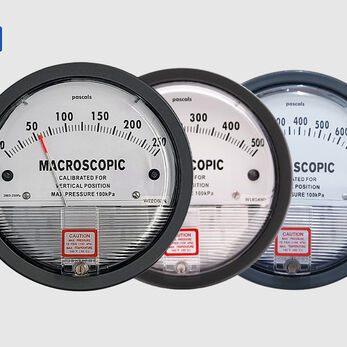
The measuring range of a differential pressure gauge should be selected so the normal operating range falls within an easy-to-read area on the display. If the pointer or value stays too close to the beginning of the scale, operators may find it difficult to monitor changes. If it stays near the end of the scale, the gauge may not have enough reserve when the system changes.
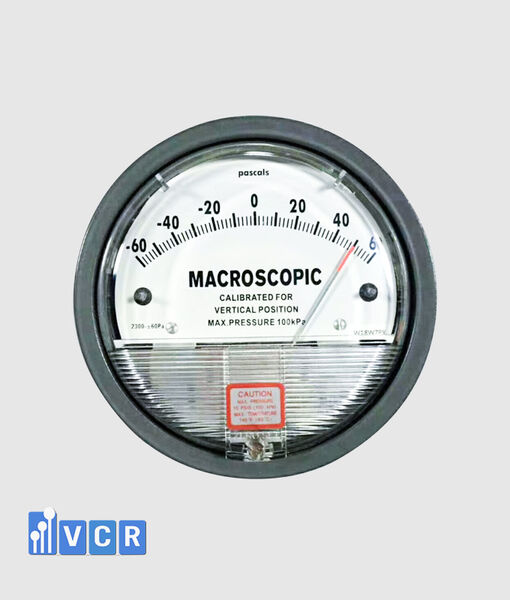
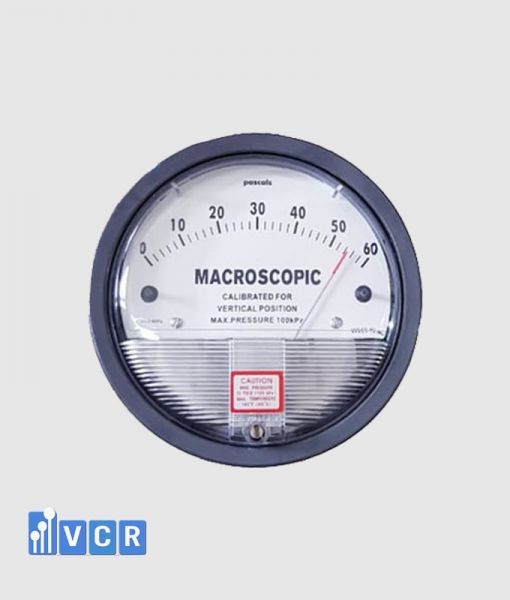
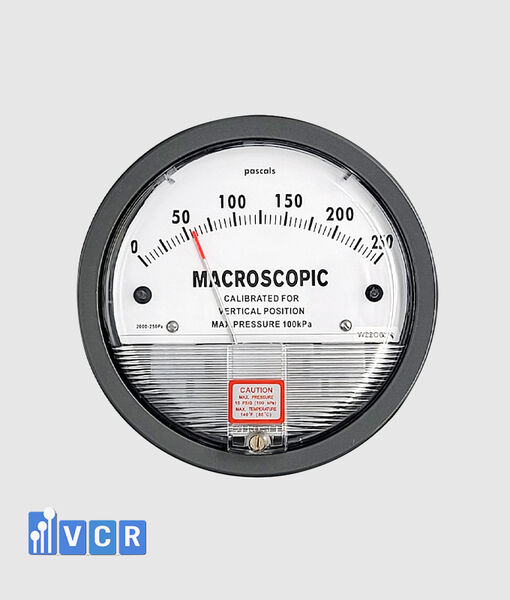
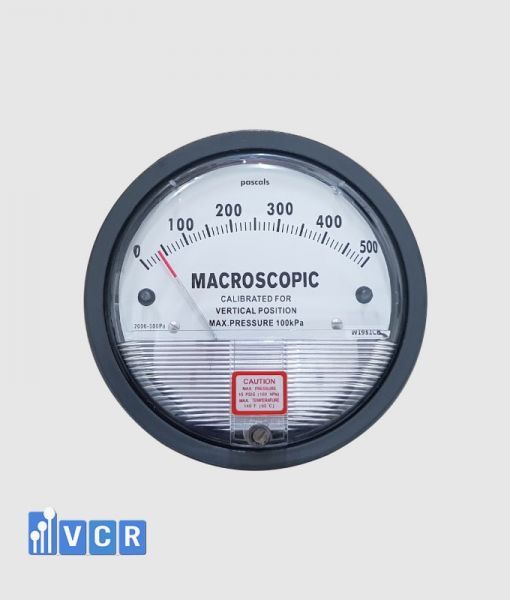
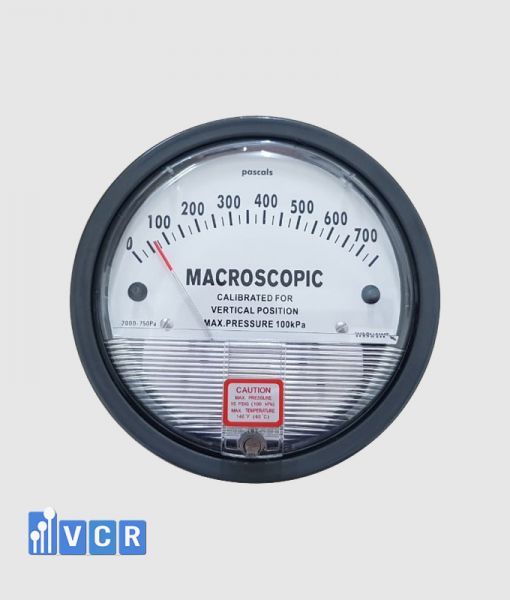
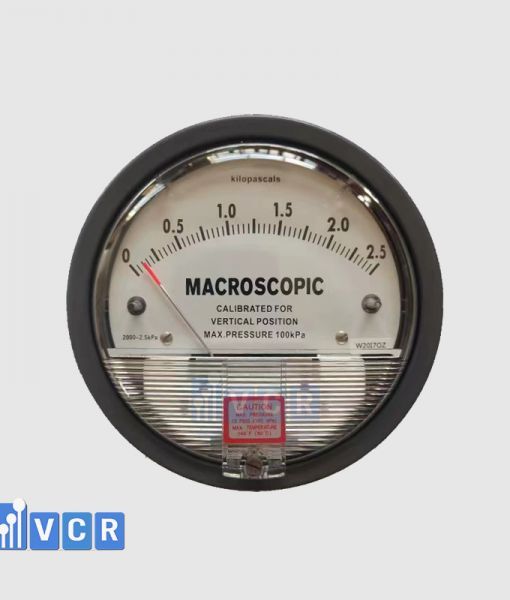
For room pressure monitoring, a smaller and more sensitive measuring range is usually preferred to observe differences between areas. For HEPA filter differential pressure monitoring, the range usually needs to be higher because filter resistance is generally greater than room-to-room pressure difference. For equipment such as Air Showers, HEPA Boxes, FFU - Fan Filter Unit, or AHU - Air Handling Unit, the range should be based on design specifications and system operating conditions.
The measuring range should not be selected only by habit or by using one model for the entire factory. The correct method is to identify the normal operating limit, alert limit, action limit, and reading requirements for each location.
Mechanical or Electronic Gauges for ISO Cleanrooms?
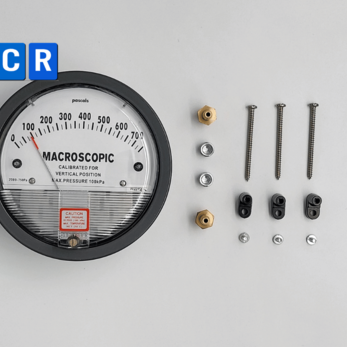
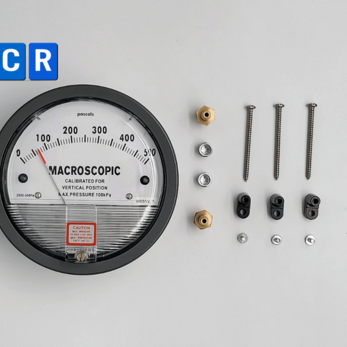
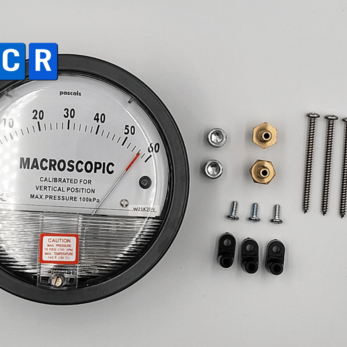
Mechanical gauges are suitable for locations requiring direct on-site observation, simple installation, reasonable cost, and no signal transmission. They are commonly used in many ISO 7, ISO 8, buffer room, airlock, clean corridor, HEPA filter box, or general cleanroom equipment applications.
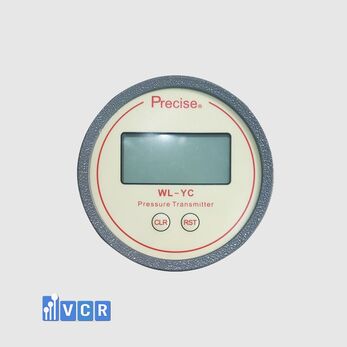
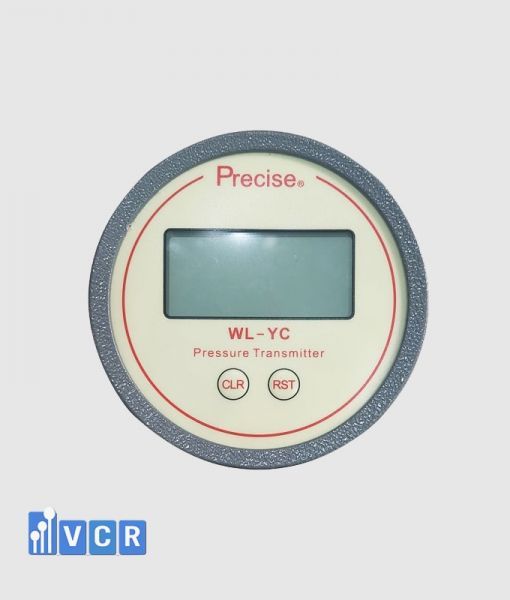
Electronic differential pressure gauges or sensors are suitable for areas requiring alarms, continuous monitoring, data transmission, BMS, EMS, or cleanroom monitoring system connection. They are often more suitable for ISO 5, ISO 6, critical GMP areas, sterile rooms, filling areas, or areas requiring data traceability.
The choice between mechanical and electronic gauges does not depend only on ISO class. It depends on the criticality of the area, monitoring requirements, budget, quality documentation needs, and the risk if pressure exceeds limits.
Common Mistakes When Choosing Gauges Based on ISO 14644
The first mistake is choosing the gauge only based on cleanroom class without considering the measurement purpose. ISO 7 does not automatically determine the measuring range, gauge type, or pressure tapping position. The function of the area, designed pressure, and operational risk must be considered.
The second mistake is using one measuring range for all locations. Room pressure monitoring, HEPA filter monitoring, AHU - Air Handling Unit, FFU - Fan Filter Unit, Pass Box, Air Shower, and HEPA Box applications are different. If the same range is used everywhere, the gauge may be difficult to read or unsuitable.
The third mistake is installing pressure tapping points incorrectly. Pressure tapping points should avoid doors, air diffusers, direct airflow, or disturbed pressure zones. If the tapping point is incorrect, the reading may fluctuate or fail to reflect actual pressure.
The fourth mistake is ignoring calibration and documentation. For GMP cleanrooms or critical areas, gauges should be checked periodically, calibrated when necessary, and supported with suitable records for quality assessment.
Where to Buy Differential Pressure Gauges for ISO 14644 Cleanrooms
When purchasing differential pressure gauges for ISO 14644 cleanrooms, businesses should choose a cleanroom equipment specialist for application-based consulting. Correct selection is not based only on ISO class, but also on measurement purpose, measuring range, installation position, room type, HVAC system, HEPA filtration, and operating requirements.
VCR Cleanroom Equipment can advise on differential pressure gauges for ISO 5, ISO 6, ISO 7, ISO 8 cleanrooms, GMP factories, hospitals, laboratories, pharmaceutical, food, cosmetic, electronics, and semiconductor facilities. VCR also supports gauge selection for HEPA filter boxes, AHU - Air Handling Unit, FFU - Fan Filter Unit, Pass Boxes, Air Showers, Clean Booths, Dispensing Booths, and Weighing Booths.
When requesting consultation, businesses should provide the cleanroom class, installation location, measurement purpose, designed pressure difference, equipment type, calibration requirement, alarm requirement, and documentation needs. From there, VCR Cleanroom Equipment can recommend a more suitable gauge for each application point.
Frequently Asked Questions
Does ISO 14644 Classification Determine the Gauge Measuring Range?
Not entirely. ISO 14644 classification is a reference factor, but the measuring range of a differential pressure gauge should be based on measurement purpose, HVAC design, pressure zoning, and operating requirements of each area. An ISO 7 room pressure measurement requires a different range from a HEPA Box located inside an ISO 7 room. Therefore, the gauge should be selected according to the actual application.
What Type of Differential Pressure Gauge Should Be Used for ISO 5 Cleanrooms?
ISO 5 cleanrooms are usually critical areas, so the differential pressure gauge should have suitable sensitivity, clear readability, and stable performance. If only local reading is required, a high-quality mechanical gauge may be used. If alarms, signal transmission, or continuous monitoring are required, an electronic gauge or differential pressure sensor should be considered. VCR Cleanroom Equipment can advise based on each specific ISO 5 location.
Can ISO 7 and ISO 8 Cleanrooms Use the Same Gauge?
The same gauge series may be used in some cases, but the same measuring range should not be assumed for both ISO 7 and ISO 8. Each area has a different designed pressure difference, function, and installation location. If the same range is used incorrectly, readings may be difficult to interpret or operationally meaningless. Selection should be based on pressure design and actual measurement purpose.
Can Room Differential Pressure and HEPA Filter Differential Pressure Use the Same Range?
They should not be assumed to use the same range. Room differential pressure monitoring usually needs a smaller and more sensitive range to track differences between two areas. HEPA filter differential pressure monitoring requires a range suitable for filter resistance, which may be higher than room pressure measurement. Choosing the wrong range can make the gauge difficult to read or unreliable for operation.
Should Mechanical or Electronic Gauges Be Used for ISO 14644 Cleanrooms?
Mechanical gauges are suitable for local observation, reasonable cost, and applications that do not require signal transmission. Electronic gauges are suitable for areas requiring alarms, continuous monitoring, data logging, or connection to BMS and EMS systems. The choice should not depend only on ISO class, but also on area criticality, operating requirements, and quality documentation needs.
What Are the Benefits of Buying ISO 14644 Differential Pressure Gauges from VCR?
When buying from VCR Cleanroom Equipment, customers receive advice based on cleanroom class, installation position, measurement purpose, pressure range, and actual operating requirements. VCR can support gauge selection for ISO 5, ISO 6, ISO 7, ISO 8 cleanrooms, GMP factories, HEPA filter boxes, AHU - Air Handling Unit, FFU - Fan Filter Unit, Pass Boxes, Air Showers, and many other cleanroom devices.
Conclusion
Choosing a differential pressure gauge based on ISO 14644 cleanroom classification should not rely only on the class name. Measurement purpose, HVAC design, pressure zoning, HEPA filtration, installation position, and area risk level must all be considered. Selecting the right gauge helps cleanrooms operate more stably, improve monitoring, and support cross-contamination control.
If your business needs differential pressure gauges for ISO 5, ISO 6, ISO 7, ISO 8 cleanrooms, GMP factories, or cleanroom equipment, contact VCR Cleanroom Equipment for support in selecting the right solution for actual operating needs.