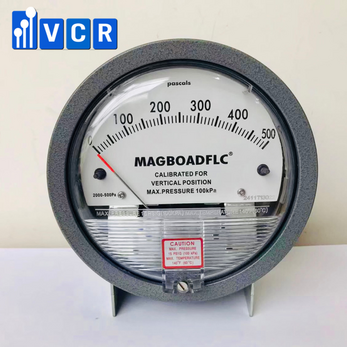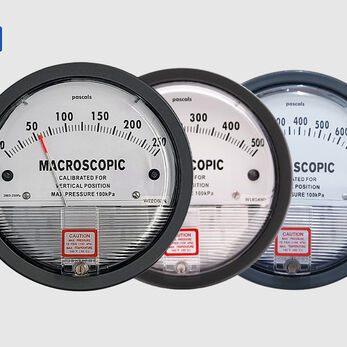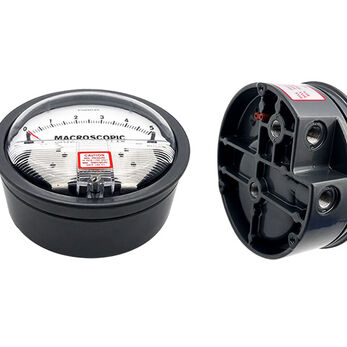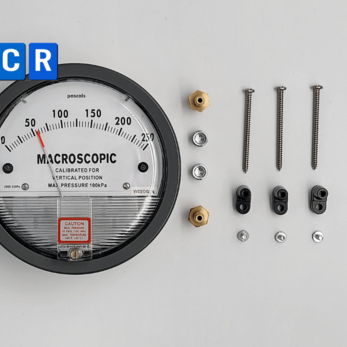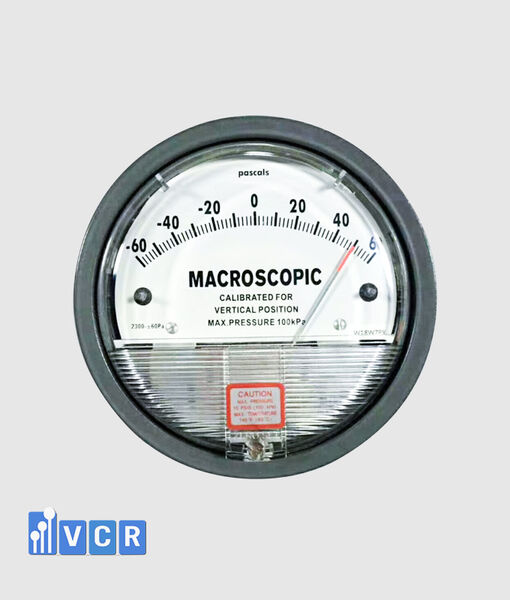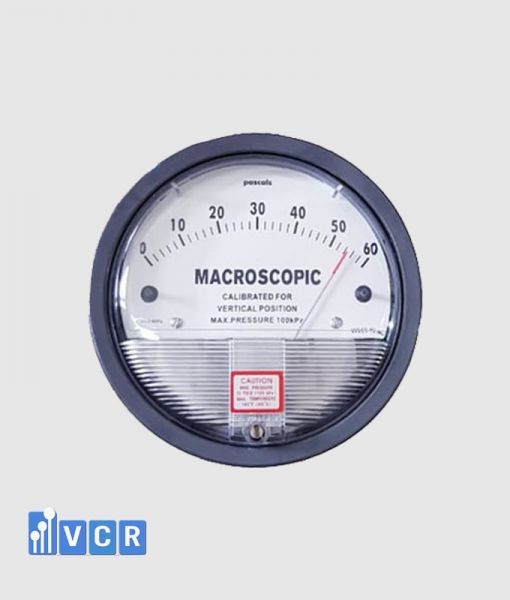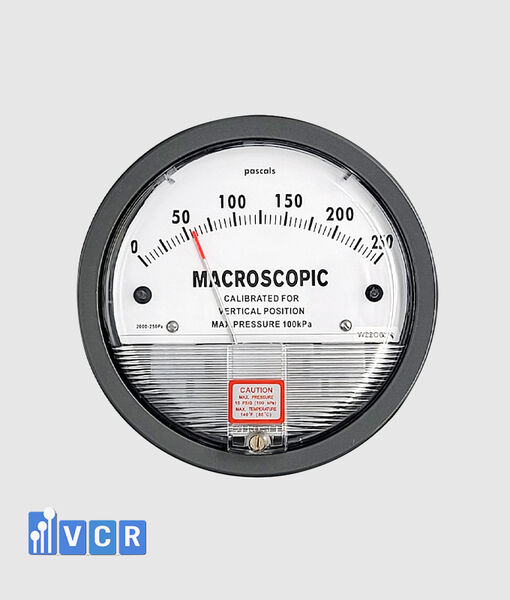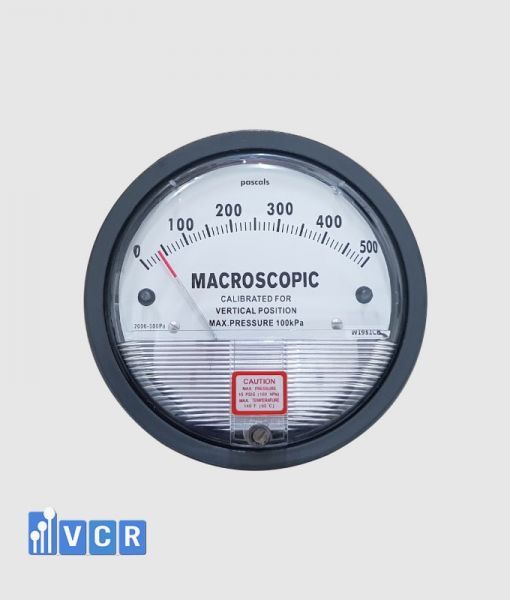

A differential pressure gauge installed on an FFU - Fan Filter Unit helps monitor HEPA filtration, control clean airflow, and maintain cleanroom operating efficiency.
- What Is a Differential Pressure Gauge Installed on an FFU - Fan Filter Unit?
- Why Does an FFU - Fan Filter Unit Need a Differential Pressure Gauge?
- The Role of FFU - Fan Filter Unit in Cleanroom Systems
- Why Does an FFU - Fan Filter Unit Need Differential Pressure Control?
- Where Is a Differential Pressure Gauge Installed on an FFU - Fan Filter Unit?
- Applications of Differential Pressure Gauges on FFU - Fan Filter Unit
- Suitable Types of Differential Pressure Gauges for FFU - Fan Filter Unit
- How to Choose a Differential Pressure Gauge Installed on an FFU - Fan Filter Unit
- Common Mistakes When Choosing and Installing Differential Pressure Gauges for FFU - Fan Filter Unit
- When Should a Differential Pressure Gauge on an FFU - Fan Filter Unit Be Calibrated or Replaced?
- Where to Buy Differential Pressure Gauges Installed on FFU - Fan Filter Unit
- Frequently Asked Questions About Differential Pressure Gauges Installed on FFU - Fan Filter Unit
- Does an FFU - Fan Filter Unit Need a Differential Pressure Gauge?
- Where Does a Differential Pressure Gauge on an FFU - Fan Filter Unit Usually Measure?
- What Does High Differential Pressure Across an FFU - Fan Filter Unit Mean?
- Is Abnormally Low Differential Pressure on an FFU - Fan Filter Unit a Good Sign?
- Should a Mechanical or Electronic Gauge Be Used for FFU - Fan Filter Unit?
- When Should a HEPA or ULPA Filter on an FFU - Fan Filter Unit Be Replaced Based on Differential Pressure?
- What Are the Benefits of Buying a Differential Pressure Gauge Installed on FFU - Fan Filter Unit from VCR?
- Conclusion
What Is a Differential Pressure Gauge Installed on an FFU - Fan Filter Unit?
A differential pressure gauge installed on an FFU - Fan Filter Unit is a device used to monitor pressure differences at important points within the Fan Filter Unit, especially the differential pressure across the HEPA or ULPA filter. The device helps operators identify airflow resistance, evaluate the dust loading level of the filter, and control the effectiveness of clean air supply into the cleanroom.
An FFU - Fan Filter Unit is an air filtration device that integrates a fan and a high-efficiency filter. It is commonly installed on the cleanroom ceiling to supply clean air directly to production areas, laboratories, work zones, or process lines that require particle control. When the FFU - Fan Filter Unit operates, air is drawn through the filter stages by the fan and pushed through the HEPA or ULPA filter before entering the clean space.
During operation, the filter on the FFU - Fan Filter Unit gradually accumulates dust and creates greater resistance to airflow. A differential pressure gauge helps monitor this change visually. As a result, the technical team can detect early signs of clogged filters, reduced fan performance, abnormal airflow, or other issues that may affect the cleanliness level of the room.
Why Does an FFU - Fan Filter Unit Need a Differential Pressure Gauge?
An FFU - Fan Filter Unit needs a differential pressure gauge to monitor differential pressure across the HEPA or ULPA filter during operation. When differential pressure rises, the filter may be loaded with dust or clogged. When differential pressure is abnormally low, the fan, filter, sealing gasket, airflow, or pressure tapping point should be checked to ensure stable clean air supply from the FFU - Fan Filter Unit.
The Role of FFU - Fan Filter Unit in Cleanroom Systems
An FFU - Fan Filter Unit is one of the key clean air supply devices in many modern cleanroom systems. Instead of depending entirely on a central AHU and duct system, FFU - Fan Filter Unit equipment allows local clean air supply to individual areas, ceiling modules, or production zones that require separate control. This makes the system more flexible, especially in electronics, semiconductor, pharmaceutical, medical device, biotechnology, and laboratory cleanrooms.
A typical FFU - Fan Filter Unit includes a housing, fan, motor, speed controller, pre-filter if available, and a HEPA or ULPA filter. When operating stably, the FFU - Fan Filter Unit generates downward clean airflow into the working space, contributing to cleanliness level maintenance, reduction of airborne particles, and airflow control inside the room.
However, FFU - Fan Filter Unit performance depends heavily on the condition of the filter and fan. If the filter becomes clogged, airflow decreases. If the fan is weak or the speed setting is unsuitable, air velocity and air change rate may fail to meet requirements. Therefore, a differential pressure gauge installed on the FFU - Fan Filter Unit gives operators an important indicator for monitoring equipment condition during use.
Why Does an FFU - Fan Filter Unit Need Differential Pressure Control?
Differential pressure across the FFU - Fan Filter Unit filter reflects the airflow resistance as air passes through the HEPA or ULPA filter. When the filter is still clean, differential pressure usually remains within the initial operating range. Over time, dust and airborne particles accumulate on the filter, increasing resistance and causing the differential pressure reading to change. This is an important sign for evaluating filter condition without frequently opening or dismantling the FFU - Fan Filter Unit.
If differential pressure rises, the FFU - Fan Filter Unit may have to work harder to maintain airflow. In many cases, the air supplied down into the cleanroom will decrease, affecting air change rate, airflow distribution, dust control capability, and cleanliness stability. In electronics, semiconductor, or pharmaceutical production areas, this reduction may directly affect product quality.
Conversely, abnormally low differential pressure is not always a good sign. Very low differential pressure may be related to improper filter installation, leakage through the filter frame, poor gasket sealing, weak fan operation, insufficient airflow, or incorrect pressure tapping points. Therefore, a differential pressure gauge helps operators identify both excessive filter resistance and insufficient pressure generation through the filter.
Where Is a Differential Pressure Gauge Installed on an FFU - Fan Filter Unit?
A differential pressure gauge installed on an FFU - Fan Filter Unit is usually positioned where observation, inspection, and maintenance are convenient. Depending on the system design, the gauge may be installed directly on the FFU - Fan Filter Unit body, in the technical ceiling area, on the control cabinet, or on a monitoring panel near the FFU - Fan Filter Unit group. In cleanrooms with many FFU - Fan Filter Unit units, a reasonable observation position helps the technical team inspect equipment more quickly.
The most important point is the location of the pressure tapping points. If the purpose is to measure differential pressure across the HEPA or ULPA filter, one pressure port should be placed before the filter, where air has not yet passed through the filter, and the other port should be placed after the filter, where air has been filtered and supplied down into the cleanroom. This pressure tapping method reflects the actual resistance of the filter during operation.
In some systems, the gauge may also be used to monitor pressure inside the FFU - Fan Filter Unit chamber, plenum pressure, or pressure between the FFU - Fan Filter Unit and the cleanroom space. Each measurement purpose requires a different installation method. If the pressure tapping points are installed incorrectly, the displayed reading may not reflect the true filter condition or airflow, leading to incorrect evaluation during maintenance and operation.
Applications of Differential Pressure Gauges on FFU - Fan Filter Unit
The first application is monitoring the condition of the HEPA or ULPA filter. This is the most common application when installing a differential pressure gauge on an FFU - Fan Filter Unit. As the filter gradually accumulates dust, resistance increases and the differential pressure reading changes. The technical team can use this trend to plan inspections, clean the pre-filter area if available, or replace the filter when needed.
The second application is supporting clean airflow maintenance. An FFU - Fan Filter Unit supplies air directly into the cleanroom, so any change in the filter or fan can affect the amount of supplied air. When differential pressure is abnormal, air velocity, airflow rate, fan speed, and filter condition should be checked further to ensure that the system still meets operating requirements.
The third application is detecting risks after filter replacement or FFU - Fan Filter Unit maintenance. After replacing a HEPA or ULPA filter, the differential pressure reading can help provide a preliminary check of installation condition. If differential pressure is too low or too high compared with expectations, the gasket, filter frame, filter installation direction, sealing condition, and fan operation should be checked.
The fourth application is supporting the management of multiple FFU - Fan Filter Unit units in the same cleanroom. In electronics or semiconductor cleanrooms, or production areas with many FFU - Fan Filter Unit units installed on the ceiling, monitoring differential pressure helps the technical team identify which device shows abnormal signs. This supports proactive maintenance and reduces the risk that certain areas in the cleanroom may not achieve the required airflow.
Suitable Types of Differential Pressure Gauges for FFU - Fan Filter Unit
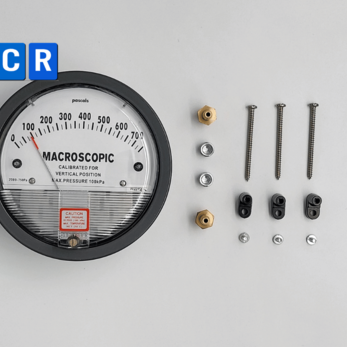
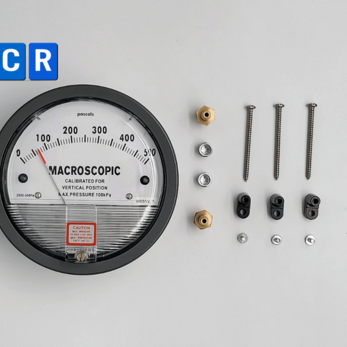
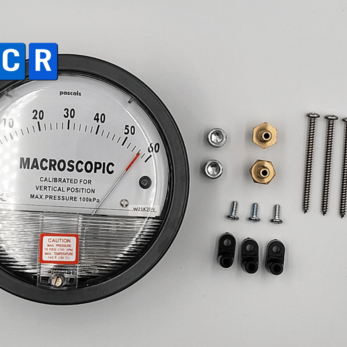
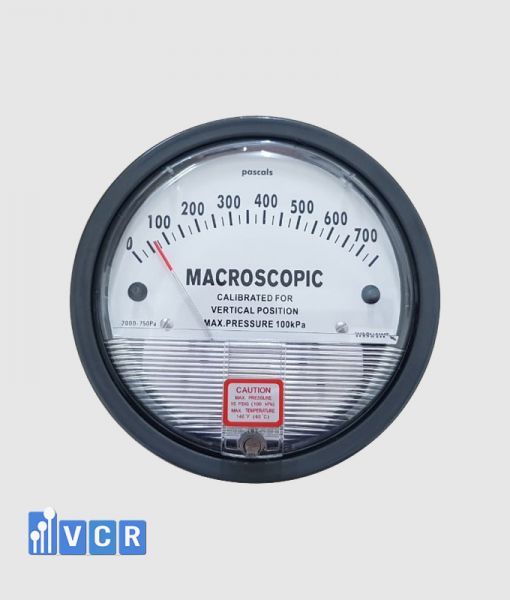
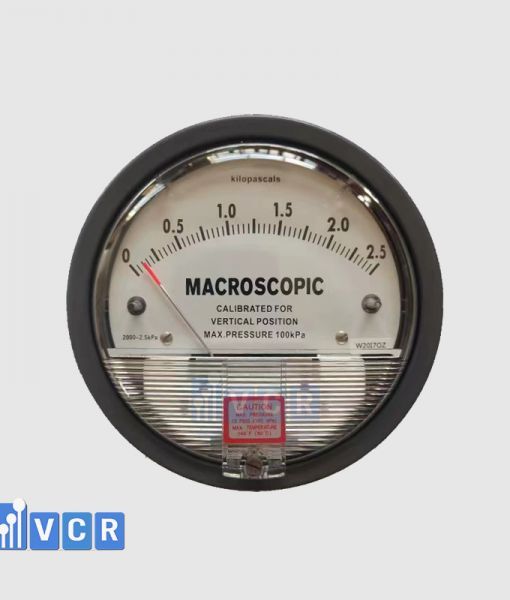
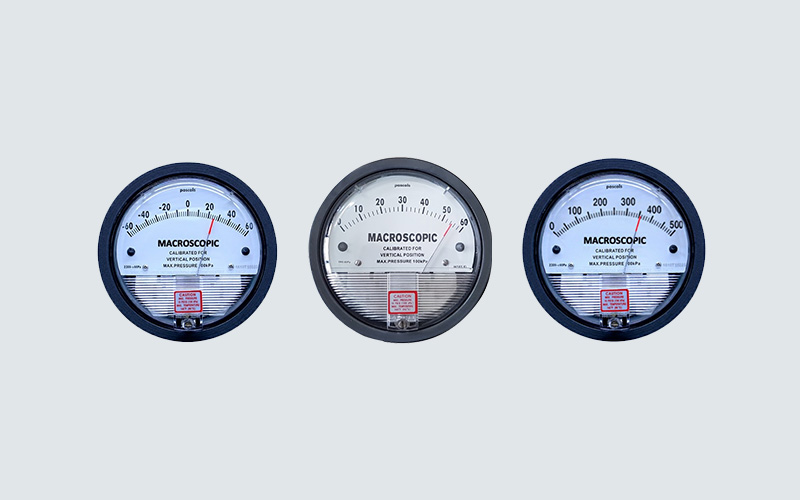
Mechanical differential pressure gauges are suitable when direct on-site display is required. This type is easy to observe, easy to install, does not require power for basic display functions, and is commonly used to monitor differential pressure across HEPA or ULPA filters. For independently operated FFU - Fan Filter Unit systems or systems that require periodic manual checks, a mechanical gauge is a simple and effective solution.
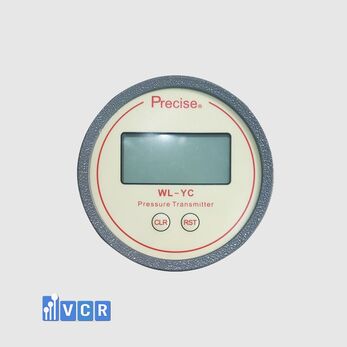
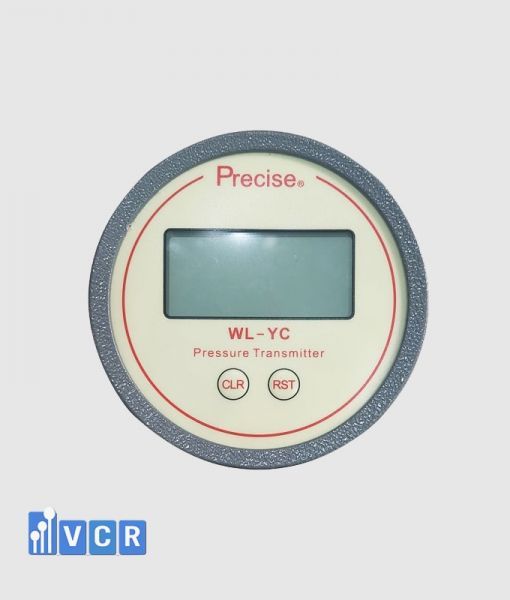
Electronic differential pressure gauges are suitable for FFU - Fan Filter Unit systems that require data monitoring, alarms, or connection to a control cabinet, BMS, EMS, or cleanroom management system. This type is often used in projects with high control requirements, many FFU - Fan Filter Unit units, or the need to record operating status over time.
Differential pressure gauges with alarm contacts can be used at important locations. When differential pressure exceeds or falls below the set threshold, the device can send an alarm signal so the technical team can check it promptly. This option is suitable for pharmaceutical cleanrooms, precision electronics, semiconductor production, medical device manufacturing, or areas where operational risks must be minimized.
The choice of gauge type should be based on the purpose of use. If only on-site reading is required, a mechanical gauge may be sufficient. If automatic alarms, signal transmission, or management of multiple FFU - Fan Filter Unit units at the same time is needed, an electronic type or a gauge with signal output should be considered.
How to Choose a Differential Pressure Gauge Installed on an FFU - Fan Filter Unit
The first criterion is the measuring range. The range must match the actual differential pressure across the FFU - Fan Filter Unit filter. If the range is too large, small filter changes will be difficult to observe. If the range is too small, the gauge may exceed its scale when the filter becomes loaded with dust or when the system operates under higher-than-normal conditions.
The second criterion is the measurement purpose. It is necessary to clearly determine whether the gauge is used to measure differential pressure across the HEPA filter, ULPA filter, FFU - Fan Filter Unit chamber, plenum, or supply air area. Each measurement purpose requires a different arrangement of pressure tapping points. Correctly defining the purpose ensures that the displayed value has practical operating value.
The third criterion is readability and maintainability. FFU - Fan Filter Unit equipment is usually installed on the ceiling, so the gauge should be placed where technical personnel can conveniently read the value. If the gauge is installed in a hard-to-access location, periodic inspection becomes inconvenient and may be neglected. For systems with many FFU - Fan Filter Unit units, centralized display solutions or electronic gauges with signal transmission may be considered.
The fourth criterion is compatibility with cleanroom environments. The gauge should have a compact design, be easy to clean, be securely installed, have stable pressure tubing, and not create dust accumulation risks or affect the clean ceiling structure. For GMP factories or cleanrooms requiring equipment documentation, certificates, inspection capability, and calibration should be considered.
Common Mistakes When Choosing and Installing Differential Pressure Gauges for FFU - Fan Filter Unit
The most common mistake is choosing an unsuitable measuring range. Many companies select gauges based on familiar models without comparing them with the designed differential pressure of the HEPA or ULPA filter on the FFU - Fan Filter Unit. This reduces monitoring value because the reading may be too small to observe or may quickly exceed the scale when the filter becomes loaded with dust.
The second mistake is installing pressure tapping points incorrectly. If the goal is to measure differential pressure across the filter but the tapping points are not located correctly before and after the filter, the displayed reading will not reflect the true filter condition. Operators may then incorrectly judge whether the filter is still good, clogged, or whether the air system is abnormal.
The third mistake is not checking the pressure tubing. Bent, clogged, loose, leaking, or excessively long pressure tubing can cause the pressure signal reaching the gauge to be inaccurate. For ceiling-mounted FFU - Fan Filter Unit equipment, pressure tubing should be neatly fixed, correctly routed, and easy to check during maintenance.
The fourth mistake is monitoring only differential pressure while ignoring airflow. Differential pressure is an important indicator, but it does not fully replace checks of air velocity, airflow rate, and cleanliness level. When evaluating an FFU - Fan Filter Unit, differential pressure should be considered together with fan condition, air velocity, particle test results, and actual operating requirements.
The fifth mistake is choosing only based on price. A differential pressure gauge installed on an FFU - Fan Filter Unit is directly related to air filtration control and cleanroom operation. Therefore, stability, readability, documentation, calibration capability, and technical consulting should be considered instead of selecting only the lowest-cost product.
When Should a Differential Pressure Gauge on an FFU - Fan Filter Unit Be Calibrated or Replaced?
A differential pressure gauge on an FFU - Fan Filter Unit should be checked when the pointer does not return to zero, the reading fluctuates abnormally, the gauge face is damaged, the device has been impacted, the pressure tubing is loose, or the displayed result does not match the actual operating condition. These are signs that inspection, calibration, or replacement may be needed.
In facilities with GMP, ISO, or strict quality management requirements, differential pressure gauges may be included in the list of measuring devices requiring periodic control. Calibration frequency depends on internal regulations, the importance of the installation area, and the audit requirements of each facility.
In addition to the gauge, the HEPA or ULPA filter, sealing gasket, filter frame, fan, speed controller, pressure tubing, and airflow rate should also be checked. In many cases, abnormal differential pressure readings are not caused by the gauge itself, but by dust-loaded filters, reduced fan performance, poorly sealed filter installation, or pressure tubing problems.
Where to Buy Differential Pressure Gauges Installed on FFU - Fan Filter Unit
When purchasing a differential pressure gauge installed on an FFU - Fan Filter Unit, businesses should choose a supplier that understands cleanroom equipment, air filtration systems, FFU - Fan Filter Unit equipment, and HVAC operating requirements. Selecting the right gauge should be based on the FFU - Fan Filter Unit type, filter type, measurement purpose, pressure range, installation position, alarm requirements, and actual operating conditions.
VCR Cleanroom Equipment can advise on selecting suitable differential pressure gauges for FFU - Fan Filter Unit equipment, HEPA filter boxes, AHUs, Air Showers, Pass Boxes, weighing LAF, and related cleanroom systems. For each application, VCR helps customers determine the correct gauge type, measuring range, installation method, and operating requirements to reduce the risk of selecting the wrong device.
If a business needs a differential pressure gauge for FFU - Fan Filter Unit equipment in pharmaceutical, food, cosmetic, electronics, semiconductor, biotechnology, or laboratory facilities, it should provide information about the FFU - Fan Filter Unit type, filter type, measurement position, measurement purpose, desired pressure range, and alarm requirements if any. From there, VCR Cleanroom Equipment can propose a more suitable solution for long-term operation.
Frequently Asked Questions About Differential Pressure Gauges Installed on FFU - Fan Filter Unit
Does an FFU - Fan Filter Unit Need a Differential Pressure Gauge?
An FFU - Fan Filter Unit should be equipped with a differential pressure gauge, especially when monitoring the condition of HEPA or ULPA filters in cleanroom systems is required. The gauge helps identify changes in filter resistance, supports the detection of dust-loaded filters, clogged filters, or airflow abnormalities. For pharmaceutical, electronics, semiconductor, or laboratory cleanrooms, VCR Cleanroom Equipment can recommend a suitable gauge based on FFU - Fan Filter Unit structure and operating requirements.
Where Does a Differential Pressure Gauge on an FFU - Fan Filter Unit Usually Measure?
A differential pressure gauge on an FFU - Fan Filter Unit usually measures the pressure difference between the upstream and downstream sides of the HEPA or ULPA filter. One pressure port is placed on the unfiltered air side, while the other is placed on the filtered air side or the clean air supply side facing the room. This installation method helps monitor filter resistance during operation. If the pressure tapping point is unclear, businesses should consult VCR Cleanroom Equipment to avoid incorrect installation and inaccurate readings.
What Does High Differential Pressure Across an FFU - Fan Filter Unit Mean?
High differential pressure across an FFU - Fan Filter Unit usually indicates that the HEPA or ULPA filter is accumulating more dust, airflow resistance is increasing, or the air path is obstructed. This condition may reduce the airflow supplied into the cleanroom, affecting cleanliness level and dust control performance. When the reading rises abnormally, the filter, fan, air velocity, and pressure tubing should be checked. VCR Cleanroom Equipment can support suitable inspection recommendations.
Is Abnormally Low Differential Pressure on an FFU - Fan Filter Unit a Good Sign?
Abnormally low differential pressure is not necessarily a good sign. It may be related to improper filter installation, leakage through the filter frame, poor gasket sealing, weak fan performance, low airflow, or incorrect pressure tapping points. If not checked, the FFU - Fan Filter Unit may not supply enough clean air or air may not pass properly through the filter. For areas with high control requirements, the entire FFU - Fan Filter Unit should be checked when differential pressure is abnormally low.
Should a Mechanical or Electronic Gauge Be Used for FFU - Fan Filter Unit?
If only on-site differential pressure observation is required, a mechanical differential pressure gauge is suitable because it is easy to read, easy to install, and cost-effective. If the system requires alarms, signal transmission, or monitoring of multiple FFU - Fan Filter Unit units at the same time, an electronic gauge will be more suitable. For cleanrooms requiring data management or operating alarms, VCR Cleanroom Equipment can advise on the gauge type based on measuring range, installation position, and purpose of use.
When Should a HEPA or ULPA Filter on an FFU - Fan Filter Unit Be Replaced Based on Differential Pressure?
Filters should not be replaced only based on guesswork or service time. When differential pressure rises above the allowable limit, airflow decreases, air velocity fails to meet requirements, or cleanroom test results become unstable, the filter should be inspected and replacement should be considered. A differential pressure gauge helps monitor filter dust-loading trends, while the decision to replace the filter should be combined with design requirements, operating conditions, and actual inspection results.
What Are the Benefits of Buying a Differential Pressure Gauge Installed on FFU - Fan Filter Unit from VCR?
When purchasing from VCR Cleanroom Equipment, customers receive advice based on the actual FFU - Fan Filter Unit application rather than simply choosing a generic gauge model. VCR can support determination of the measuring range, gauge type, pressure tapping position, alarm requirements, and compatibility with HEPA filters, ULPA filters, or cleanroom systems. This helps businesses reduce the risk of choosing the wrong device, installing the wrong measuring point, and operating FFU - Fan Filter Unit equipment unstably.
Conclusion
A differential pressure gauge installed on an FFU - Fan Filter Unit is an important device for monitoring HEPA or ULPA filter condition, controlling clean airflow, and supporting cleanroom operating efficiency. When selected and installed correctly, it helps the technical team detect abnormalities early, plan maintenance properly, and reduce the risk of cleanliness degradation during production.
To select the right differential pressure gauge for an FFU - Fan Filter Unit, businesses should consider the measuring range, measurement purpose, pressure tapping position, filter type, alarm requirements, calibration capability, and the facility’s operating standards. If you need advice on suitable equipment for FFU - Fan Filter Unit or cleanroom systems, contact VCR Cleanroom Equipment for support in choosing the right solution for your actual needs.