
Differential air pressure gauges help factories in Yen Phong Industrial Park monitor room pressure, filter resistance, and HVAC performance. Selecting the correct measuring range, output signal, installation method, and calibration documents is essential for reliable operation and project acceptance.
- Demand for differential pressure gauges in Yen Phong Industrial Park
- What is a differential air pressure gauge?
- Types of differential pressure instruments
- Selecting the correct measuring range
- Criteria for selecting a reliable supplier
- Common installation errors
- Solutions provided by Vietnam Cleanroom Equipment
- Frequently asked questions
- Contact a differential pressure gauge supplier in Yen Phong
Demand for differential pressure gauges in Yen Phong Industrial Park
Yen Phong Industrial Park is one of the major industrial zones in Northern Vietnam. It offers convenient connections to Hanoi, Noi Bai International Airport, and important regional transportation routes. The industrial park has attracted significant foreign investment, particularly from technology and industrial manufacturing corporations.
Factories manufacturing electronics, components, medical devices, pharmaceuticals, food products, and precision equipment often need controlled air pressure to reduce particulate contamination, prevent cross-contamination, and maintain stable production conditions.
A differential air pressure gauge measures and displays the pressure difference between two spaces or two sides of an air filter. Typical applications include:
-
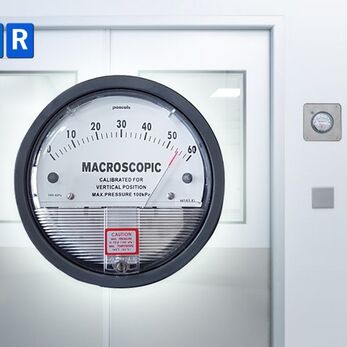
Monitoring pressure between a cleanroom and a corridor.
-
Monitoring rooms with different cleanliness classifications.
-
Checking the pressure difference between production rooms and airlocks.
-
Monitoring the resistance of HEPA filters and HVAC filters.
-
Measuring pressure in dispensing booths, laminar airflow units, pass boxes, and safety enclosures.
-
Confirming the operating condition of ventilation and air-conditioning systems.
What is a differential air pressure gauge?
A differential air pressure gauge measures the difference between two pressure points. In a cleanroom application, one pressure port is normally connected to the monitored room, while the other is connected to a reference room or atmospheric pressure.
Differential pressure is commonly displayed in Pa or mmH₂O. A positive pressure reading indicates that air tends to flow from the cleaner room toward an adjacent area with a lower pressure. Negative-pressure rooms are used when dust, hazardous substances, or airborne contaminants must be contained within a controlled space.
The gauge does not generate room pressure. It only measures the pressure difference created by the supply air, return air, exhaust air, room leakage, and airflow control system. When the pressure reading is outside the specified range, the inspection should include fans, filters, dampers, doors, pressure tubing, and room airtightness.
Types of differential pressure instruments
Mechanical differential pressure gauges
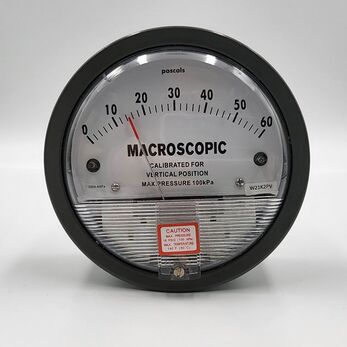
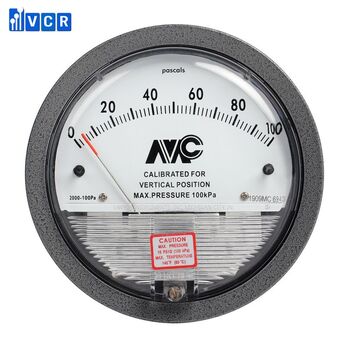
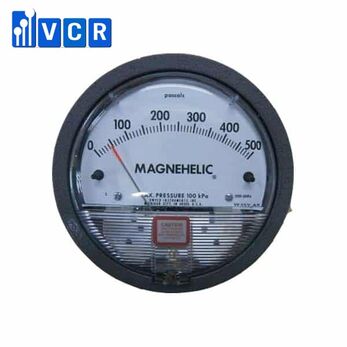
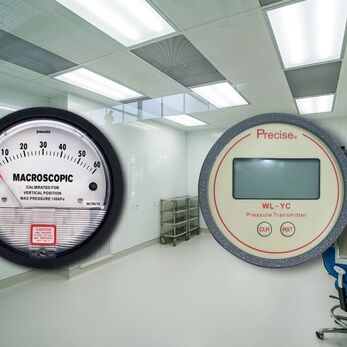
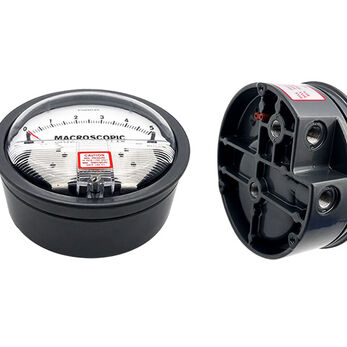
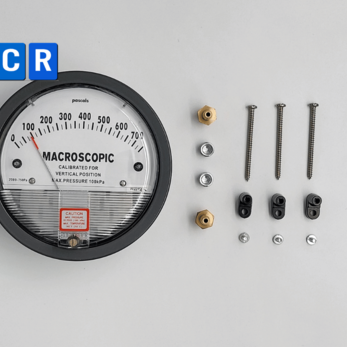
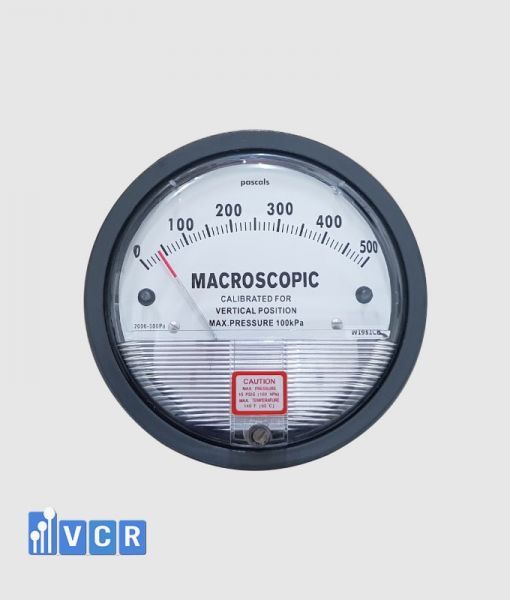
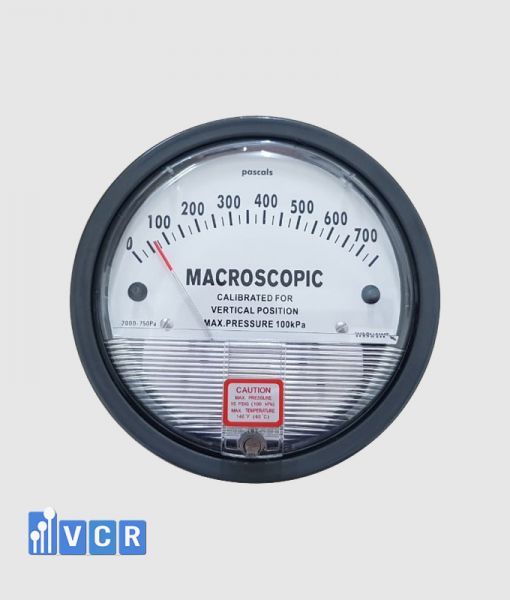
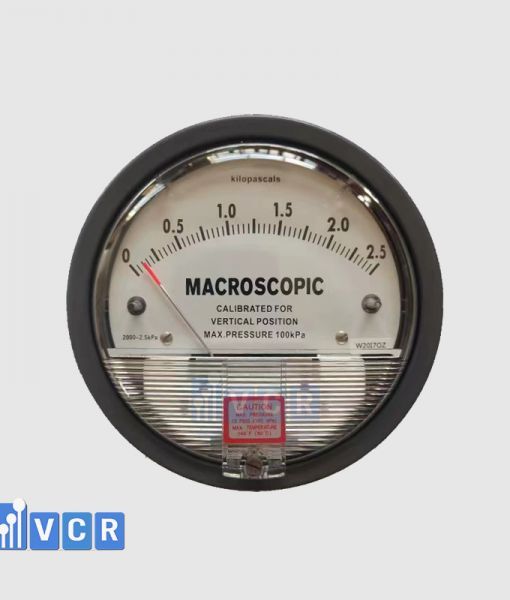
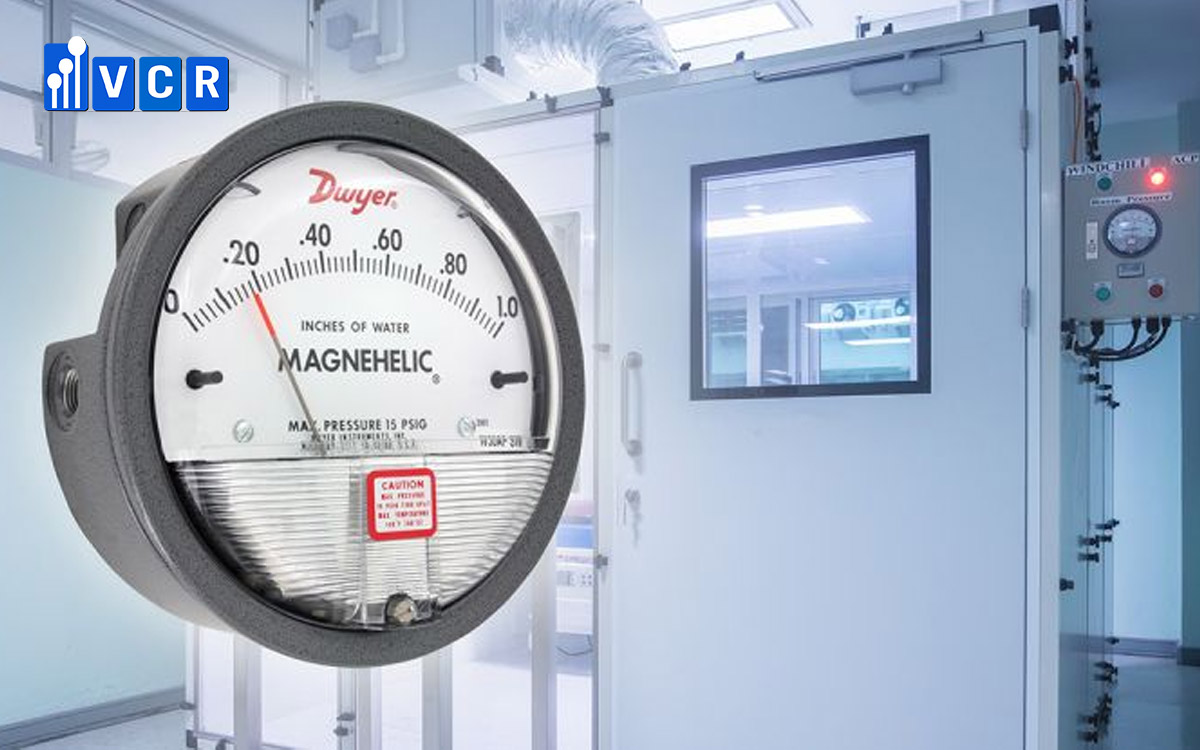
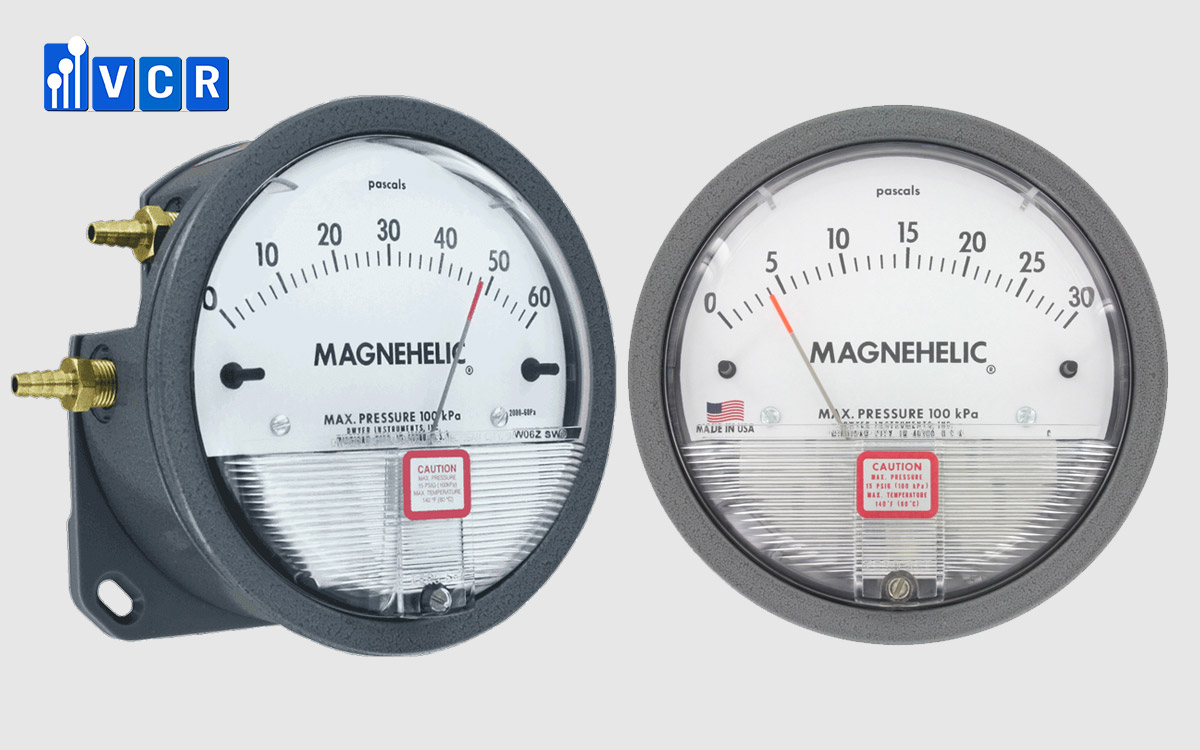
A mechanical gauge provides an easy-to-read dial indication and normally requires no electrical power. It is widely used for room pressure monitoring, filter condition indication, and cleanroom equipment.
Its main advantages are simple operation, durability, and convenient local observation. However, a standard mechanical gauge does not normally transmit measurement data to a central monitoring system.
Digital differential pressure gauges
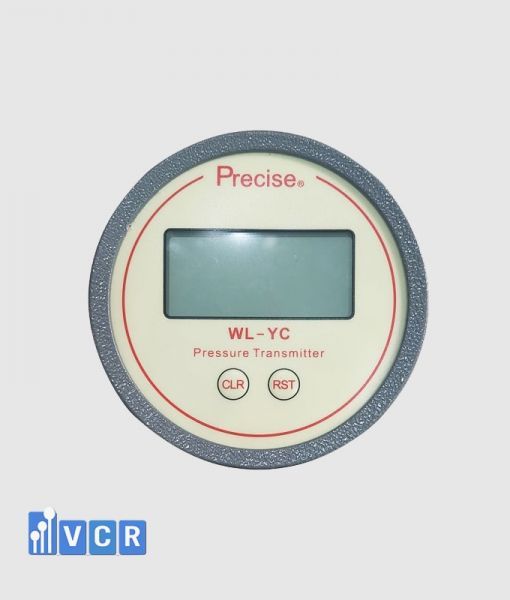
A digital gauge displays the measured value on a screen. Depending on the configuration, it may provide alarm contacts, a 4–20 mA output, a 0–10 V output, or a digital communication interface.
Digital models are suitable for factories that need continuous monitoring, alarm management, data recording, or integration with a building management system, environmental monitoring system, or programmable controller.
Differential pressure transmitters
A pressure transmitter converts the measured pressure difference into an electrical signal. Some models have no local display and are designed mainly for connection to a control panel, programmable controller, or central monitoring platform.
Where both local indication and remote data collection are required, a digital differential pressure gauge with an integrated transmitter output can be selected.
Selecting the correct measuring range
The measuring range strongly influences readability and measurement performance. A range that is excessively wide makes small pressure changes difficult to observe. A range that is too narrow may be exceeded when the HVAC system fluctuates.
Common ranges considered for factory and cleanroom applications include:
-
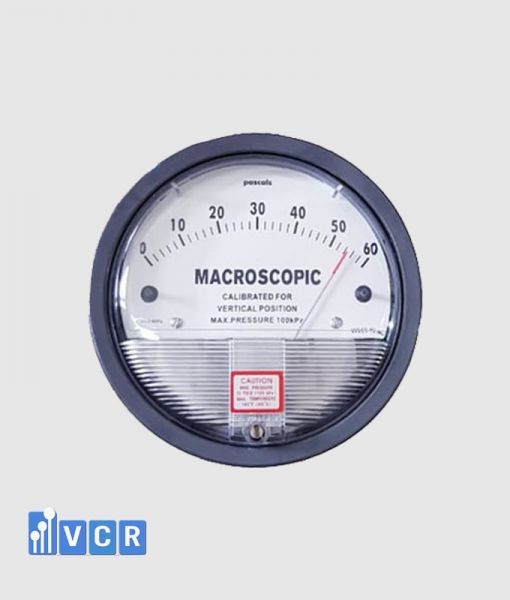
0–60 Pa or 0–100 Pa for room pressure monitoring.
-
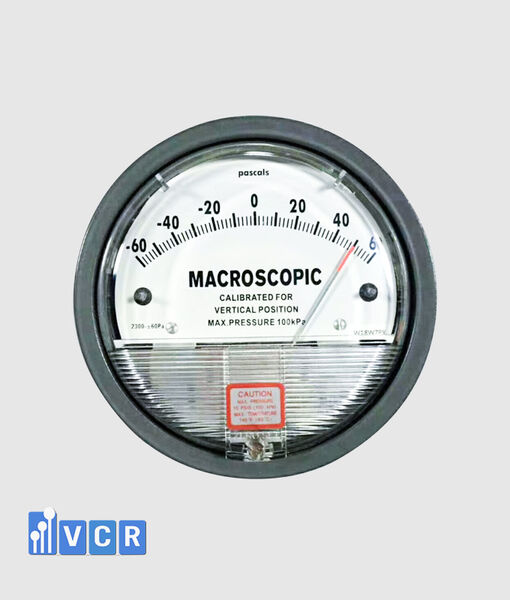
0–125 Pa or ±125 Pa where both positive and negative pressure must be observed.
-
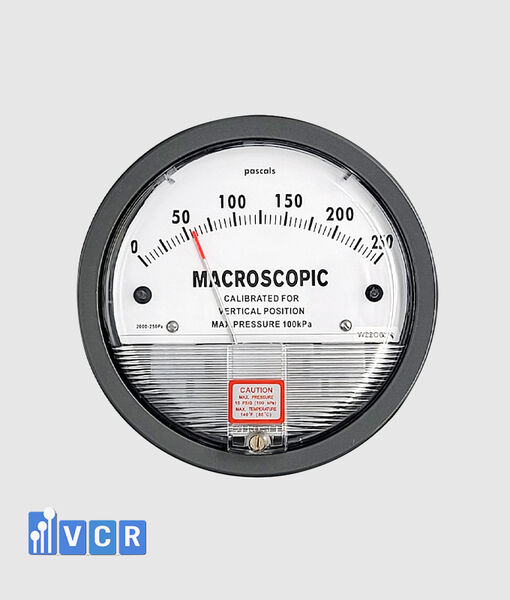
0–250 Pa for cleanrooms, airlocks, or equipment with higher pressure differences.
-
0–500 Pa, 0–750 Pa, or higher ranges for filter and air-handling system monitoring.
The final selection should be based on the designed operating pressure, alarm limits, required accuracy, and application. A gauge should not be selected only because a particular model is readily available.
Criteria for selecting a reliable supplier
A qualified supplier should do more than deliver the requested model. The supplier must understand whether the instrument will monitor room pressure, filter resistance, equipment pressure, or a signal connected to the factory control system.
Application-based technical advice
The supplier should understand the relationship between differential pressure, airflow direction, room classification, and contamination control. This helps prevent incorrect range selection, reversed pressure connections, and the use of a filter gauge in an application requiring precise room pressure monitoring.
Clear technical specifications
The technical documentation should clearly state the measuring range, engineering unit, accuracy, overpressure limit, operating conditions, mounting method, dimensions, and available output signals.
For digital gauges and transmitters, the power supply, response time, alarm functions, wiring diagram, and communication protocol should also be confirmed.
Documentation for project acceptance
Depending on project requirements, the documentation package may include:
-
Product catalogue and technical datasheet.
-
Installation and operating instructions.
-
Certificate of origin.
-
Certificate of quality or factory inspection report.
-
Calibration certificate.
-
Wiring and connection diagrams.
A manufacturer’s quality certificate is not the same as an instrument-specific calibration certificate. For critical measuring points, the calibration document should identify the instrument, calibration range, test points, measurement error, measurement uncertainty, and traceability information.
After-sales technical support
A competent supplier should assist with issues such as a pointer not returning to zero, unstable readings, reversed indication, damaged tubing, blocked pressure ports, and differences between the installed gauge and the reference instrument.
Common installation errors
Even a high-quality gauge may provide incorrect readings when it is installed improperly. Common problems include reversed high- and low-pressure ports, bent or leaking tubing, pressure taps installed near frequently opened doors, failure to perform zero adjustment, and mounting the instrument in a high-vibration location.
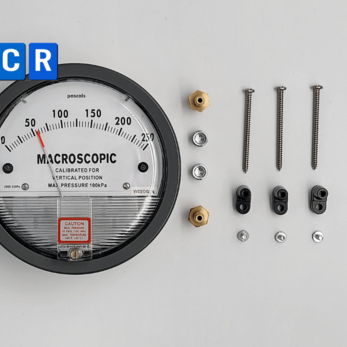
Mechanical gauges should be mounted in the orientation specified by the manufacturer. Before connecting the pressure tubes, the zero position should be checked under equal pressure conditions.
When a gauge monitors a HEPA filter, its two pressure ports must be connected upstream and downstream of the filter. When it monitors room pressure, the pressure points must represent the two spaces being compared.
During commissioning, the installed gauge should be checked against a suitable reference instrument. Alarm setpoints and transmitted signals should also be verified where applicable.
Solutions provided by Vietnam Cleanroom Equipment
Vietnam Cleanroom Equipment – VCR Cleanroom supplies cleanroom equipment to cleanroom contractors and factory engineering companies. For projects in Yen Phong Industrial Park, VCR can provide technical consultation for mechanical differential pressure gauges, digital gauges, and differential pressure transmitters.
Instrument selection is based on the designed pressure range, installation location, display requirements, alarm functions, output signals, and project documentation. This approach reduces the risk of purchasing a recognized brand with an unsuitable measuring range or configuration.
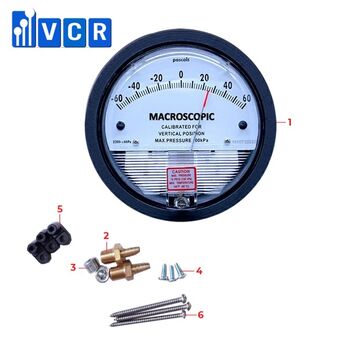
Vietnam Cleanroom Equipment can also coordinate the supply of related cleanroom products, including pass boxes, laminar airflow units, HEPA filters, filter housings, clean air equipment, and installation accessories. A coordinated supply package can simplify technical documentation, installation, commissioning, and acceptance.
Frequently asked questions
Do electronics factories need differential pressure gauges?
Yes. Differential pressure monitoring is commonly required in clean production rooms, airlocks, controlled environments, and areas where particulate contamination must be limited. It confirms airflow direction and helps identify an imbalance in the ventilation system.
Should a factory use a mechanical or digital gauge?
A mechanical gauge is suitable for simple local indication without an electrical power supply. A digital model is more appropriate when alarms, transmitted signals, data recording, or integration with a central monitoring system are required.
Does a new gauge require calibration?
The requirement depends on the project specification and the factory’s quality management system. Gauges used at critical monitoring points or for project acceptance should normally have suitable calibration documentation and measurement traceability.
How frequently should the gauge be recalibrated?
The calibration interval should be determined according to measurement criticality, operating conditions, frequency of use, previous calibration results, and the factory’s internal procedures. A risk-based interval is more appropriate than applying the same period to every instrument.
Can one gauge be used for both room pressure and filter monitoring?
The same operating principle may be used, but the required range, accuracy, scale, and installation arrangement can be different. The supplier should verify the specific application before selecting the model.
Contact a differential pressure gauge supplier in Yen Phong
A correctly selected differential pressure gauge supports airflow control, filter condition monitoring, and stable HVAC operation. Its measuring range, display type, output signal, calibration status, and installation method must be compatible with the cleanroom design and project acceptance requirements.
Contractors and factories in Yen Phong Industrial Park may contact Vietnam Cleanroom Equipment – VCR Cleanroom for consultation on measuring ranges, mechanical or digital displays, output signals, installation accessories, calibration options, and technical documentation.