
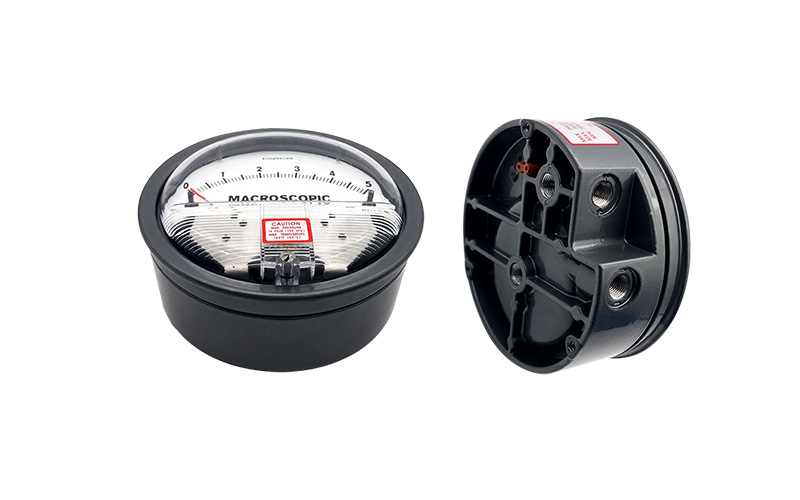
Businesses can buy air differential pressure gauges for cleanrooms from VCR Cleanroom Equipment, a supplier of cleanroom equipment for pharmaceutical, food, cosmetic, electronics, semiconductor, medical device, laboratory, and testing center projects. When purchasing, it is important to select the correct measuring range, application, documentation, and installation position so the device accurately reflects cleanroom pressure status.
- Where to Buy Air Differential Pressure Gauges for Cleanrooms?
- Price of Air Differential Pressure Gauges for Cleanrooms
- Selection Criteria for Cleanroom Air Differential Pressure Gauges
- Mechanical Gauge or Electronic Gauge?
- Common Mistakes When Buying Air Differential Pressure Gauges
- Why Buy from VCR Cleanroom Equipment?
- Frequently Asked Questions
- Conclusion
Where to Buy Air Differential Pressure Gauges for Cleanrooms?
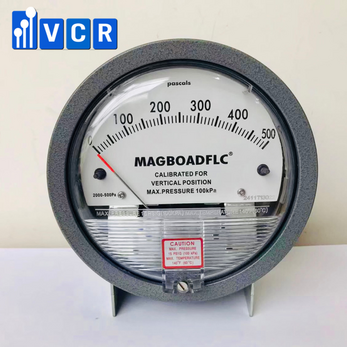
Businesses can buy air differential pressure gauges for cleanrooms from VCR Cleanroom Equipment. In cleanroom applications, this product is more accurately referred to as a differential pressure gauge, used to monitor pressure difference between two rooms, between a cleanroom and a corridor, between a buffer room and a production area, or across a HEPA filter.
A differential pressure gauge is important in GMP factories because it helps control airflow direction, reduce dust, microorganisms, and cross-contamination risks. If pressure is not achieved or fluctuates abnormally, operators can detect early issues such as poor door sealing, HVAC imbalance, dust-loaded HEPA filters, or blocked pressure tubing.
VCR Cleanroom Equipment supplies differential pressure gauges for cleanrooms, buffer rooms, airlocks, clean corridors, weighing rooms, formulation rooms, gowning rooms, negative pressure rooms, HEPA Boxes, AHU - Air Handling Unit, FFU - Fan Filter Unit, Dynamic Pass Boxes, Clean Booths, and cleanroom HVAC systems.
Price of Air Differential Pressure Gauges for Cleanrooms
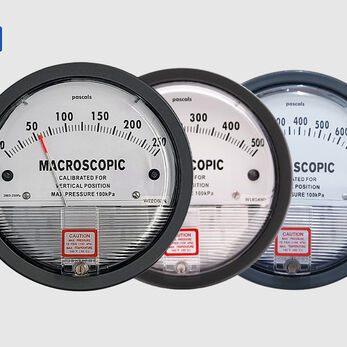
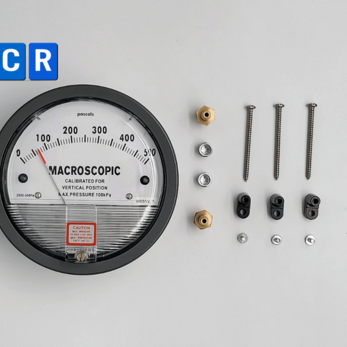
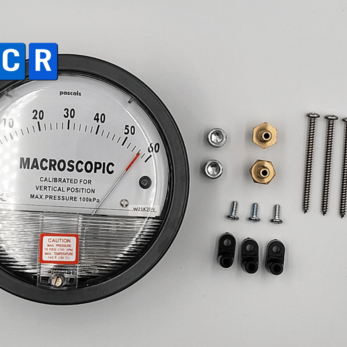
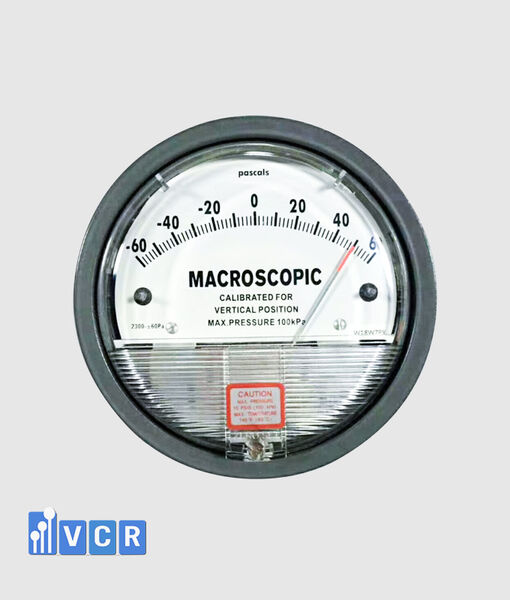
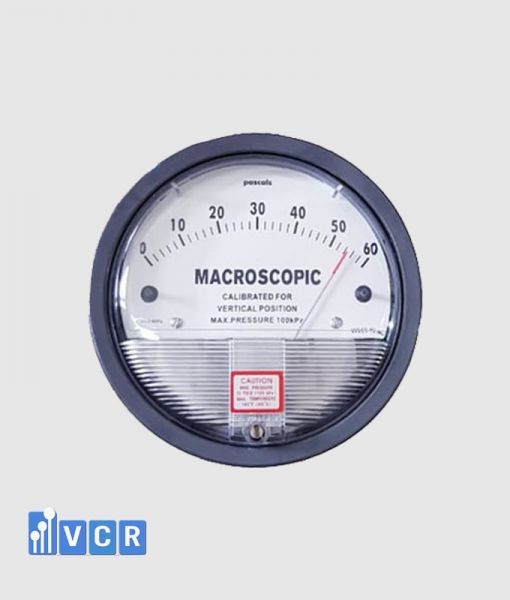
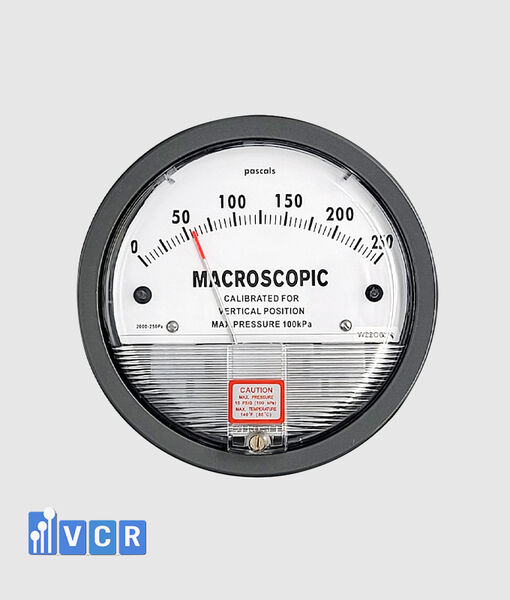
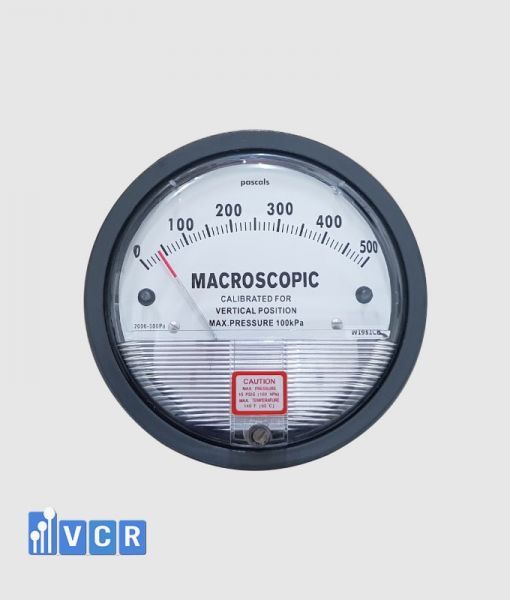
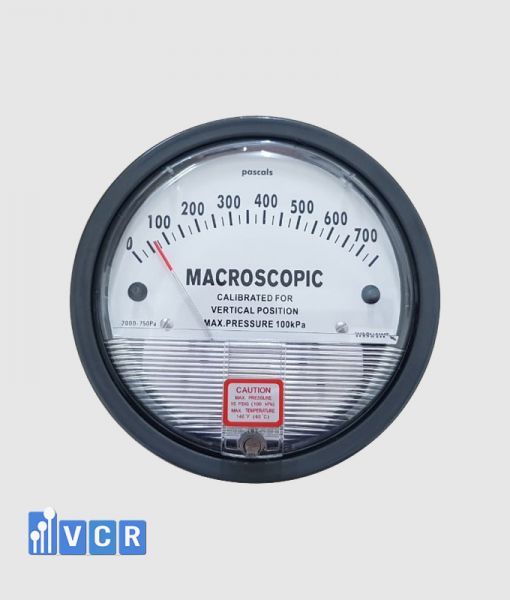
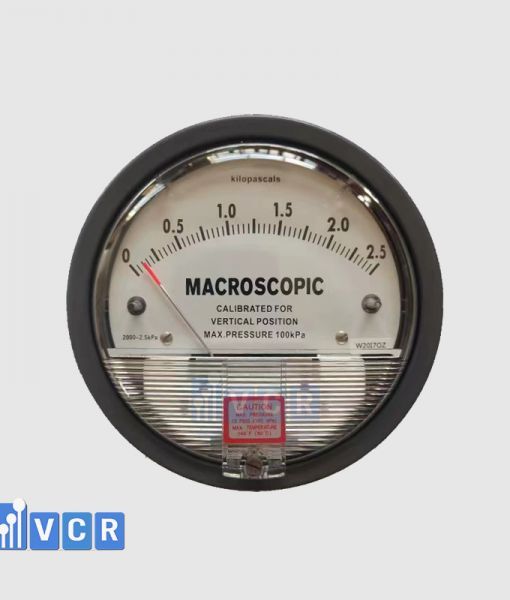
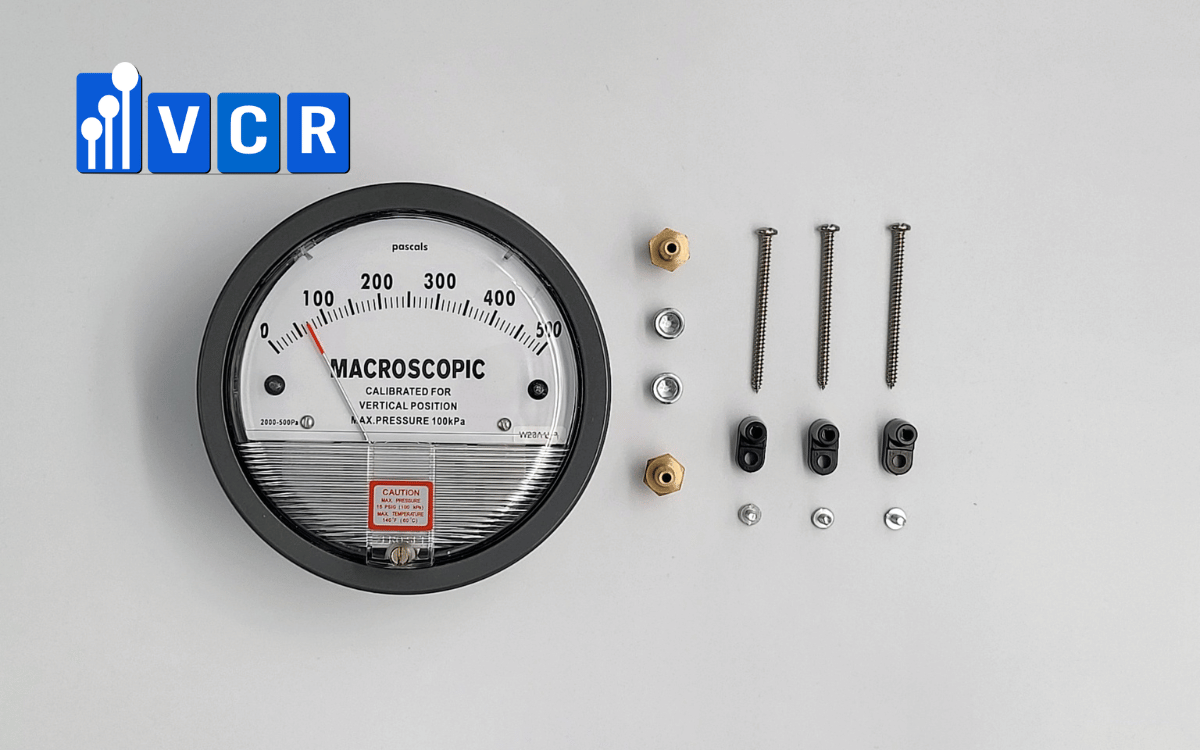
The price of an air differential pressure gauge for cleanrooms depends on brand, measuring range, mechanical or electronic type, documentation requirements, order quantity, installation accessories, and calibration requirements. For common mechanical gauges such as Macroscopic, several popular measuring ranges may have a reference price of around VND 1.2–1.39 million per unit, depending on timing and order configuration.
Common ranges include 0–60 Pa, 0–125 Pa, 0–250 Pa, 0–500 Pa, and 0–750 Pa. If customers need an electronic type with 4–20 mA output, display, alarm relay, or BMS/EMS connection, the price should be quoted according to the specific configuration.
When requesting a quotation, businesses should provide quantity, desired range, installation position, measurement purpose, CO/CQ requirements, calibration certificate needs, VAT invoice, accessories, and delivery time. The clearer the information, the more accurate the quotation.
Selection Criteria for Cleanroom Air Differential Pressure Gauges
The first criterion is selecting the correct measuring range. If the gauge is used to monitor pressure difference between two rooms, sensitive ranges such as 0–60 Pa or 0–125 Pa should be selected. These ranges are suitable for cleanrooms, buffer rooms, airlocks, clean corridors, gowning rooms, and room pressure monitoring points.
If the gauge is used to monitor pressure across HEPA filters, HEPA Boxes, AHU, or FFU, larger ranges such as 0–250 Pa, 0–500 Pa, or 0–750 Pa should be selected depending on filter resistance, airflow volume, and design specifications. One common range should not be used for every position because each application has a different pressure level.
The second criterion is defining the measurement purpose. Room pressure monitoring is different from HEPA filter monitoring. Positive pressure rooms are different from negative pressure rooms. If the wrong type or range is selected, readings may be difficult to observe, exceed the scale, or fail to reflect actual operating status.
The third criterion is documentation and calibration. For GMP cleanrooms, businesses should consider catalogues, datasheets, CO/CQ, warranty documents, VAT invoices, and calibration certificates if the measurement point is critical. Complete documentation supports acceptance, internal inspection, and quality assessment.
Mechanical Gauge or Electronic Gauge?
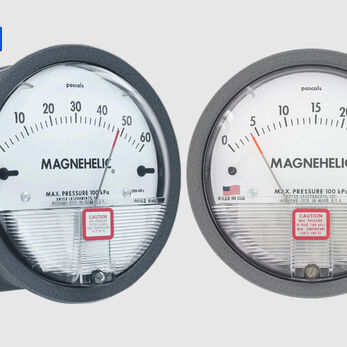
Mechanical differential pressure gauges are suitable for local reading points, reasonable in cost, easy to install, and easy to use. They are commonly used at cleanroom doors, buffer rooms, airlocks, clean corridors, HEPA Boxes, FFU, or AHU systems.
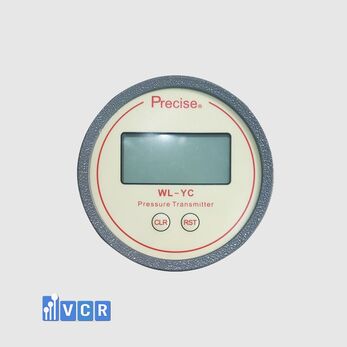
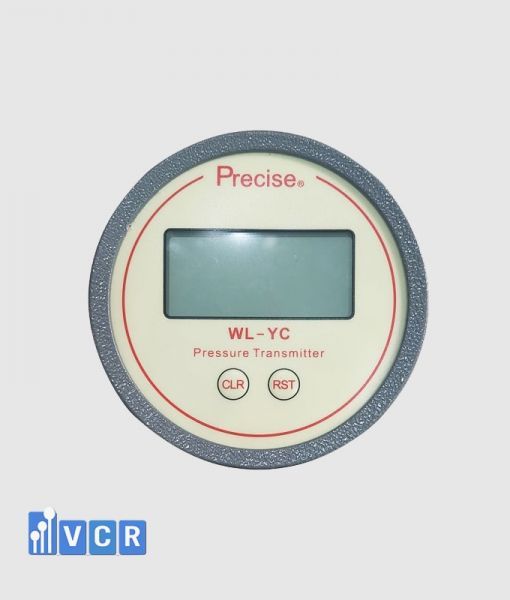
Electronic differential pressure gauges are suitable for areas requiring continuous monitoring, automatic alarms, data logging, or BMS/EMS connection. These models may include 4–20 mA output, display, alarm relay, or communication interface depending on configuration.
For critical GMP areas such as sterile rooms, negative pressure rooms, microbiology rooms, testing laboratories, critical airlocks, or areas requiring data traceability, an electronic type should be considered. For standard observation points, a mechanical gauge is a cost-effective and practical solution.
Common Mistakes When Buying Air Differential Pressure Gauges
The first common mistake is selecting a measuring range that is too large. If room pressure is measured with a 0–500 Pa or 0–750 Pa range, the pointer may move very little, making small pressure changes difficult to detect.
The second mistake is selecting a range that is too small for HEPA filter monitoring. When filters become dust-loaded, differential pressure rises and may exceed the gauge scale, causing the device to no longer reflect filter condition accurately.
The third mistake is not defining the two measurement points clearly. A gauge is meaningful only when it is clear which two areas are being measured, such as “Cleanroom / Corridor” or “Before HEPA Filter / After HEPA Filter.”
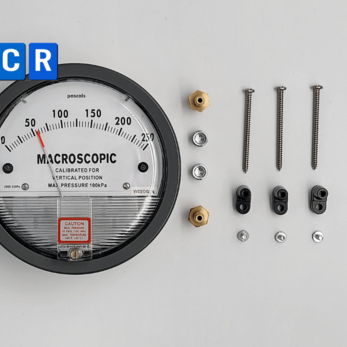
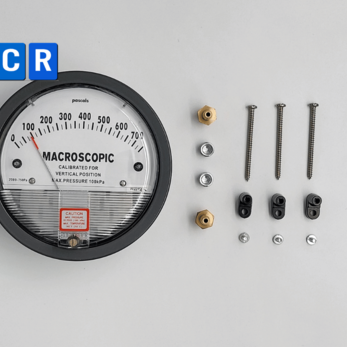
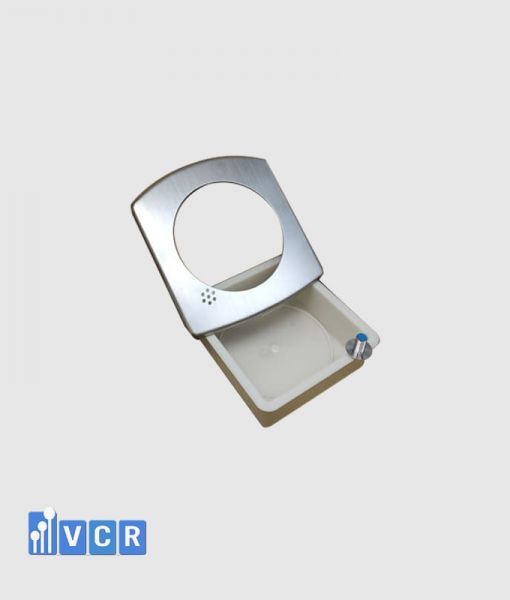
The fourth mistake is ignoring accessories and installation. Pressure tubing, high-low pressure ports, tapping position, zero adjustment, and calibration capability all affect measurement reliability.
Why Buy from VCR Cleanroom Equipment?
VCR Cleanroom Equipment not only supplies differential pressure gauges but also provides consultation based on actual cleanroom applications. Customers receive support in selecting the correct range for cleanrooms, buffer rooms, airlocks, negative pressure rooms, HEPA Boxes, AHU, FFU, and HVAC systems.
VCR also supplies related cleanroom equipment such as Pass Boxes, Air Showers, FFU, HEPA Boxes, HEPA/ULPA Filters, Clean Booths, Interlocks, cleanroom lights, cleanroom doors, Weighing Booths, Clean Benches, and other airflow and pressure control devices.
When purchasing from VCR, businesses can clarify requirements for quantity, documentation, calibration, VAT invoice, delivery time, and installation accessories. This helps ensure the purchase matches GMP acceptance and operating requirements.
Frequently Asked Questions
Where Can I Buy Air Differential Pressure Gauges for Cleanrooms?
Businesses can buy them from VCR Cleanroom Equipment. VCR supplies differential pressure gauges for cleanrooms, buffer rooms, airlocks, clean corridors, HEPA Boxes, AHU, FFU, and cleanroom HVAC systems. Customers receive support in selecting the correct range, installation position, accessories, and documentation for each project.
How Much Is an Air Differential Pressure Gauge for Cleanrooms?
The price depends on brand, measuring range, mechanical or electronic type, quantity, documentation, calibration, and installation accessories. For Macroscopic mechanical gauges, several common ranges may have a reference price of around VND 1.2–1.39 million per unit. Electronic types with 4–20 mA output or alarms are quoted according to configuration.
What Measuring Range Should Be Used for Cleanrooms?
If monitoring pressure difference between two rooms, 0–60 Pa or 0–125 Pa should be selected. If monitoring HEPA filters, HEPA Boxes, AHU, or FFU, 0–250 Pa, 0–500 Pa, or 0–750 Pa should be considered. For negative pressure rooms, a negative or negative-positive range should be selected.
Is a Calibration Certificate Required?
For critical measurement points in GMP cleanrooms, a calibration certificate should be considered. Calibration confirms that the device measures correctly and supports acceptance, internal inspection, or quality assessment records. Customers should discuss calibration and documentation requirements with VCR Cleanroom Equipment before purchase.
Conclusion
Buying an air differential pressure gauge for cleanrooms requires more than checking the price. Businesses need to select the correct measuring range, device type, application, documentation, and installation position to ensure reliable operation in cleanroom systems.
If your business needs differential pressure gauges for cleanrooms, HEPA Boxes, AHU, FFU, or GMP HVAC systems, contact VCR Cleanroom Equipment for price consultation and suitable product selection.