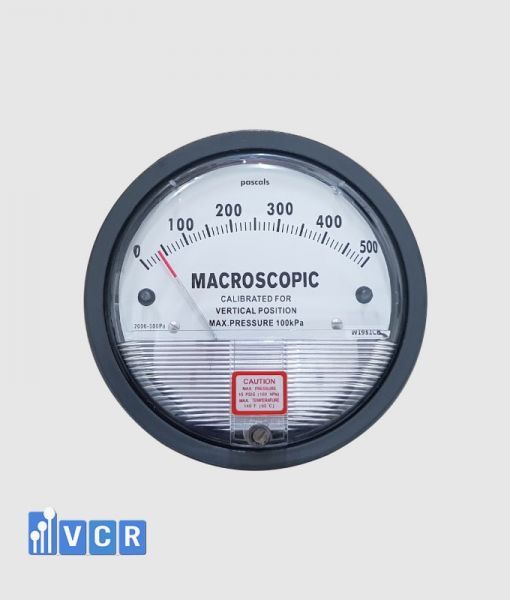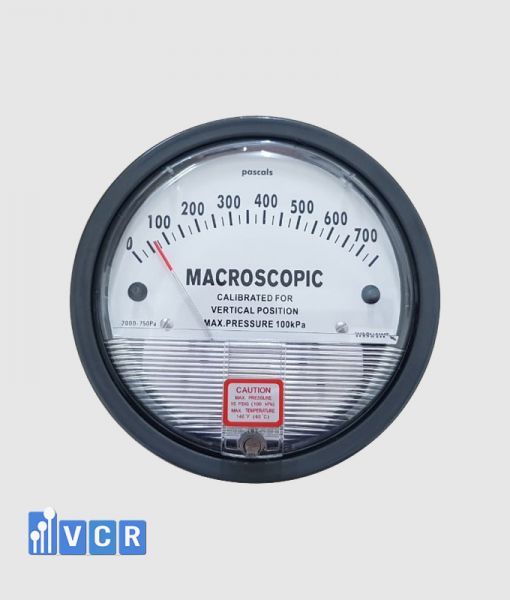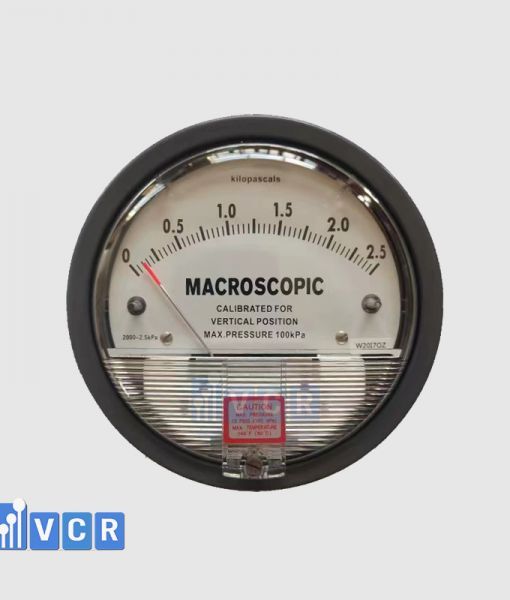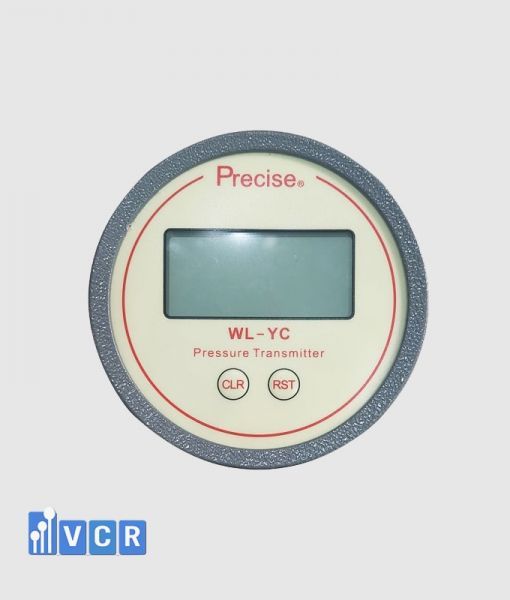

Selecting a differential pressure gauge supplier for a factory in Yen Phong Industrial Park requires careful consideration of measuring range, accuracy, calibration, installation and compatibility with cleanrooms, HVAC systems, AHUs and HEPA filters.
- Demand for differential pressure gauges in Yen Phong Industrial Park
- What is a differential pressure gauge?
- Common factory applications
- Mechanical or digital differential pressure gauge?
- Common measuring ranges
- How to select a supplier in Yen Phong Industrial Park
- Common purchasing and installation mistakes
- Commissioning and acceptance checks
- Frequently asked questions
- Differential pressure gauge consultation for Yen Phong factories
Demand for differential pressure gauges in Yen Phong Industrial Park
Yen Phong Industrial Park in Bac Ninh Province accommodates manufacturers operating in electronics, components, precision engineering, high technology and supporting industries. The industrial park benefits from its connection with Hanoi, Noi Bai International Airport and major transportation routes in northern Vietnam.
In modern factories, differential pressure gauges are not limited to pharmaceutical cleanrooms. They are also installed in electronics facilities, controlled production rooms, air-handling systems, filter housings, laminar airflow equipment and material transfer devices.
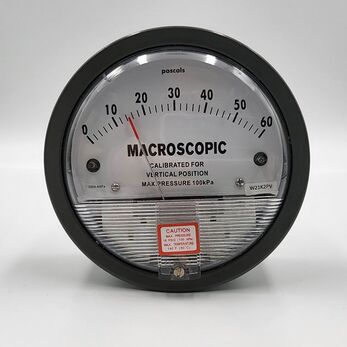
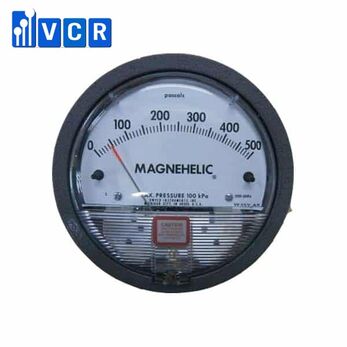
A differential pressure gauge measures the difference in pressure between two locations. The measurement can be used to monitor room pressure, evaluate filter resistance or confirm that an HVAC system is operating within its intended pressure conditions.
Selecting the correct gauge is therefore important for environmental control, maintenance planning and reliable factory operation.
What is a differential pressure gauge?
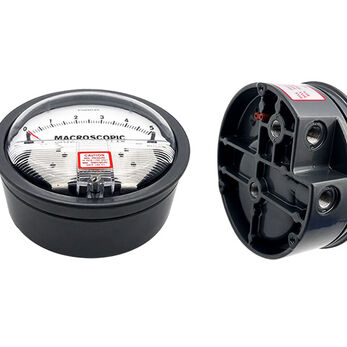
A differential pressure gauge is an instrument designed to measure the pressure difference between two points. The two measuring locations are connected to the high-pressure and low-pressure ports of the gauge through pressure tubing.
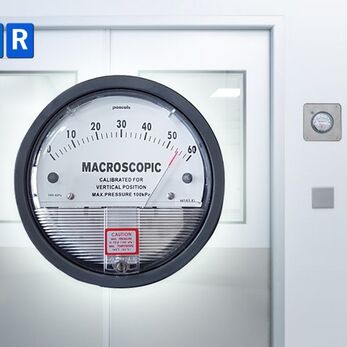
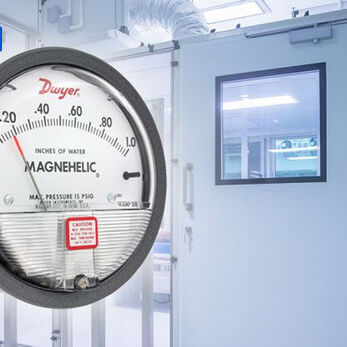
In a cleanroom, the gauge may be installed between a controlled room and a corridor, between rooms of different cleanliness classifications or between a manufacturing area and an adjacent support area.
For HEPA filters, air-handling units and filter housings, the two pressure ports are connected upstream and downstream of the filter. As dust accumulates, the resistance across the filter generally increases. The gauge allows the maintenance team to observe this change and evaluate whether inspection or filter replacement is required.
A differential pressure gauge does not measure air cleanliness directly. It must not be used as a substitute for airborne particle counting, airflow velocity measurement, airflow volume testing or HEPA filter integrity testing.
Common factory applications
Cleanroom pressure monitoring
Maintaining an appropriate pressure difference supports controlled airflow between adjacent rooms. When a cleaner room is operated at a higher pressure than the surrounding area, air tends to move outward when a door is opened or when leakage paths are present.
For containment applications involving dust, chemicals or potentially hazardous materials, the controlled room may be operated at a lower pressure to help prevent contaminants from spreading to adjacent spaces.
The required pressure differential should be determined according to the manufacturing process, contamination-control objectives, room tightness, door operation and risk assessment. A single pressure value should not be applied automatically to every factory or production area.
HEPA filter resistance monitoring
A differential pressure gauge can indicate changes in HEPA filter resistance during operation. The reading should be evaluated against the initial clean-filter pressure drop, the filter manufacturer’s technical data and the actual operating airflow.
A filter should not be replaced only because a general pressure value has been reached. Filter condition should be assessed by considering pressure drop, airflow, air velocity, leakage, integrity and the required performance of the controlled area.
AHU and HVAC filter monitoring
An air-handling unit may include prefilters, medium-efficiency filters, fine filters and terminal filtration stages. Differential pressure gauges can be installed across individual stages to help maintenance teams identify increasing filter resistance.
The selected measuring range must correspond to the expected pressure drop of the filter. A range that is unnecessarily high reduces the visibility of small changes. A range that is too low may cause the pointer to exceed full scale or expose the gauge to pressures outside its intended operating range.
Cleanroom equipment
Differential pressure gauges are also used on dynamic pass boxes, air showers, laminar airflow units, biosafety cabinets, dispensing booths, sampling booths, fume-control equipment and standalone HEPA filtration systems.
Each application has a different operating pressure. A supplier should therefore understand the equipment design and airflow principle before recommending a measuring range.
Mechanical or digital differential pressure gauge?
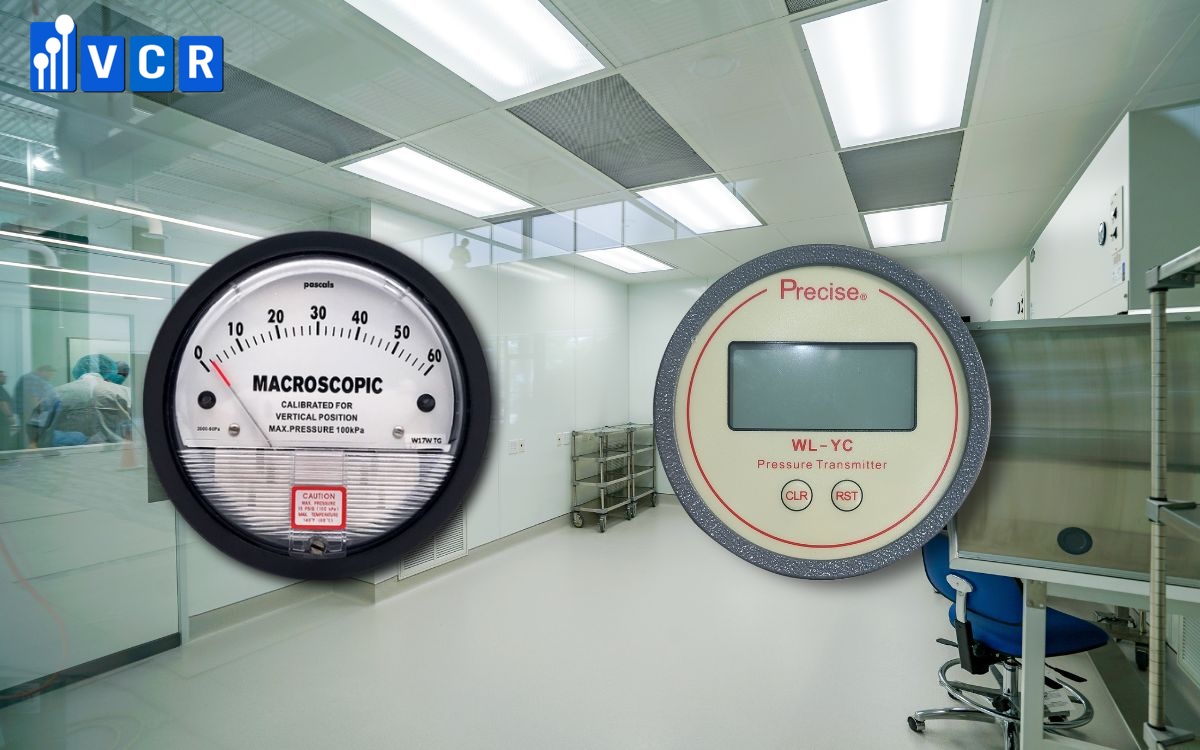
Mechanical differential pressure gauges are relatively simple, easy to read locally and normally do not require an electrical supply for basic indication. They are widely used for room pressure, HEPA filter and AHU monitoring.
Digital differential pressure gauges or transmitters can provide a numerical display, alarm outputs, control contacts and signals for building management or central monitoring systems. Depending on the model, output options may include 4–20 mA, 0–10 V or digital communication.
The selection should not be based only on purchasing cost. The factory should consider data recording, alarm requirements, automation level, maintenance capability and system qualification requirements.
Common measuring ranges
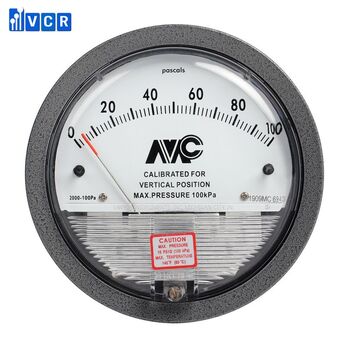
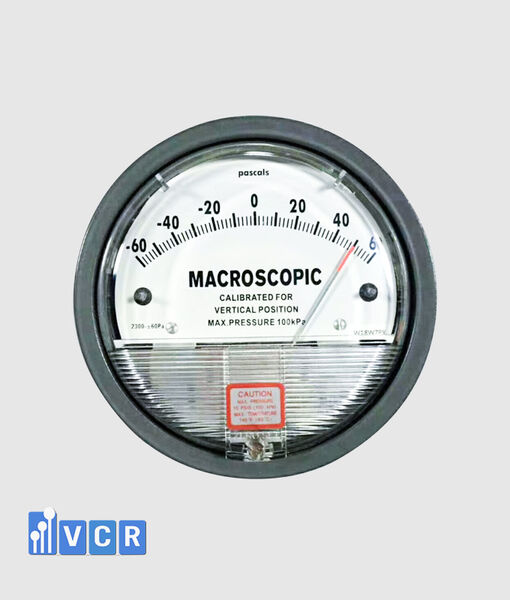
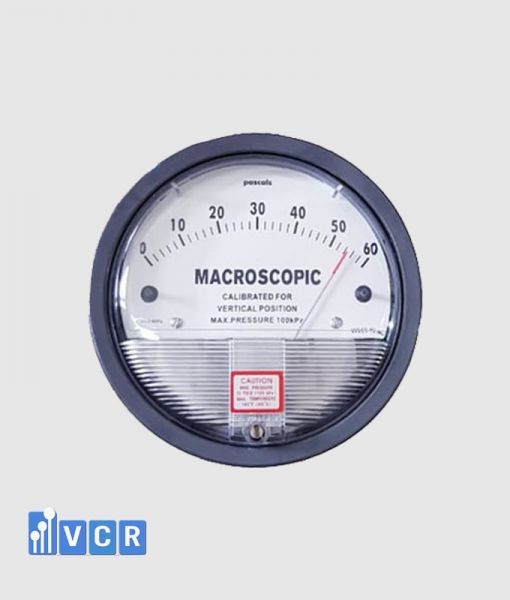
Relatively low measuring ranges are normally preferred for room-pressure monitoring because they allow operators to observe small pressure changes more clearly. Depending on the application, ranges such as 0–30 Pa, 0–60 Pa, 0–100 Pa or bidirectional ranges may be considered.
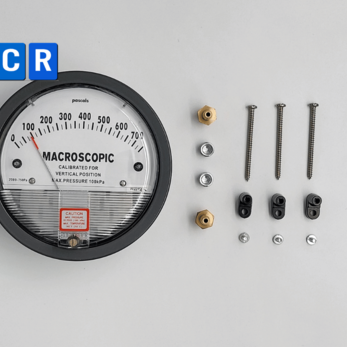
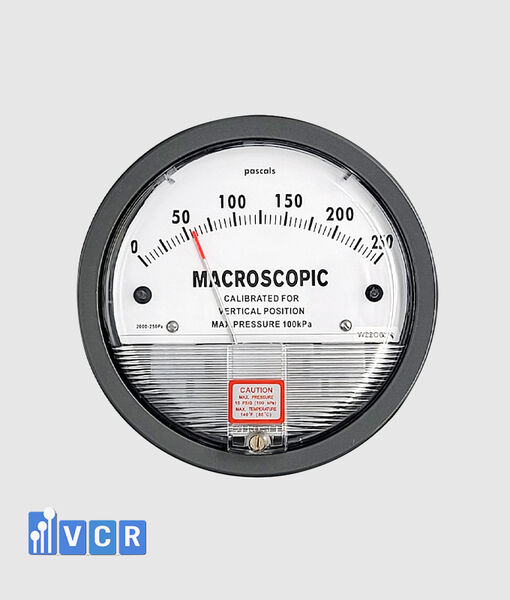
For HEPA filters and air-filtration assemblies, higher ranges such as 0–250 Pa, 0–500 Pa, 0–750 Pa or 0–1,000 Pa may be required.
For an AHU, the correct range depends on the filter type, face area, airflow rate and recommended final pressure drop.
The range should always be selected using design information, filter data and expected operating pressure. A single gauge model should not be specified for every measuring point without technical evaluation.
How to select a supplier in Yen Phong Industrial Park
Ability to recommend the correct range
A technically competent supplier should first determine whether the gauge will monitor room pressure or filter resistance. The supplier should also ask about normal operating pressure, maximum expected pressure and the smallest change that operators need to observe.
When the customer does not yet have a defined measuring range, the supplier should coordinate with the cleanroom designer, mechanical contractor or equipment manufacturer instead of selecting a model solely from a general catalogue.
Understanding of cleanrooms and HVAC systems
A differential pressure gauge is part of a broader environmental-control system. Technical selection should consider airflow direction, cleanliness classification, room construction, supply and return airflow, filtration stages and contamination-control objectives.
Vietnam Cleanroom Equipment, also known as VCR Cleanroom, supplies differential pressure gauges and cleanroom equipment to cleanroom contractors, MEP companies, system integrators and industrial factories. Product selection is based on the actual application rather than only on the gauge model number.
Clear technical documentation
Depending on project requirements, documentation may include product catalogues, installation instructions, technical data sheets, certificates of origin, certificates of quality and calibration certificates.
A product quality certificate is different from an individual calibration certificate. A calibration certificate should identify the specific instrument and record the results at defined test points with suitable traceability.
Installation and troubleshooting support
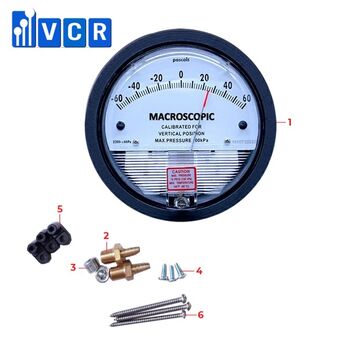
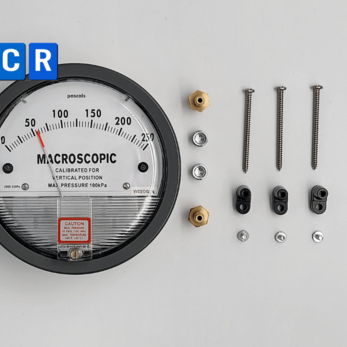
Many pressure-monitoring problems are caused by installation rather than by gauge failure. Common causes include reversed high- and low-pressure ports, kinked tubing, leakage, blockage, condensation and unsuitable pressure-tapping locations.
An experienced supplier should be able to review the tubing arrangement, explain zero adjustment and support troubleshooting when readings are unstable or inconsistent with actual operating conditions.
Capability to supply coordinated cleanroom equipment
For a new factory or renovation project, working with a supplier that can provide differential pressure gauges together with HEPA filter housings, laminar airflow equipment, pass boxes, door interlocks and other cleanroom equipment can reduce technical coordination risks.
This approach also helps contractors coordinate drawings, technical submissions, delivery schedules and after-sales support.
Common purchasing and installation mistakes
One common mistake is choosing an excessively high measuring range. For example, if a room-pressure point only requires observation of small pressure variations, a gauge with a very high full-scale range may show very little pointer movement.
Another mistake is using a low-range room-pressure gauge across a filter with significantly higher resistance. The pointer may exceed full scale, or the instrument may be operated outside its appropriate range.
Reversing the high-pressure and low-pressure connections is also common. On a unidirectional gauge, the pointer may not move correctly or may move in the wrong direction.
Other potential problems include locating tubing near heat sources, compressing or bending the tubing, failing to inspect leakage and allowing moisture to accumulate in the pressure lines.
Commissioning and acceptance checks
Before commissioning, the project team should confirm the model, measuring range, engineering unit, installation position and connection direction of both pressure ports.
When both ports are exposed to the same pressure, the zero point should be checked. The system should then be operated to verify the direction of indication and the actual pressure differential.
For digital gauges and transmitters, the power supply, output signal, alarm thresholds and PLC or building-management connections should also be tested.
Calibration does not replace field installation inspection. A calibrated gauge may still provide an incorrect system reading if the pressure tubing is leaking, blocked or connected to unsuitable tapping points.
Frequently asked questions
Where can factories in Yen Phong buy differential pressure gauges?
Factories should select a supplier capable of reviewing the measuring range, application, documentation and installation method. For cleanroom projects, the supplier should understand room pressure, HEPA filters, AHUs and HVAC systems rather than supplying the gauge as an isolated component.
Can the same measuring range be used for every room?
It is not recommended. Different rooms may have different operating pressure values and contamination-control objectives. The range should be selected according to the expected differential pressure and the smallest variation that needs to be observed.
Is calibration required?
Calibration requirements depend on the factory’s quality-management system, the criticality of the measuring point and internal procedures. Gauges used to monitor important environmental conditions or generate quality records are commonly included in a periodic calibration programme.
Does a gauge that does not return to zero need replacement?
Not necessarily. Residual pressure in the tubing, blocked pressure ports, installation angle, mechanical offset or incorrect zero adjustment may cause the problem. Both ports should first be isolated and exposed to the same pressure before the instrument is evaluated.
When should a digital gauge be selected?
A digital gauge or transmitter is appropriate when the factory requires alarms, signal transmission to a PLC, data recording or central monitoring. Where only local indication is required, a mechanical gauge may provide a simpler and more economical solution.
Differential pressure gauge consultation for Yen Phong factories
Vietnam Cleanroom Equipment supplies differential pressure gauges for cleanrooms, AHUs, HVAC systems, HEPA filters and controlled-air equipment to cleanroom contractors and factories operating in Yen Phong Industrial Park.
To receive an appropriate technical recommendation, customers should provide the measuring location, expected pressure range, display type, output-signal requirements, required documentation and quantity. Based on this information, VCR Cleanroom can support model selection and reduce the risk of purchasing an unsuitable measuring range or applying the gauge incorrectly.