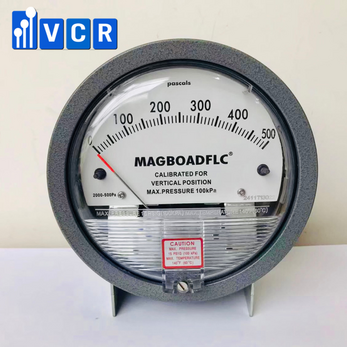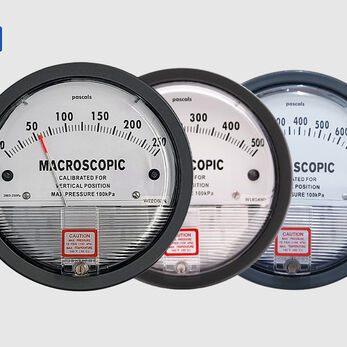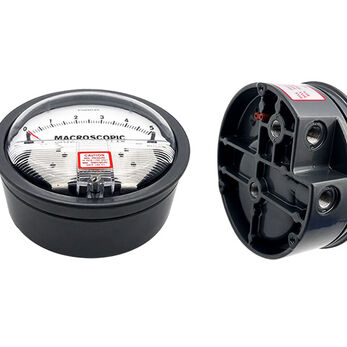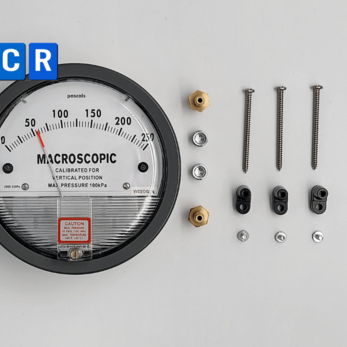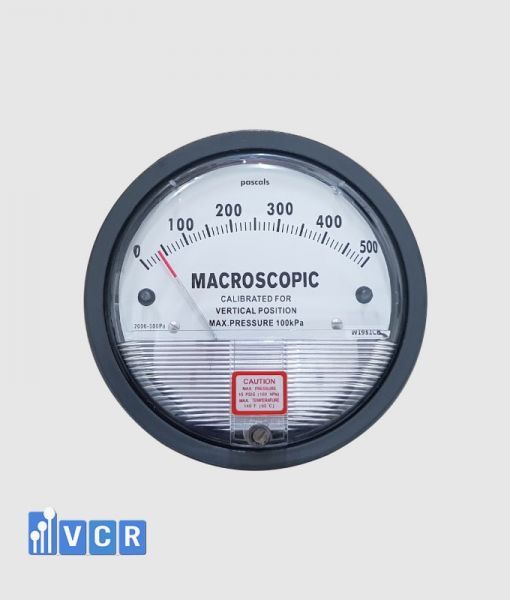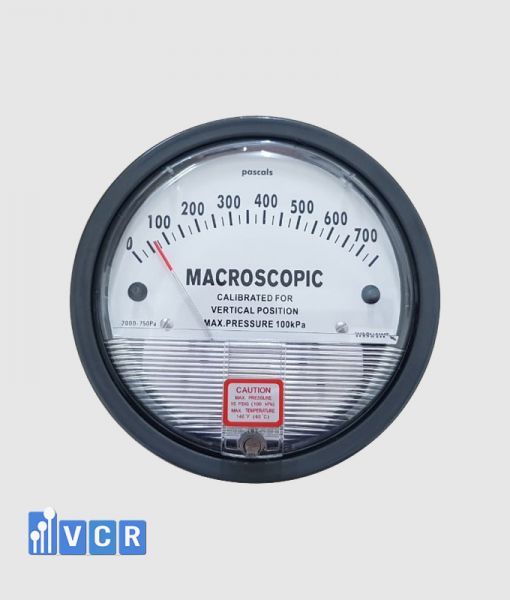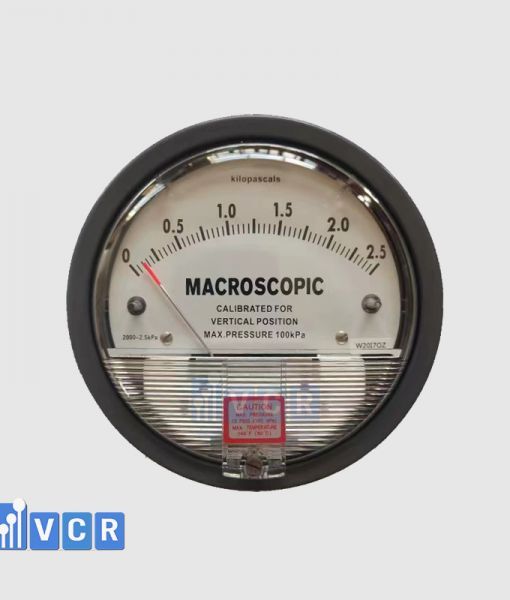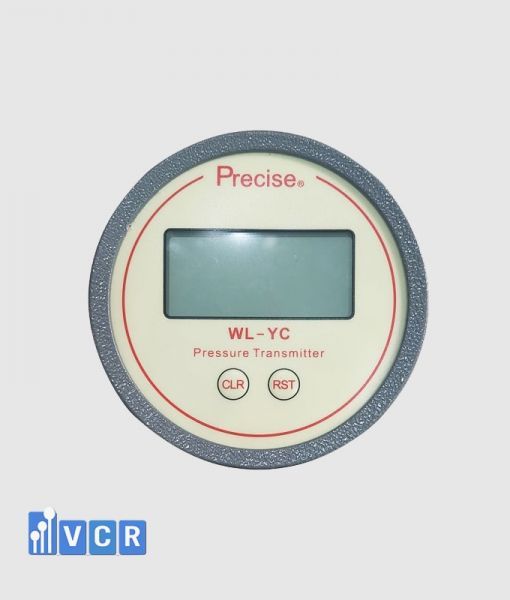

An air pressure gauge is a device used to measure air pressure or differential air pressure in HVAC systems, cleanrooms, AHU, FFU, HEPA Boxes, air ducts, and filtration systems. In cleanrooms, it is commonly used as a differential pressure gauge to monitor room pressure, HEPA filter condition, and clean air supply stability.
- What Is an Air Pressure Gauge?
- Is an Air Pressure Gauge the Same as a Differential Pressure Gauge?
- Basic Structure of an Air Pressure Gauge
- Working Principle of an Air Pressure Gauge
- Applications in Cleanrooms
- Applications in AHU, FFU, and HEPA Boxes
- Applications in HVAC Systems
- What Measuring Range Should Be Selected?
- Installation Notes for Air Pressure Gauges
- Where to Buy Air Pressure Gauges?
- Frequently Asked Questions
- Conclusion
What Is an Air Pressure Gauge?
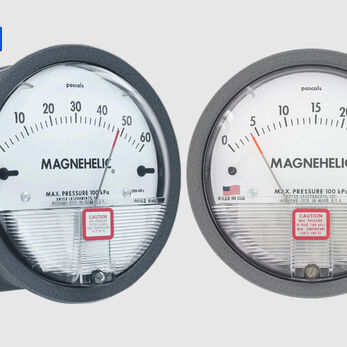
An air pressure gauge is a device used to measure air pressure or pressure difference between two points in an airflow system. In practice, this term often refers to air pressure gauges, differential pressure gauges, Magnehelic-type gauges, or differential pressure sensors used in HVAC and cleanroom systems.
In cleanrooms, air pressure is not only a technical parameter of the air-conditioning system but also directly related to dust control, microbial control, airflow direction, and cross-contamination risk. Therefore, air pressure gauges are commonly installed in cleanrooms, buffer rooms, airlocks, clean corridors, HEPA Boxes, AHU - Air Handling Unit, FFU - Fan Filter Unit, and air ducts.
If used for room pressure monitoring, the device helps operators know which area has higher or lower pressure. If used across a HEPA filter, it helps assess filter loading and airflow resistance.
Is an Air Pressure Gauge the Same as a Differential Pressure Gauge?
“Air pressure gauge” is a common term, while “differential pressure gauge” is often the more accurate technical term in many cleanroom applications. An air pressure gauge may measure air pressure against a reference environment or measure pressure difference between two points.
In cleanrooms, most applications do not simply need to know air pressure at one point. They need to know the difference between two areas, such as between a cleanroom and corridor, between a buffer room and production room, or before and after a HEPA filter. Therefore, differential pressure gauges are more commonly used.
In simple terms, if a business needs to monitor room pressure, check HEPA filters, or monitor AHU, FFU, or HEPA Boxes, the term “differential pressure gauge” should be used to select the correct device and measuring range.
Basic Structure of an Air Pressure Gauge
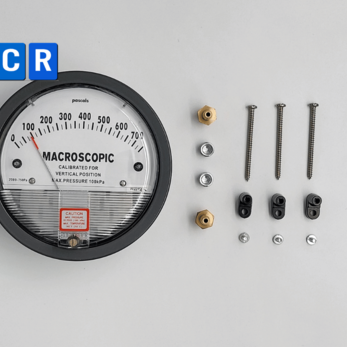
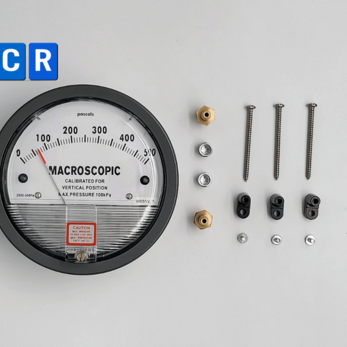
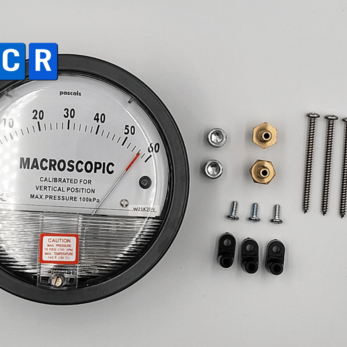
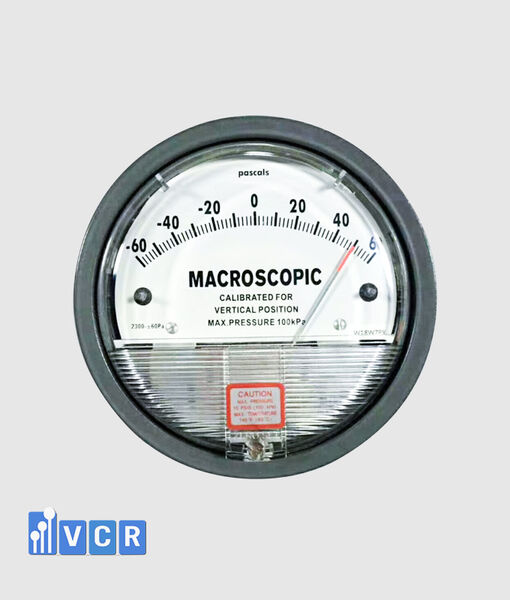
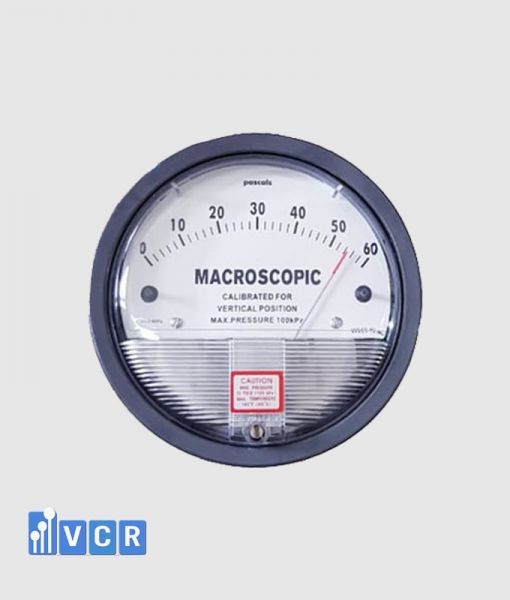
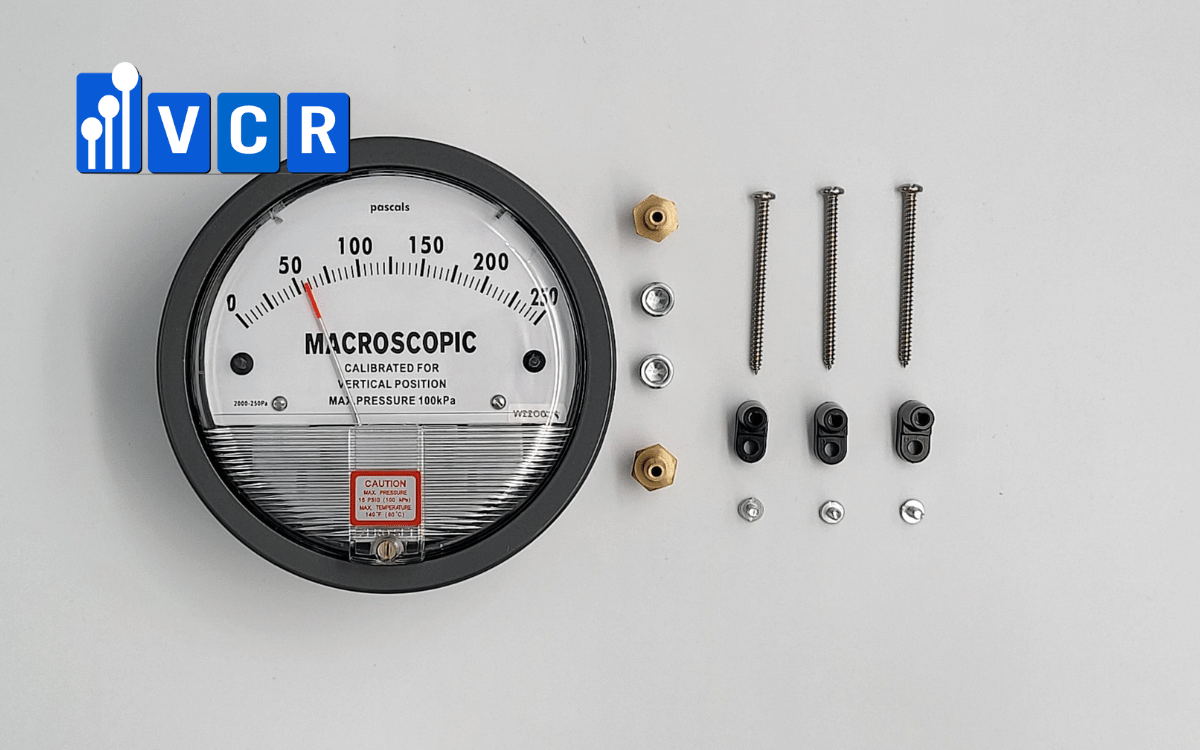
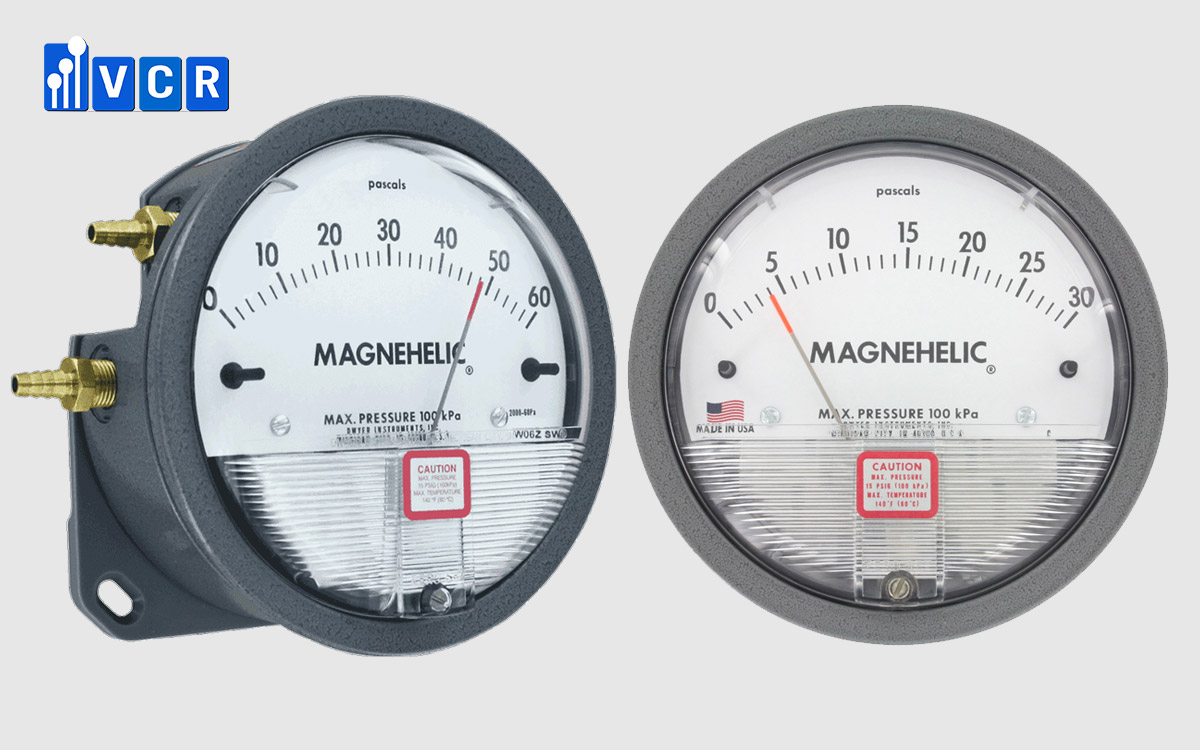
A mechanical air pressure gauge usually includes a housing, display face, pointer, scale, high-pressure port, low-pressure port, zero adjustment knob, pressure sensing mechanism, and pressure tapping accessories. Depending on the model, the scale may use Pa, mmH2O, inH2O, or kPa.
The high-pressure port is usually marked “High” or “+” and is connected to the higher pressure side. The low-pressure port is usually marked “Low” or “-” and is connected to the lower pressure side. When pressure difference occurs between the two ports, the pointer moves and displays the value on the gauge face.
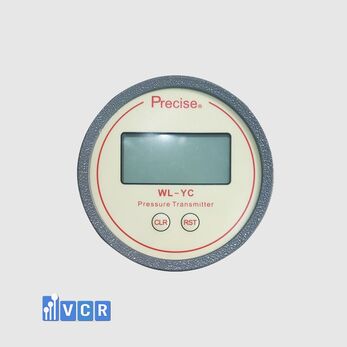
Electronic types include additional components such as electronic sensors, LCD/LED display, signal processor, power supply, 4-20mA output, alarm relay, or RS485/Modbus communication depending on configuration. These types are suitable for areas requiring continuous monitoring or BMS/EMS integration.
Working Principle of an Air Pressure Gauge
The working principle of an air pressure gauge is based on pressure difference between two measurement points. When pressure at the high-pressure port is greater than pressure at the low-pressure port, the internal sensing mechanism converts this difference into mechanical movement or an electrical signal.
In a mechanical gauge, pressure difference deforms a sensing diaphragm or acts on a magnetic mechanism, causing the pointer to move across the scale. Operators can read the pressure value directly on the gauge face.
In an electronic sensor, pressure is converted into an electrical signal and displayed on a screen or transmitted to a monitoring system. For example, a 4-20mA signal can transmit pressure values to BMS/EMS for continuous monitoring, data logging, and alarms when pressure exceeds limits.
Applications in Cleanrooms
In cleanrooms, air pressure gauges are commonly used to monitor differential pressure between areas. The purpose is to ensure air moves in the correct direction, usually from cleaner areas to less clean areas, or according to the pressure design of each process.
The device is often installed between cleanrooms and clean corridors, between buffer rooms and production rooms, between airlocks and working areas, between gowning rooms and corridors, or in negative pressure rooms requiring safety control. When pressure is not achieved, operators can detect early issues such as open doors, poor sealing gaskets, HVAC imbalance, or airflow changes.
In GMP factories, differential pressure gauges are important devices for supporting cross-contamination control, product protection, operator safety, and stable production environments.
Applications in AHU, FFU, and HEPA Boxes
In AHU, FFU, and HEPA Boxes, air pressure gauges are commonly used to measure differential pressure across filters. When filters are new, airflow resistance is usually lower. After operation over time, dust and particles accumulate on filter surfaces, causing differential pressure to increase.
By monitoring this value, engineering teams can assess filter condition, detect dust-loaded filters, clogged filters, or reduced airflow. This is an important basis for planning cleaning, maintenance, or filter replacement at the right time.
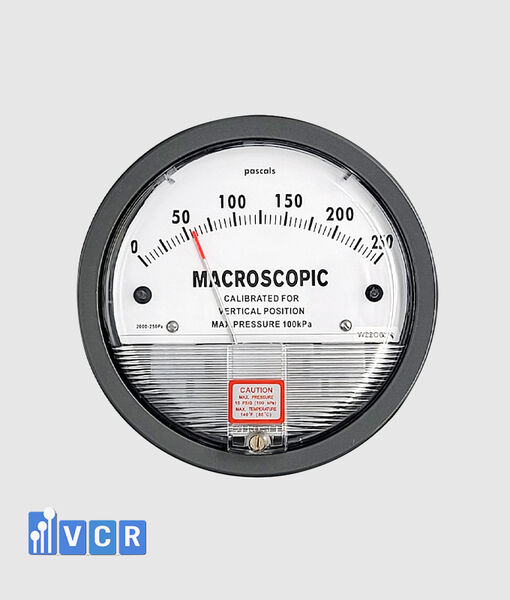
For HEPA Boxes and FFU, the measuring range often needs to be larger than room pressure monitoring. Ranges such as 0–250 Pa, 0–500 Pa, or 0–750 Pa are commonly considered depending on filter type, airflow volume, and design specifications.
Applications in HVAC Systems
In HVAC systems, air pressure gauges are used to check air duct pressure, differential pressure across filters, pressure differences between areas, and fan operating conditions. The device helps technicians evaluate whether supply air, return air, exhaust air, and filtration systems are operating stably.
If pressure changes abnormally, possible causes may include dirty filters, incorrect damper position, reduced fan performance, air duct leakage, blocked airflow, or imbalance between supply, return, and exhaust air. Air pressure gauges help detect these signs before the system affects production.
In cleanrooms, HVAC is not only a comfort air-conditioning system like in general buildings. It is an environmental control system for production. Therefore, pressure monitoring with suitable gauges is an important part of operation and maintenance.
What Measuring Range Should Be Selected?
The measuring range should be selected according to the application. If monitoring differential pressure between two rooms, sensitive ranges such as 0–60 Pa or 0–125 Pa should be used. These ranges help operators observe small room pressure changes more easily.
If monitoring differential pressure across HEPA filters, HEPA Boxes, AHU, or FFU, larger ranges such as 0–250 Pa, 0–500 Pa, or 0–750 Pa should be selected depending on filter resistance and design specifications. One common range should not be used for every position because each application has a different pressure level.
If the area requires negative pressure monitoring, a negative or negative-positive range should be selected to display pressure status correctly. If signal transmission to BMS/EMS is needed, an electronic type with 4-20mA output should be considered.
Installation Notes for Air Pressure Gauges
When installing an air pressure gauge, it must be clear which two points are being measured. Examples include “Cleanroom / Corridor,” “Buffer Room / Production Room,” or “Before HEPA Filter / After HEPA Filter.” Clear labeling helps operators interpret readings correctly.
High and low pressure ports must be connected correctly. If reversed, the gauge may display the wrong direction or cause operators to misunderstand pressure status. Pressure tubing should be securely installed without bending, blockage, leakage, and should not be placed in areas with strong airflow disturbance.
After installation, zero adjustment should be performed, reading stability should be checked, and the device should be included in a periodic inspection plan. For important points in GMP cleanrooms, calibration should be considered according to an appropriate schedule.
Where to Buy Air Pressure Gauges?
Businesses can buy air pressure gauges, differential pressure gauges, and differential pressure sensors from VCR Cleanroom Equipment. VCR provides application-based consulting to help customers select the correct measuring range, installation position, mechanical or electronic type, and documentation requirements.
VCR Cleanroom Equipment supplies differential pressure gauges for GMP cleanrooms, AHU - Air Handling Unit, FFU - Fan Filter Unit, HEPA Boxes, Pass Boxes, Air Showers, Clean Booths, buffer rooms, airlocks, clean corridors, laboratories, and cleanroom HVAC systems.
When requesting consultation, businesses should provide installation position, measurement purpose, desired range, positive or negative pressure requirement, CO/CQ requirements, calibration certificate needs, VAT invoice, quantity, and BMS/EMS connection requirements if any. From there, VCR can recommend a suitable solution for actual operation needs.
Frequently Asked Questions
What Is an Air Pressure Gauge Used For?
An air pressure gauge is used to measure air pressure or pressure difference between two points in an airflow system. It is commonly used in cleanrooms, HVAC systems, AHU, FFU, HEPA Boxes, air ducts, and filtration systems. In cleanrooms, it helps control room pressure, airflow direction, and HEPA filter condition.
Is an Air Pressure Gauge a Differential Pressure Gauge?
In many cleanroom and HVAC applications, an air pressure gauge is often a differential pressure gauge. It measures the difference between two pressure points, such as between two rooms or before and after a HEPA filter. When purchasing, the term differential pressure gauge should be used to select the correct measuring range and model.
What Range Should Be Selected for Cleanrooms?
If monitoring pressure between two rooms, 0–60 Pa or 0–125 Pa may be selected. If monitoring HEPA filters, HEPA Boxes, AHU, or FFU, ranges such as 0–250 Pa, 0–500 Pa, or 0–750 Pa may be required. For negative pressure rooms, a negative or negative-positive range should be selected.
Does an Air Pressure Gauge Need Calibration?
Yes, especially for important points in GMP cleanrooms, laboratories, testing centers, or HVAC systems requiring quality control. Calibration confirms that the device measures correctly and supports acceptance, internal inspection, or quality assessment records. Calibration intervals may depend on factory requirements and measurement point criticality.
Conclusion
An air pressure gauge is an important device in HVAC and cleanroom systems. It helps measure air pressure, differential pressure between areas, and filter condition. When selecting the device, businesses should define the measurement purpose, range, pressure tapping position, mechanical or electronic type, calibration requirements, and monitoring connection needs.
If your business needs air pressure gauges or differential pressure gauges for cleanrooms, AHU, FFU, HEPA Boxes, or HVAC systems, contact VCR Cleanroom Equipment for support in selecting the correct range, application, and solution for actual operating needs.