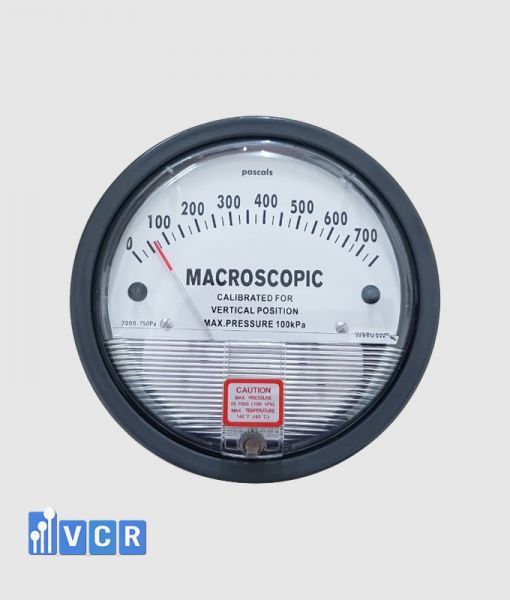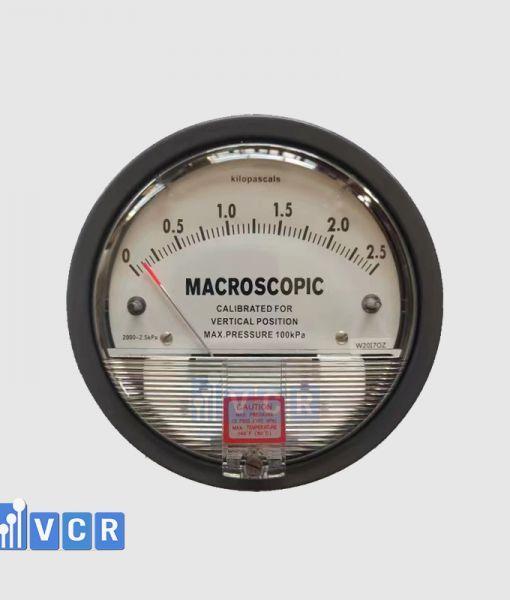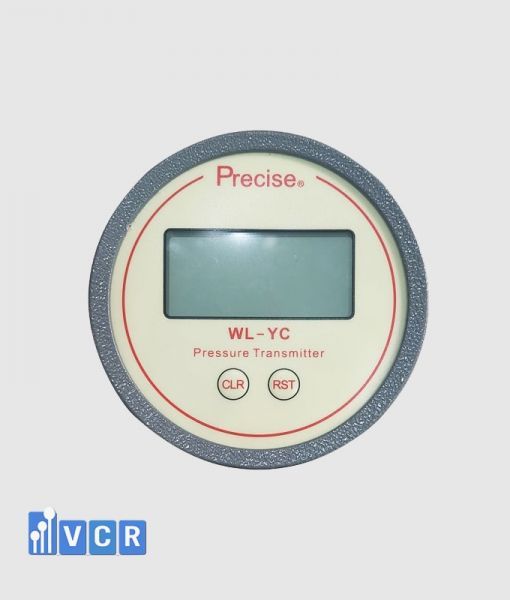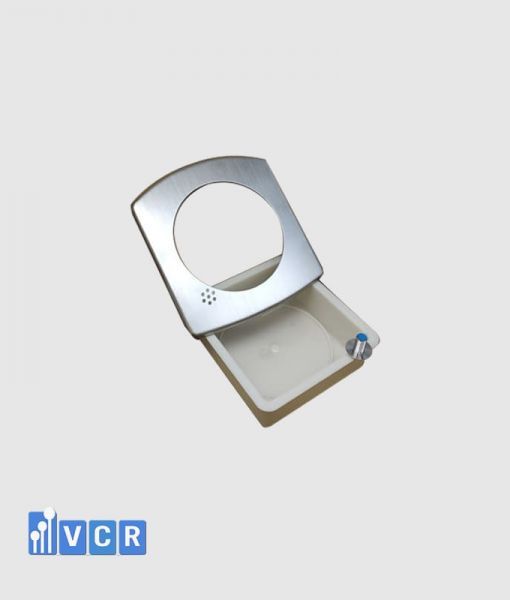

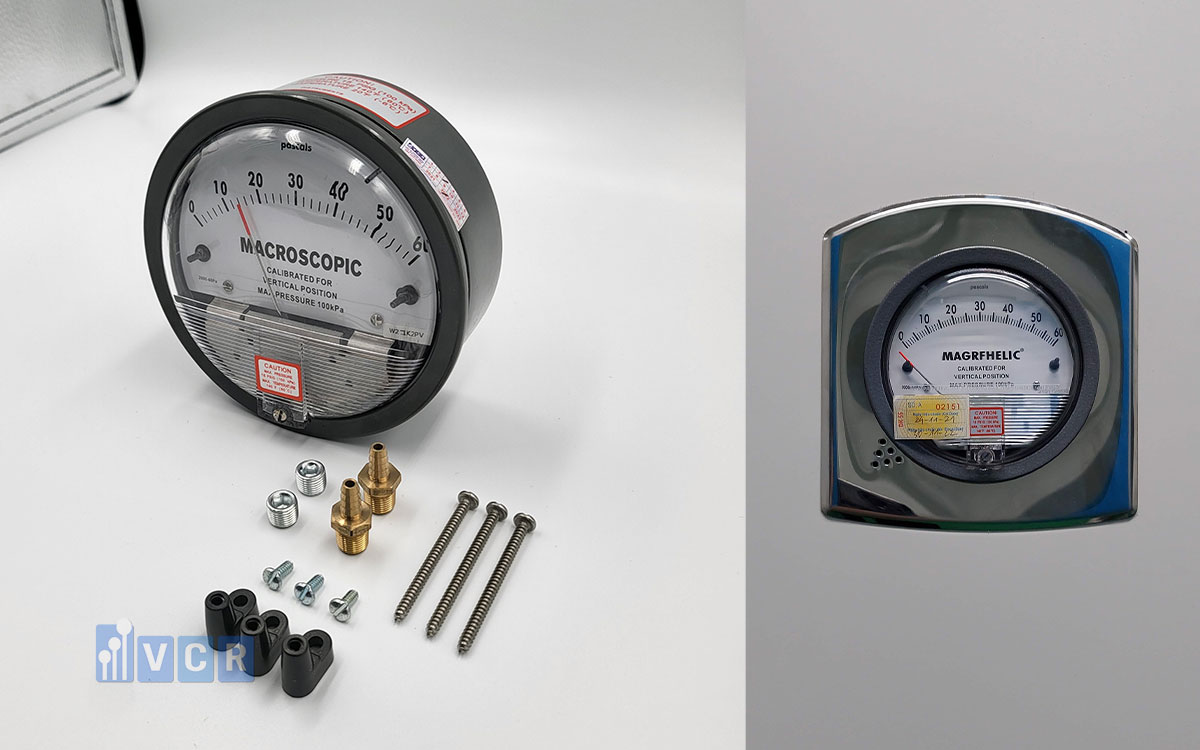
Differential pressure gauge accessories include mounting rings, brackets, pressure tubing, fittings, pressure taps, valves, and sealing components. Explore 20 frequently asked questions about their functions, selection, installation, compatibility, and applications in cleanroom environments.
Differential pressure gauges are essential instruments for monitoring pressure differences between controlled environments, helping maintain appropriate airflow direction and supporting contamination control in cleanrooms.
However, the accuracy and reliability of differential pressure monitoring depend not only on the gauge itself but also on the accessories used for mounting, pressure transmission, connection, testing, and maintenance.
Different installation conditions, including cleanroom sandwich panels, tempered glass partitions, HVAC ductwork, and air handling units, may require different accessory configurations.
VCR Cleanroom Equipment, a supplier of cleanroom equipment to cleanroom construction contractors in Vietnam, provides technical information to support appropriate equipment and accessory selection for cleanroom projects.
The following 20 frequently asked questions explain the definitions, functions, selection criteria, compatibility considerations, and applications of differential pressure gauge accessories in cleanroom environments.
Frequently Asked Questions About Differential Pressure Gauge Accessories
What are differential pressure gauge accessories?
Differential pressure gauge accessories are components used to mount, connect, operate, test, and maintain differential pressure gauges in pressure monitoring systems.
Common accessories include mounting rings, mounting brackets, mounting screws, pressure tubing, tube fittings, pressure taps, port plugs, isolation valves, and equalizing valves.
Additional components may include sealing gaskets, flush-mounting kits, protective mounting hardware, and specialized accessories for installation on cleanroom panels or glass partitions.
These accessories perform different functions. Mounting components secure the gauge, while tubing and fittings transmit pressure from the measurement points to the instrument.
Not every accessory is included with the gauge. The actual accessory package depends on the manufacturer, instrument model, installation configuration, and project requirements.
Why are differential pressure gauge accessories important in cleanrooms?
Differential pressure gauge accessories help ensure secure installation, reliable pressure transmission, and consistent measurement performance in cleanroom environments.
Cleanrooms often use pressure differences between adjacent rooms to support controlled airflow direction and reduce the risk of contamination or cross-contamination.
Pressure tubing, fittings, and pressure taps must provide sufficiently airtight connections to prevent leakage or blockage that could affect measurement accuracy.
Mounting brackets and fixing components help maintain the instrument's position and support accessibility for routine inspection and maintenance.
Incorrect accessory selection may introduce measurement errors, installation difficulties, or leakage paths through cleanroom partitions.
Therefore, accessory selection should be considered an integral part of differential pressure monitoring system design rather than a secondary installation detail.
What is a differential pressure gauge mounting ring?
A differential pressure gauge mounting ring is a mechanical accessory used to secure a gauge to a mounting surface, particularly in panel-mounted or recessed installations.
Depending on the instrument design, the mounting ring may work with retaining clips, mounting screws, or other fixing components to hold the gauge in position.
Its primary function is to maintain mechanical stability and prevent unwanted movement of the instrument during operation.
When selecting a mounting ring, installers should verify the gauge body diameter, mounting-hole dimensions, panel thickness, and manufacturer's fixing arrangement.
Mounting accessories are not necessarily interchangeable between different gauge brands or models.
For cleanroom applications, the mounting configuration should also support cleaning, inspection, and appropriate sealing around the installation opening.
What types of mounting brackets are available for differential pressure gauges?
Differential pressure gauge mounting brackets are mechanical components used to secure gauges to walls, panels, frames, pipes, or other structural surfaces.
Common mounting configurations include surface-mounted brackets, flush-mounting assemblies, frame-mounted supports, and pipe-mounting brackets.
Some gauges use integrated mounting tabs or dedicated mounting screws instead of separate brackets.
The appropriate bracket depends on the gauge design, installation location, available space, and mechanical support requirements.
In cleanroom environments, mounting accessories should provide sufficient stability while allowing convenient cleaning, inspection, calibration checks, and replacement.
Materials and exposed surfaces should also be compatible with the cleaning procedures used in the facility.
The manufacturer's installation instructions should always take priority when determining the mounting method.
What accessories are required to install a differential pressure gauge on cleanroom sandwich panels?
Installing a differential pressure gauge on a cleanroom sandwich panel may require a mounting bracket or ring, fixing screws, sealing gaskets, pressure tubing, and compatible tube fittings.
For flush-mounted installations, the contractor must verify the mounting-hole dimensions, panel thickness, and clearance behind the gauge.
Surface-mounted configurations may use a dedicated bracket or mounting plate compatible with the instrument.
Penetrations through the panel should be sealed according to the cleanroom construction requirements to maintain the integrity of the partition.
Installers should also consider the routing of pressure tubing, accessibility for maintenance, and the ability to clean the surrounding surfaces.
Proper planning helps prevent air leakage, mechanical damage, and unnecessary modifications to completed cleanroom partitions.
Can differential pressure gauges be installed on tempered glass partitions?
Differential pressure gauges can be installed near or on tempered glass partitions when an appropriate mounting system and structural support arrangement are used.
Possible solutions include brackets attached to the surrounding frame, independently supported mounting assemblies, or mounting openings incorporated into the glass design before tempering.
Tempered glass should not be drilled, cut, or mechanically modified after the tempering process because such operations can cause glass breakage.
The installation must account for mechanical loads, pressure tubing routing, protective gaskets, and the risk of concentrated stress on the glass.
Where possible, frame-mounted or independent support systems can reduce the need for direct modifications to glass panels.
The final arrangement should be reviewed against the glass manufacturer's requirements and the cleanroom partition design.
What is pressure tubing for differential pressure gauges?
Pressure tubing is a component used to transmit pressure from a measurement location to the pressure ports of a differential pressure gauge.
For measurements between two locations, separate pressure lines typically connect the high-pressure and low-pressure measurement points to the corresponding gauge ports.
Some gauge configurations measure pressure relative to the surrounding atmosphere and may therefore use only one connected pressure line.
Common tubing materials include silicone, PVC, polyurethane, and other materials compatible with the operating environment.
When selecting pressure tubing, important factors include internal diameter, external diameter, fitting compatibility, operating temperature, chemical resistance, and airtightness.
Excessively long tubing, leaks, kinks, condensation, or blocked lines can affect measurement performance, especially in low-pressure applications.
Is silicone tubing or PVC tubing better for differential pressure gauges?
Both silicone tubing and PVC tubing can be suitable for differential pressure gauge installations, depending on the application and operating conditions.
Silicone tubing is generally flexible and can be convenient for routing through confined spaces. PVC tubing is available in different flexibility grades and is widely used for pneumatic connections.
However, material selection should not be based on flexibility alone.
Installers must consider the tubing diameter, pressure fitting compatibility, temperature range, chemical exposure, cleaning agents, and the manufacturer's installation recommendations.
Tubing should maintain its shape without collapsing, kinking, or creating leakage at the connection points.
For certain permanent installations, rigid metallic tubing may also be appropriate.
The preferred tubing material is the one that meets the instrument specifications and project operating requirements.
What are differential pressure gauge fittings?
Differential pressure gauge fittings are connection components that join gauge pressure ports to pressure tubing or other pressure transmission lines.
Common fitting types include threaded fittings, barbed hose fittings, compression fittings, straight connectors, elbow fittings, and size adapters.
Their primary function is to establish a mechanically secure and sufficiently airtight pressure connection.
Some Dwyer Magnehelic models use 1/8-inch NPT pressure ports. NPT stands for National Pipe Taper, a tapered pipe-thread standard commonly used in North America.
However, port dimensions and thread specifications vary between instruments.
Incorrect fittings may cause leaks, damaged threads, or unreliable pressure readings.
Before purchasing fittings, users should verify the instrument model, pressure port specification, tubing dimensions, and applicable installation instructions.
What is a pressure tap in a cleanroom differential pressure monitoring system?
A pressure tap is a component or opening used to collect pressure information at a specific measurement location and connect that point to a pressure monitoring instrument.
In cleanrooms, pressure taps may be installed on room partitions, HVAC ducts, air handling units, or other equipment depending on the measurement objective.
For room-to-room differential pressure measurements, pressure tap locations should be selected to minimize the influence of direct supply air jets and localized pressure disturbances.
Pressure taps also need protection against blockage, mechanical damage, and leakage.
Their connection to pressure tubing should provide stable pressure transmission to the gauge.
The selection and positioning of pressure taps are important because unsuitable locations may produce readings that do not accurately represent the intended measurement conditions.
What is the difference between a static pressure tap and a standard pressure tap?
A static pressure tap is designed to measure static pressure while minimizing the influence of dynamic pressure caused by airflow movement.
Static pressure taps are particularly important in HVAC ductwork, where airflow velocity can affect measurements if the pressure sensing arrangement is unsuitable.
The term pressure tap is broader and can describe several types of pressure sampling arrangements used in different applications.
For cleanroom room-pressure monitoring, the pressure collection point should provide a representative measurement of the surrounding room pressure.
For duct measurements, pressure tap design and position may need to account for airflow direction, turbulence, and local velocity effects.
The correct arrangement depends on whether the system measures room differential pressure, duct static pressure, or pressure drop across a filtration component.
What is the function of a three-way valve in a differential pressure gauge system?
A three-way valve is a valve with three connection ports that can direct, isolate, or switch pressure flow paths depending on its internal design.
In differential pressure measurement systems, valve arrangements may support instrument isolation, pressure equalization, or connection to testing equipment.
However, not every three-way valve provides all these functions.
Specific functions depend on the valve design, internal flow passages, and installation configuration.
Some differential pressure systems require specialized valve manifolds rather than a single three-way valve.
For low-range cleanroom pressure gauges, the selected valve must provide adequate sealing and should not introduce leakage that could affect measurement performance.
The valve arrangement should be selected according to the instrument manufacturer's recommendations and the system piping diagram.
What is an equalizing valve for differential pressure gauges?
An equalizing valve is a component used to connect the high-pressure and low-pressure sides of a differential pressure measurement system during specified testing or maintenance procedures.
When both pressure ports are exposed to the same pressure, a correctly functioning differential pressure gauge should ideally indicate zero differential pressure.
This arrangement can help support zero-point checks and protect certain pressure sensing elements from excessive differential pressure during selected operations.
However, pressure equalization does not replace a complete calibration procedure.
The correct sequence for operating equalizing and isolation valves depends on the system configuration and instrument specifications.
For cleanroom applications, equalizing valves should be selected and installed carefully to avoid pressure leakage, unintended cross-connections, or disturbance of normal monitoring operation.
What is a pressure port plug, and why is it needed?
A pressure port plug is a sealing component used to close unused pressure connection ports on a differential pressure gauge.
Some instruments provide multiple high-pressure and low-pressure connections to support different mounting arrangements.
When only one pair of connections is used, additional ports may need to be sealed according to the manufacturer's instructions.
For two-line differential pressure measurement, unused pressure ports generally require appropriate sealing to prevent leakage.
However, certain gauge configurations use an atmospheric reference port that must remain open to the reference environment.
Therefore, installers should not automatically seal every unconnected port without verifying the instrument's measurement principle.
Correct use of pressure port plugs helps maintain pressure circuit integrity and supports reliable readings.
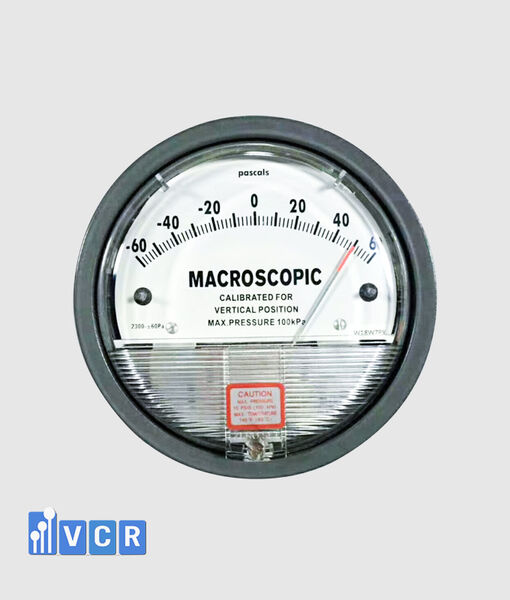
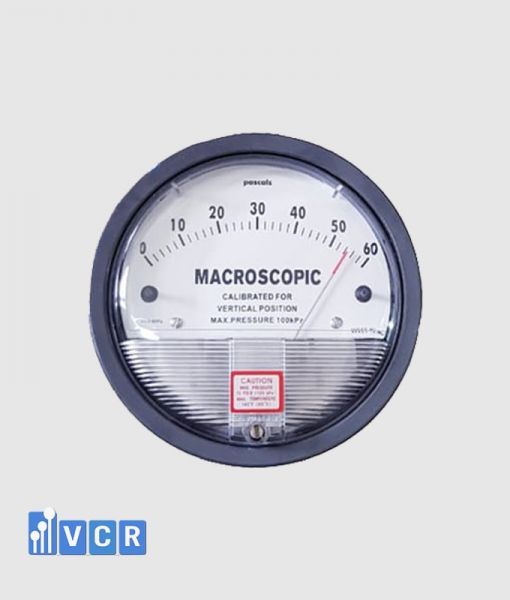
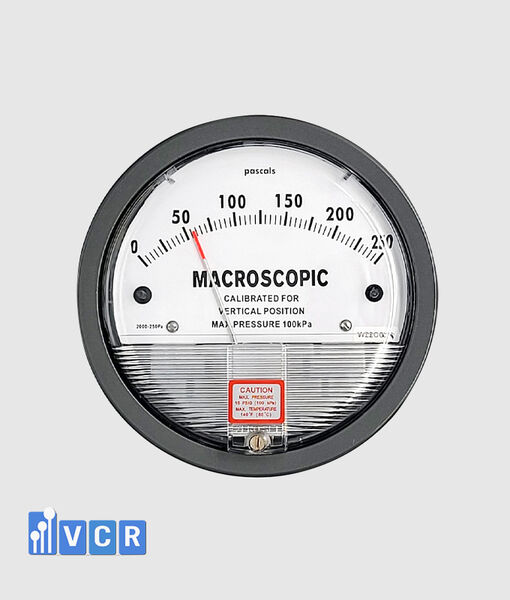
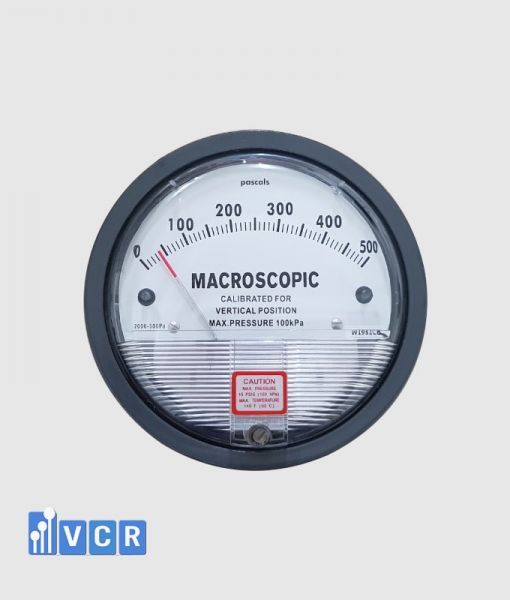
What accessories are commonly available for Dwyer Magnehelic differential pressure gauges?
Dwyer Magnehelic differential pressure gauges may be supplied with standard mounting and connection accessories, while additional accessories are available for specific applications.
Depending on the model and supplied configuration, standard accessories may include pressure port plugs, tubing adapters, mounting screws, and flush-mounting components.
Optional accessories may include pipe-mounting brackets, filter pressure monitoring kits, pressure tubing, and static pressure tips.
The specific accessory package depends on the instrument series and product configuration.
For example, accessory information for the Magnehelic Series 2000 should be checked against the manufacturer's current technical documentation.
Users should confirm the gauge model and supplied accessories before ordering additional components to avoid compatibility problems, missing parts, or unnecessary duplicate purchases.
Are accessories for mechanical and digital differential pressure gauges interchangeable?
Mechanical and digital differential pressure gauges may use similar pressure connection components, but their accessories are not necessarily interchangeable.
Both types of instruments can use pressure tubing, compatible fittings, and pressure taps to obtain measurements.
However, mechanical dial gauges typically use mounting arrangements designed for circular gauge bodies, whereas digital instruments may have different housings, panel cutouts, brackets, and fixing requirements.
Digital differential pressure gauges may also require electrical power supplies, signal cables, communication interfaces, or dedicated mounting accessories.
These electrical components are generally not required for traditional mechanical gauges.
Before substituting accessories between instrument types, users should verify the port dimensions, mounting specifications, pressure range, materials, and manufacturer requirements.
How do you select the correct accessories for a differential pressure gauge?
Selecting differential pressure gauge accessories requires evaluating the instrument specifications, measurement requirements, installation conditions, and operating environment.
The first step is to identify the manufacturer, model number, mounting dimensions, pressure port configuration, and tubing connection requirements.
Next, determine whether the gauge will be installed on a cleanroom panel, tempered glass partition, wall, HVAC duct, or other equipment.
Important considerations include connection airtightness, mechanical stability, maintenance access, cleaning compatibility, and pressure transmission reliability.
For low differential pressure ranges, special attention should be paid to potential leaks, blocked tubing, and poorly positioned pressure taps.
Accessories should be selected using the manufacturer's technical documentation rather than relying only on their physical appearance or nominal dimensions.
What are the most common mistakes when installing differential pressure gauge accessories?
Common installation mistakes include selecting incorrect fittings, using incompatible tubing dimensions, creating kinked pressure lines, leaving unintended leaks, and connecting high-pressure and low-pressure ports incorrectly.
Other problems include installing pressure taps near strong air jets, mounting the instrument in an unsuitable orientation, and failing to perform a zero-point check after installation.
In cleanrooms, poorly sealed panel penetrations may also compromise partition integrity.
Mounting components that do not fit correctly can create mechanical instability or make maintenance difficult.
To reduce these risks, installers should verify accessory compatibility, follow the connection diagram, inspect pressure tubing, check for leakage, and confirm proper instrument operation after installation.
Do differential pressure gauge accessories need to comply with cleanroom standards?
Differential pressure gauge accessories used in cleanrooms should be suitable for the facility's design requirements, environmental controls, and applicable regulatory expectations.
ISO 14644 is a family of standards addressing cleanrooms and associated controlled environments.
For sterile pharmaceutical manufacturing, EU GMP Annex 1 includes requirements relating to pressure differentials, monitoring, and contamination control.
However, these standards do not mean that every individual pressure gauge accessory must carry a separate ISO 14644 certification.
Accessory suitability should be evaluated based on materials, cleanability, airtightness, compatibility, installation quality, and measurement performance.
Project specifications, manufacturer instructions, and relevant qualification activities should be used to confirm that the installed monitoring arrangement meets the facility's requirements.
Where can cleanroom contractors purchase differential pressure gauge accessories?
Cleanroom contractors can purchase differential pressure gauge accessories from suppliers specializing in pressure measurement instruments, HVAC equipment, industrial instrumentation, or cleanroom equipment.
A suitable supplier should be able to provide technical specifications and help confirm accessory compatibility with the intended gauge model and installation arrangement.
Before requesting a quotation, contractors should prepare the instrument model number, product photographs, pressure port specifications, tubing dimensions, and installation drawings or site photographs.
For cleanroom projects, these details are particularly important when accessories must fit existing sandwich panels, glass partitions, or pressure monitoring arrangements.
Contractors should also confirm the accessory list, product origin, availability, documentation, delivery conditions, and any project-specific quality requirements.
Conclusion
Differential pressure gauge accessories include mechanical mounting components, pressure transmission tubing, connection fittings, pressure taps, valves, and sealing components. Each accessory contributes to the installation, operation, reliability, or maintenance of the pressure measurement system.
For cleanroom applications, the correct accessory configuration depends on the gauge model, pressure monitoring requirements, installation location, and environmental conditions.
Understanding the function and compatibility of each component helps cleanroom contractors reduce installation errors, maintain pressure circuit integrity, and support reliable differential pressure monitoring.
VCR Cleanroom Equipment – Equipment Supply Support for Cleanroom Contractors
VCR Cleanroom Equipment supplies cleanroom equipment to contractors serving pharmaceutical, electronics, medical device, food processing, and other controlled-environment industries in Vietnam.
For differential pressure gauges and related accessories, contractors can contact VCR to discuss technical specifications, product compatibility, accessory requirements, and equipment supply options for their projects.
Contact VCR Cleanroom Equipment for technical consultation and product inquiries.