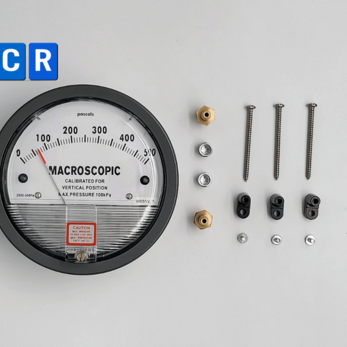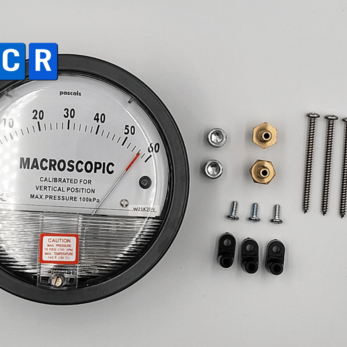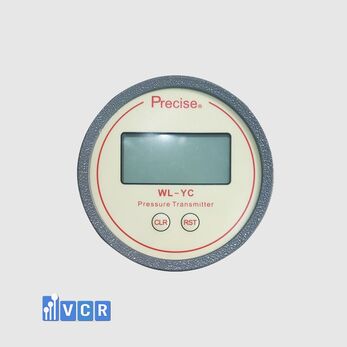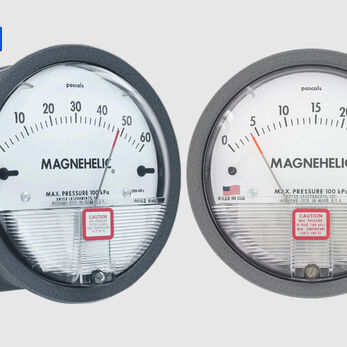

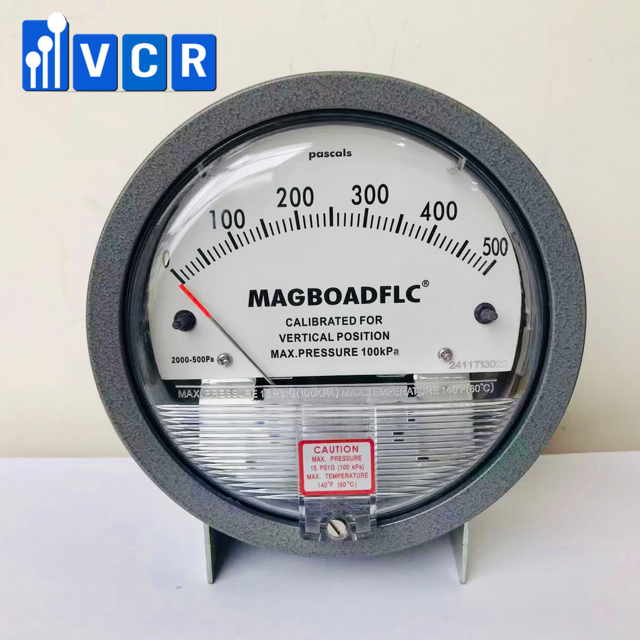
Differential pressure gauges help factories in My Phuoc III Industrial Park monitor cleanroom pressure, HEPA filter resistance and HVAC performance. Proper range selection, installation and calibration documentation support reliable operation, commissioning and maintenance.
- Demand for differential pressure gauges in My Phuoc III Industrial Park
- What is a differential pressure gauge?
- Why differential pressure matters in cleanrooms
- Room-pressure monitoring
- Monitoring HEPA filter pressure drop
- AHU and HVAC applications
- Applications on cleanroom equipment
- Common differential pressure ranges
- Mechanical or digital differential pressure gauge
- Selecting a supplier in My Phuoc III Industrial Park
- Calibration and commissioning
- Frequently asked questions
- Differential pressure gauge consultation for My Phuoc III Industrial Park
Demand for differential pressure gauges in My Phuoc III Industrial Park
My Phuoc III Industrial Park is a major manufacturing location in Binh Duong, accommodating factories involved in mechanical engineering, electrical and electronic products, food processing, pharmaceuticals, cosmetics, industrial equipment, packaging and supporting industries.
Factories operating cleanrooms, dust-controlled production spaces, laboratories, precision manufacturing areas and controlled production environments require more than temperature and humidity control.
HVAC systems must also maintain filtration performance, airflow direction and pressure relationships between adjacent spaces.
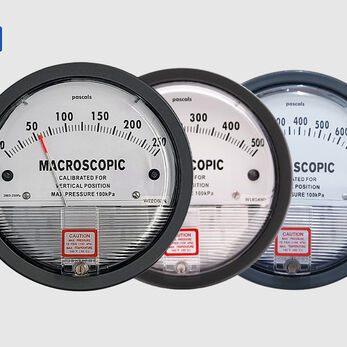
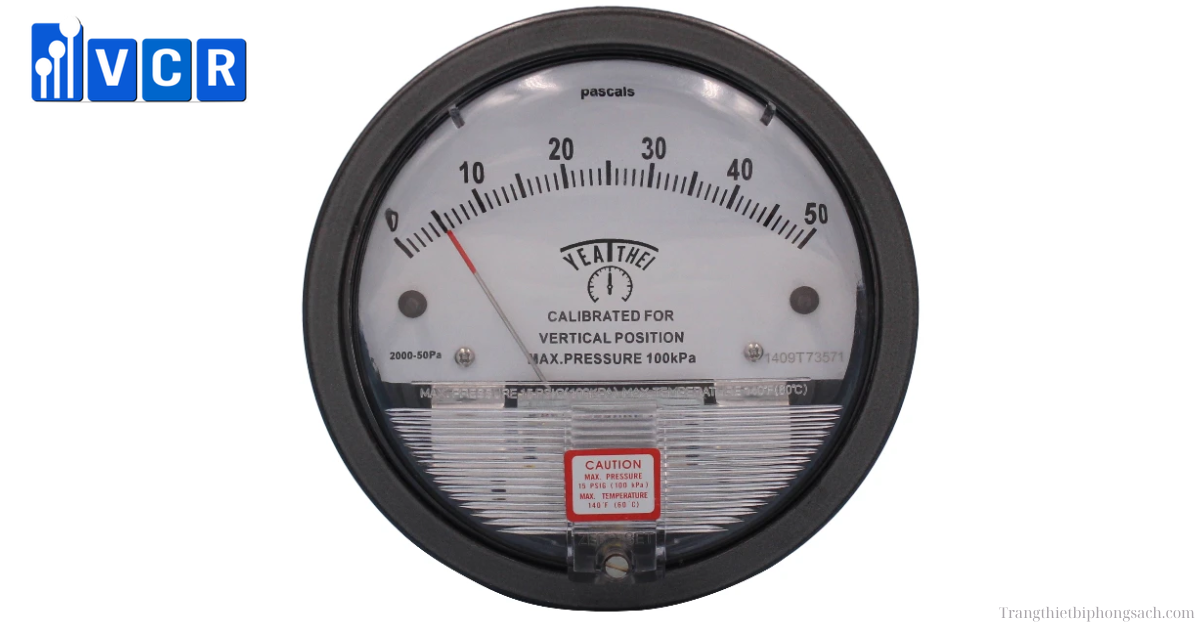
A differential pressure gauge measures the pressure difference between two locations.
It may be installed between a cleanroom and a corridor, between a cleanroom and an airlock, between areas with different environmental-control requirements or upstream and downstream of a HEPA filter.
Differential pressure gauges are also used on AHUs, HEPA Boxes, Dynamic Pass Boxes, dispensing booths, LAF units and other clean-air equipment.
For cleanroom contractors, selecting the correct instrument during the design stage helps reduce changes during testing, commissioning and final acceptance.
What is a differential pressure gauge?
A differential pressure gauge measures the difference between two pressure points.
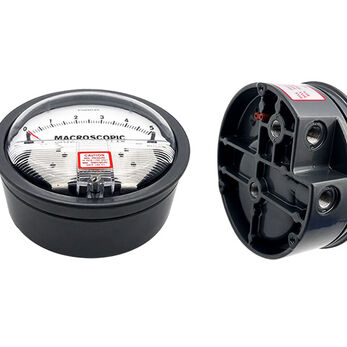
It normally includes a high-pressure port and a low-pressure port connected to the monitored points through pressure tubing.
The displayed reading represents the difference between the two pressures rather than the absolute pressure at either location.
In cleanrooms, gauges are commonly used to monitor pressure relationships between adjacent controlled areas.
In filtration systems, they are used to measure pressure loss across air filters.
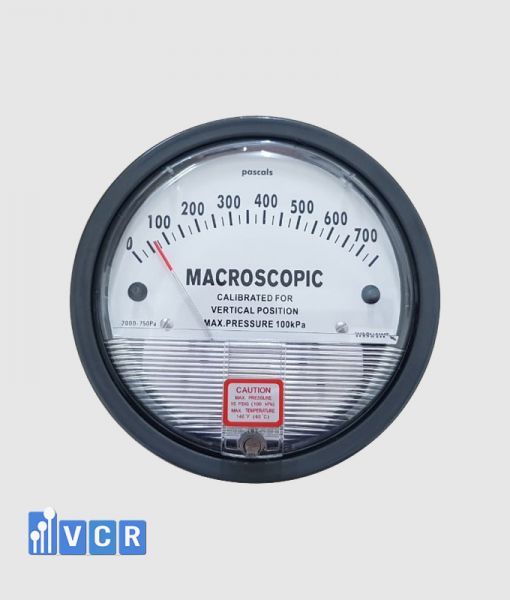
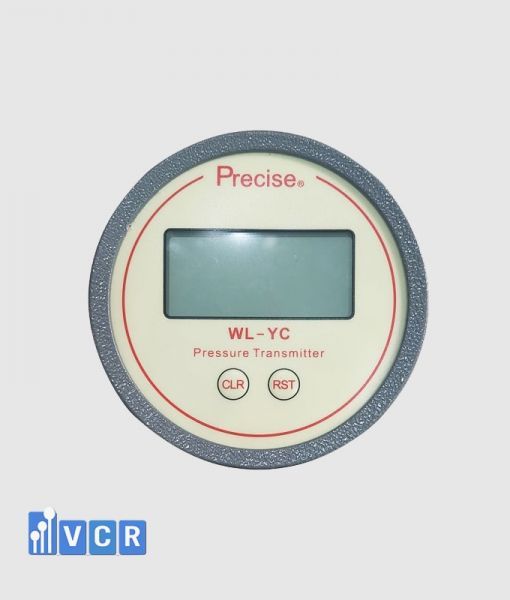
Mechanical differential pressure gauges provide simple local indication, while digital gauges and transmitters may provide alarms, signal outputs and integration with central monitoring systems.
Why differential pressure matters in cleanrooms
Air naturally tends to move from an area of higher pressure toward an area of lower pressure.
Cleanroom HVAC systems use this principle to establish the required airflow direction.
Where product protection is required, a cleaner room is commonly maintained at higher pressure than the adjacent space. When doors open or leakage paths exist, airflow tends to move outward.
For containment applications, selected rooms may operate under negative pressure so that air moves inward and contaminants are less likely to spread.
There is no single differential-pressure value suitable for every cleanroom.
The required target depends on manufacturing processes, room tightness, door-opening frequency, supply airflow, return airflow and contamination-control strategy.
A differential pressure gauge enables operators to verify whether the intended pressure relationship is maintained during actual operation.
Room-pressure monitoring
Factories in My Phuoc III Industrial Park may install differential pressure gauges between production rooms and corridors, between cleanrooms and airlocks or between areas with different environmental requirements.
The gauge display is normally positioned near the entrance for convenient inspection.
Pressure taps should represent room static pressure. They should not be installed directly in strong supply-air streams or immediately beside fans.
If differential pressure falls unexpectedly, possible causes include open doors, damaged seals, reduced supply airflow, increased return airflow, fan-performance changes or damper movement.
An unusually high reading may indicate restricted return airflow, increased supply volume or changes in damper and door positions.
Pressure readings should therefore be assessed together with HVAC operating conditions.
Monitoring HEPA filter pressure drop
Differential pressure gauges are widely used for monitoring HEPA filter resistance.
One pressure tap is positioned upstream and another downstream of the filter.
As air passes through the filter media, resistance creates a measurable pressure difference.
As dust accumulates, filter resistance generally increases. Recording pressure trends gives maintenance personnel useful information about filter loading.
When a new filter is installed, the initial pressure drop should be recorded at normal operating airflow.
High differential pressure does not automatically mean that a HEPA filter has failed. Increased airflow, filter loading or blocked pressure tubing may affect the reading.
Low differential pressure also does not prove that a filter remains effective. Filter damage, poor sealing or bypass airflow may reduce resistance while compromising filtration performance.
HEPA filter condition should therefore be assessed together with leakage or integrity testing and airflow measurements.
AHU and HVAC applications
Air-handling units commonly include several filtration stages such as prefilters, intermediate filters and fine filters. Selected systems may also use HEPA filters.
Each filtration stage has its own initial pressure drop and recommended final resistance.
The same gauge range should not automatically be used for every filter.
If the range is too wide, meaningful changes may be difficult to observe. If the range is too narrow, the instrument may operate close to or beyond full scale.
Pressure taps must be installed correctly upstream and downstream of the filter.
Tubing should be protected against leakage, kinking, blockage and condensation.
After replacing a filter, the initial pressure drop should be recorded at normal operating airflow.
Trend-based monitoring supports condition-based maintenance rather than relying only on fixed replacement schedules.
Applications on cleanroom equipment
Differential pressure gauges can also be installed on Dynamic Pass Boxes, Air Showers, Laminar Air Flow units, Fan Filter Units, Dispensing Booths, Sampling Booths and HEPA Boxes.
On dispensing booths and LAF units, the gauge commonly monitors HEPA filter resistance.
On a Dynamic Pass Box, it may monitor filter pressure drop or chamber pressure.
AHUs with several filtration stages may use separate gauges across individual filters to simplify maintenance monitoring.
Because airflow rate, filter size and resistance vary between different equipment types, gauge selection should be based on actual technical data.
Common differential pressure ranges
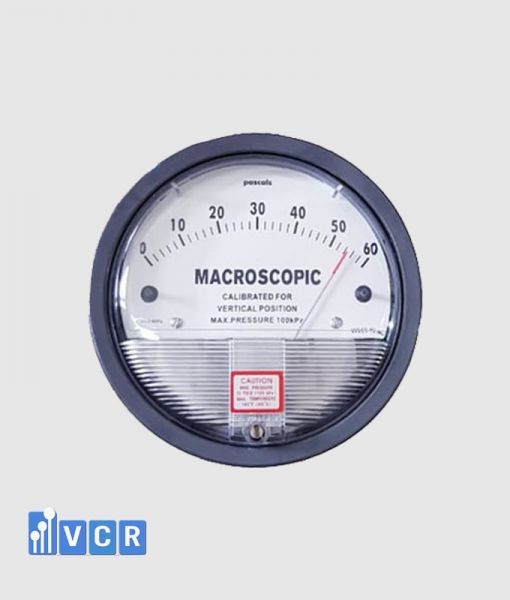
For room-pressure monitoring, ranges such as 0–30 Pa, 0–60 Pa, 0–100 Pa and 0–125 Pa may be considered.
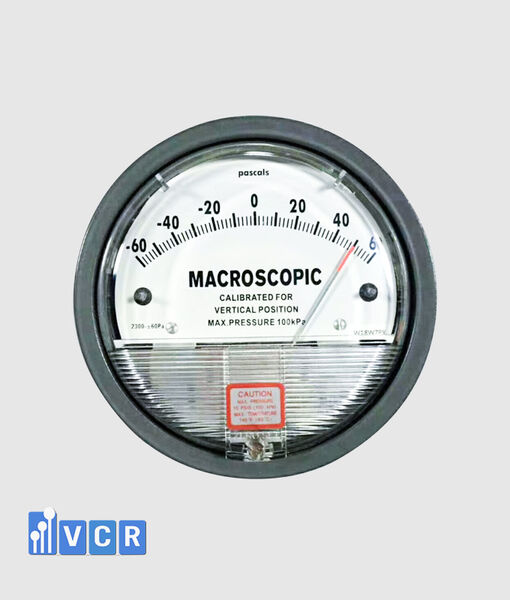
Where both positive and negative pressure need to be displayed, bidirectional ranges such as -30 to +30 Pa or -60 to +60 Pa may be appropriate.
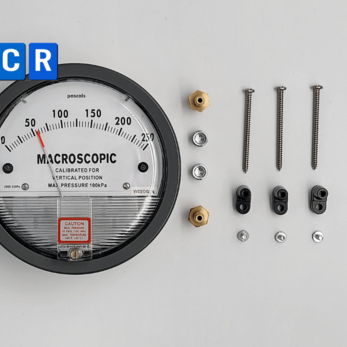
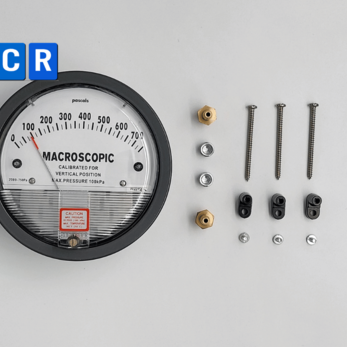
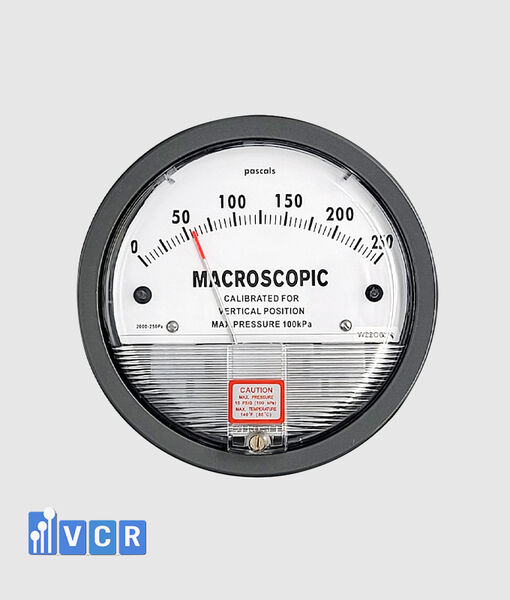
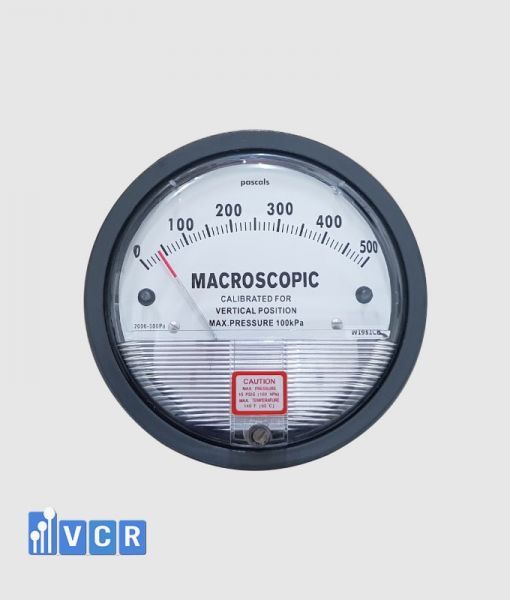
For HEPA filters and controlled-air equipment, ranges such as 0–250 Pa, 0–500 Pa, 0–750 Pa and 0–1,000 Pa may be considered depending on the designed resistance.
These ranges are references rather than universal specifications.
Final selection should be based on expected operating pressure, filter data and required reading resolution.
The widest available range is not necessarily the best option.
Mechanical or digital differential pressure gauge
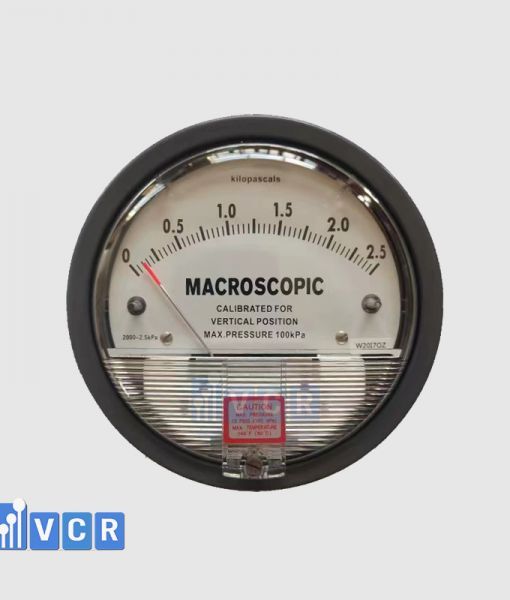
Mechanical differential pressure gauges are suitable where simple local indication is sufficient.
They are easy to read and normally do not require electrical power for basic display.
Digital gauges and differential pressure transmitters are more suitable where continuous monitoring, alarms or data transmission are required.
Depending on the model, outputs may include 4–20 mA, 0–10 V, relay contacts or communication protocols.
For routine manual inspections, a mechanical gauge may be sufficient.
For critical measuring points requiring alarms, trend data or integration with central monitoring systems, digital instruments provide greater functionality.
Selecting a supplier in My Phuoc III Industrial Park
A suitable supplier should first understand where the gauge will be installed and what it is intended to monitor.
For cleanroom pressure monitoring, the supplier should understand pressure cascades, airlocks, room tightness and airflow balancing.
For filter applications, the supplier should consider initial pressure drop, recommended final resistance, operating airflow and filter characteristics.
Vietnam Cleanroom Equipment, also known as VCR Cleanroom, supplies differential pressure gauges and other cleanroom equipment to cleanroom contractors, MEP companies, system integrators and industrial factories.
Products are selected according to actual application, measuring range, operating conditions and project-documentation requirements rather than only by product code or purchase price.
The supplier should also be able to support technical datasheets, installation instructions and calibration documentation when required.
Calibration and commissioning
Calibration is important where differential pressure is treated as a monitored or controlled parameter.
A calibration certificate should identify the instrument model, serial number, measuring range, test points and measurement errors.
A manufacturer's quality certificate does not necessarily replace an individual calibration certificate where measurement traceability is required.
Before commissioning, contractors should verify the model, range, engineering unit, mounting position, pressure-port connections and zero indication.
For digital instruments, the power supply, signal outputs, alarm thresholds and connection to the control system should also be tested.
Even a calibrated gauge can provide an incorrect field reading if the tubing leaks, becomes blocked, contains condensation or is connected incorrectly.
Commissioning should therefore assess the complete measuring loop.
Frequently asked questions
Where can factories in My Phuoc III Industrial Park buy differential pressure gauges?
Factories should choose a supplier with practical cleanroom and HVAC experience that can support range selection, accessories, installation and calibration documentation. Vietnam Cleanroom Equipment supplies differential pressure gauges to factories and cleanroom contractors serving projects in Binh Duong.
Can a room-pressure gauge be used across a HEPA filter?
Only if its measuring range and maximum pressure limit are suitable. Room-pressure applications normally require significantly lower ranges than HEPA filter monitoring.
Does high differential pressure mean a HEPA filter should be replaced immediately?
Not always. Airflow, filter loading, pressure tubing and the filter manufacturer's recommended final resistance should also be considered.
Is a gauge defective if it does not return to zero?
Not necessarily. Both ports should first be exposed to equal pressure. The tubing, condensation, mounting position and zero adjustment should then be checked.
Can a differential pressure gauge determine cleanroom classification?
No. It only measures pressure difference. Cleanroom classification is determined through airborne particle concentration measurements and other applicable tests.
Differential pressure gauge consultation for My Phuoc III Industrial Park
When requesting technical advice or a quotation, factories and contractors should specify the installation location, expected pressure range, display type, signal requirements, quantity and documentation requirements.
Vietnam Cleanroom Equipment supplies differential pressure gauges for cleanrooms, AHUs, HVAC systems, HEPA filters, Dynamic Pass Boxes, dispensing booths, LAF units and other controlled-air equipment for projects in My Phuoc III Industrial Park.
Correctly defining the application from the beginning helps select the appropriate model, reduce installation changes and improve commissioning, project acceptance and long-term maintenance.