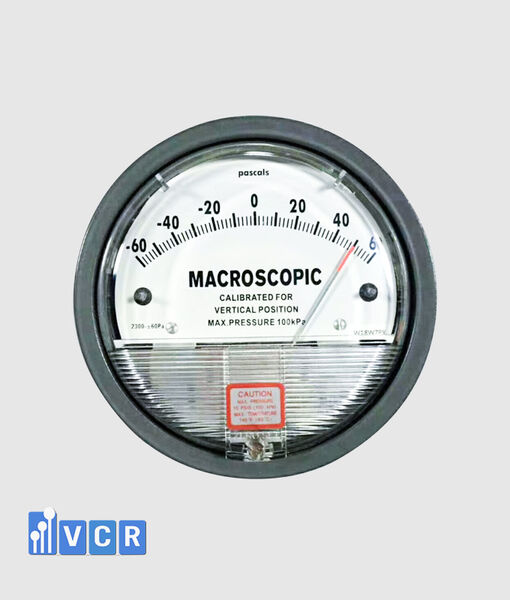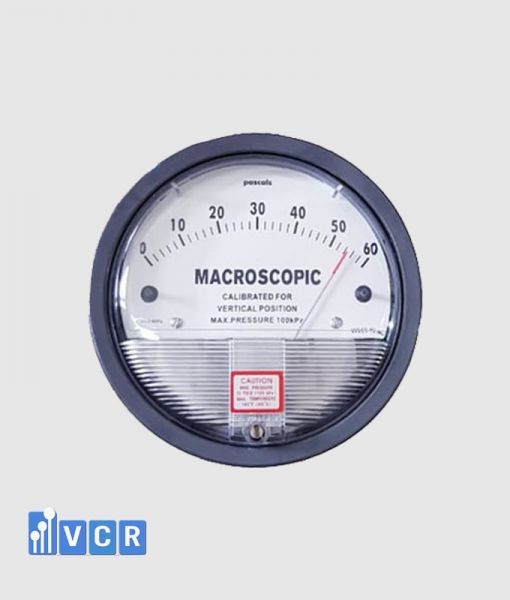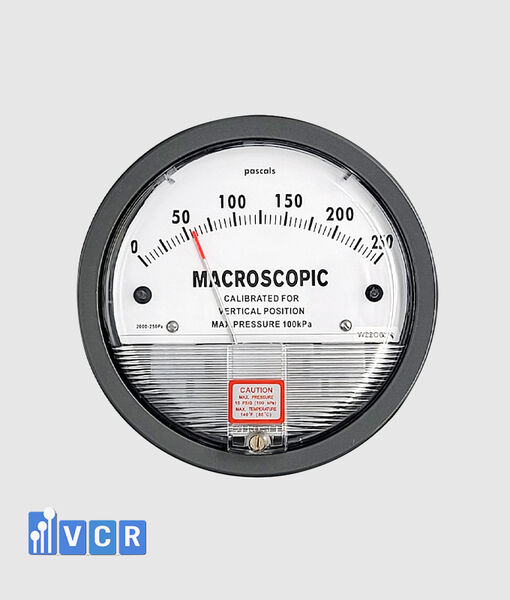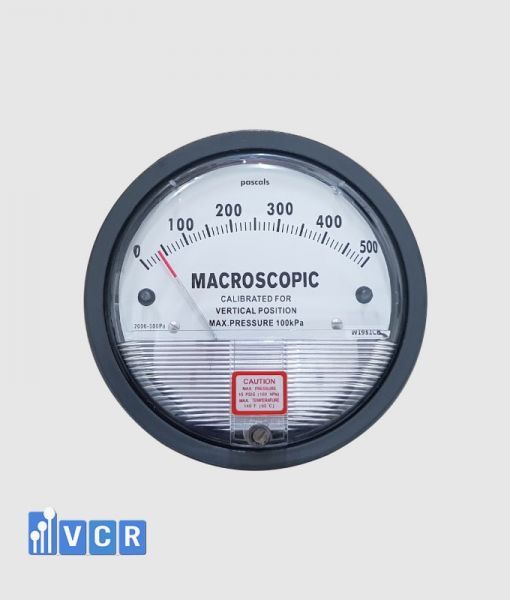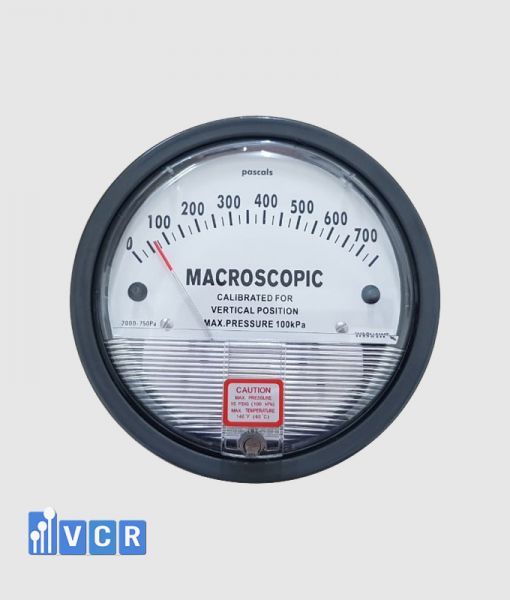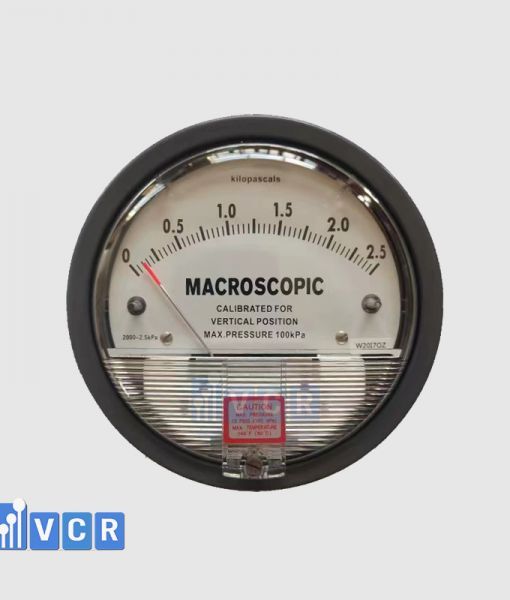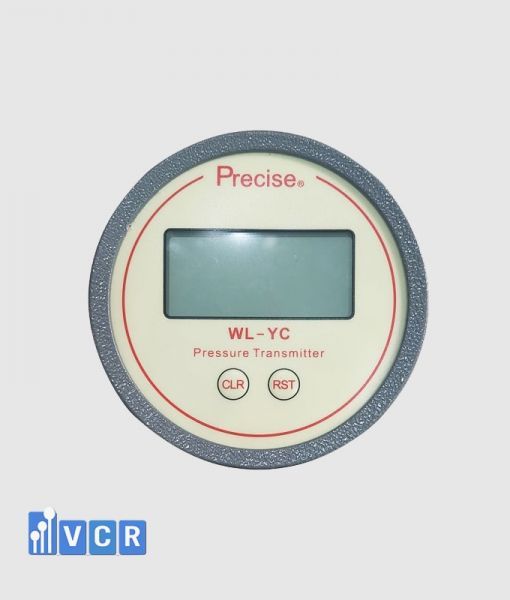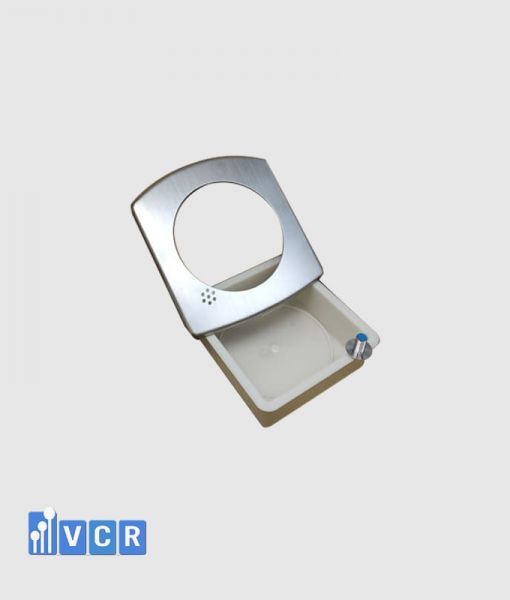

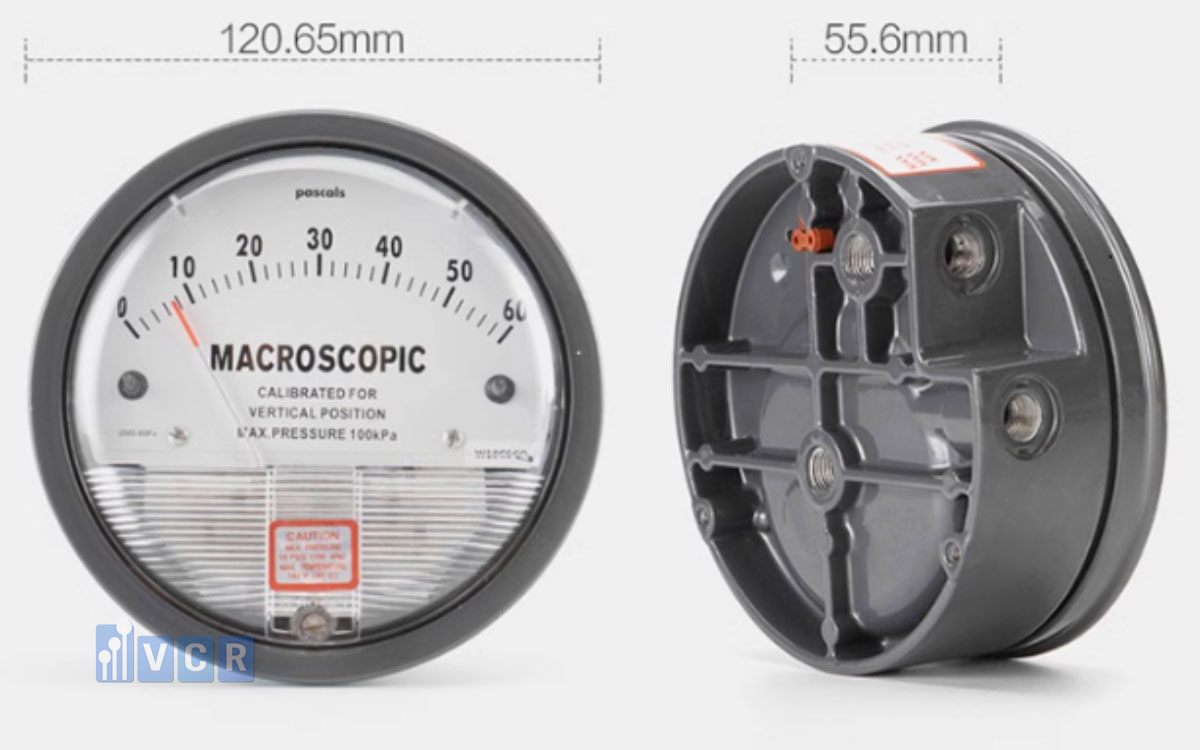
When buying a genuine differential pressure gauge, businesses should check the brand, model, measuring range, documents, calibration, labels, product condition, and suitability for cleanroom applications. Proper checking helps avoid unclear-origin products, wrong ranges, or missing acceptance documents.
- What Should You Check When Buying a Genuine Differential Pressure Gauge?
- Check the Brand, Model, and Product Code
- Check the Measuring Range and Pressure Unit
- Check Labels, Serial Number, and Product Condition
- Check CO, CQ, and Accompanying Documents
- Check Calibration Capability
- Check Accuracy and Protection Level
- Check Suitability for Cleanroom Applications
- Check Whether the Supplier Understands Cleanrooms
- Common Mistakes When Buying Genuine Differential Pressure Gauges
- Where to Buy Genuine Differential Pressure Gauges
- Frequently Asked Questions
- What Should Be Checked First When Buying a Genuine Differential Pressure Gauge?
- Are CO and CQ Enough to Prove a Gauge Is Genuine?
- Does a Genuine Differential Pressure Gauge Need Calibration?
- How Can I Know Whether the Measuring Range Is Suitable?
- Why Shouldn’t Businesses Choose Only by Low Price?
- What Are the Benefits of Buying Genuine Gauges from VCR?
- Conclusion
What Should You Check When Buying a Genuine Differential Pressure Gauge?
When buying a genuine differential pressure gauge, businesses should carefully check the product, documentation, and suitability for actual applications. In cleanrooms, this device is not only used to display pressure but also directly related to airflow control, HEPA filtration, room pressure, buffer rooms, airlocks, AHU - Air Handling Unit, FFU - Fan Filter Unit, HEPA Boxes, and operating records.
If a facility purchases unclear-origin products, wrong measuring ranges, or devices without required documents, it may face difficulties during installation, acceptance, calibration, or GMP assessment. Two gauges may look similar externally but differ in accuracy, range, materials, accessories, signal output, or calibration capability.
VCR Cleanroom Equipment advises and supplies differential pressure gauges for cleanrooms, GMP factories, hospitals, laboratories, pharmaceutical, cosmetic, food, electronics, semiconductor, and medical device manufacturing. When buying, customers should check origin – specifications – documentation – application – technical support to ensure correct selection.
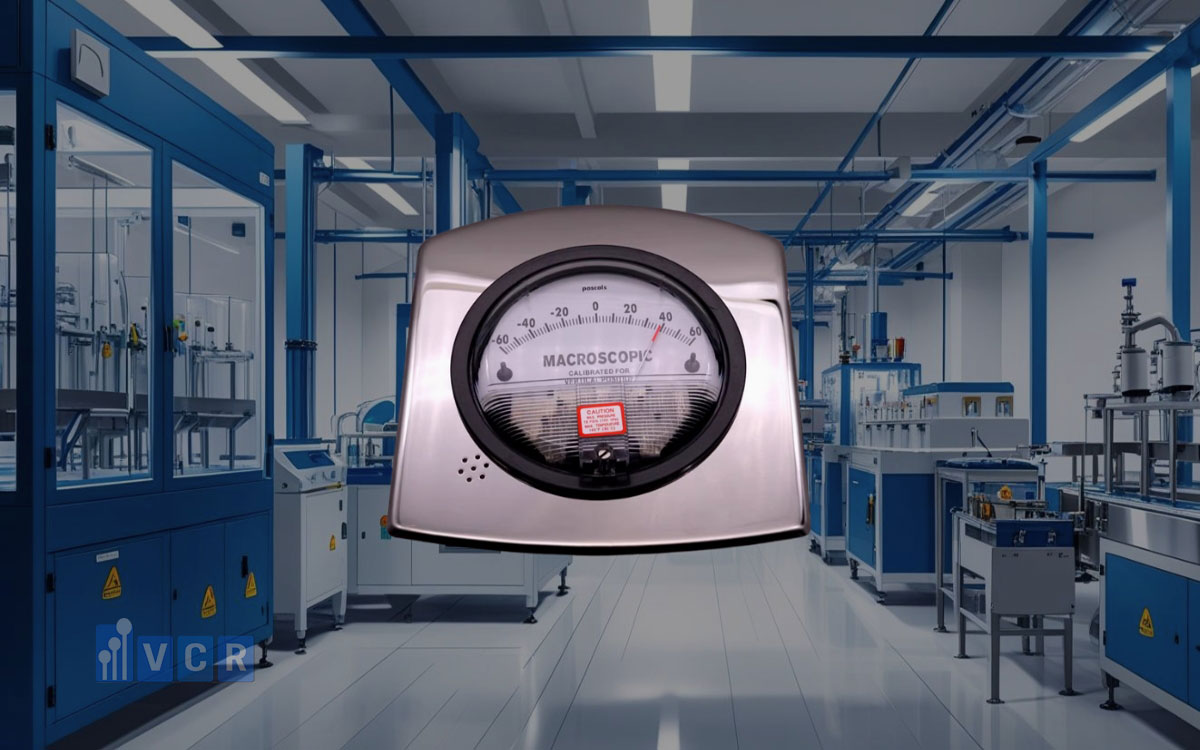
Check the Brand, Model, and Product Code
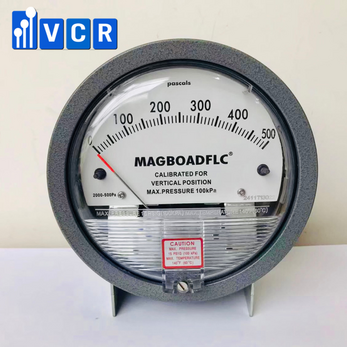
The first point to check is the brand, model, and product code on the gauge. The information on the product should match the quotation, purchase order, delivery note, catalogue, or datasheet. If the model does not match, the measuring range, accuracy, mounting type, or technical specification may be different from the original requirement.
For differential pressure gauges used in cleanrooms, even a wrong model or range can make the device difficult to read or unsuitable for the installation position. For example, a gauge used for room pressure monitoring requires a different range from one used for HEPA filter or HEPA Box monitoring.
Businesses should ask the supplier to clearly confirm the brand, model, measuring range, pressure unit, mounting type, accessories, and recommended application. VCR Cleanroom Equipment can help compare the model with actual requirements to avoid wrong selection.
Check the Measuring Range and Pressure Unit
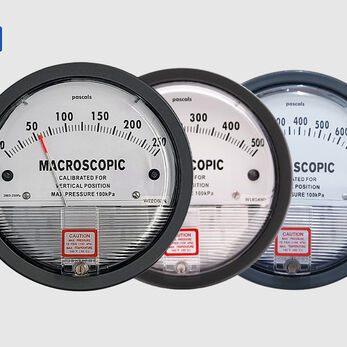
Measuring range is a very important factor when buying a genuine differential pressure gauge. The range must match the application and should not be selected by habit or used as one common range for every location. If the range is too large, operators may find it difficult to detect small changes. If the range is too small, the gauge may exceed scale when the system changes.
For room-to-room differential pressure monitoring, a sensitive and easy-to-read range should be selected according to the designed pressure difference. For HEPA filter, AHU, FFU, or HEPA Box monitoring, the range should match filter resistance and airflow volume.
The pressure unit should also be checked, such as Pa, mmH2O, in.wg, or kPa. In cleanrooms, Pa is commonly used. If the wrong unit is selected, operators may find it difficult to read values or may need conversion when recording data.
Check Labels, Serial Number, and Product Condition
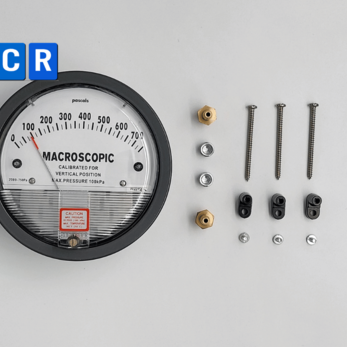
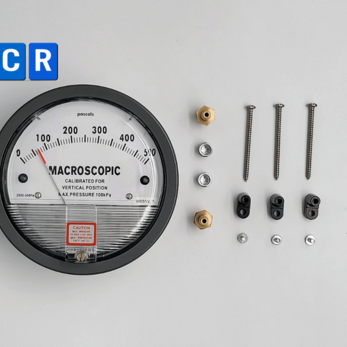
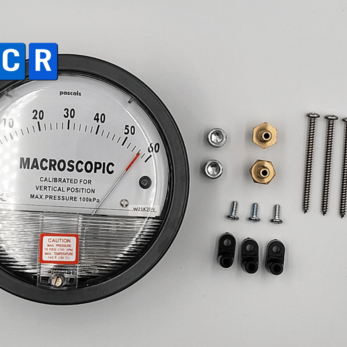
When receiving goods, businesses should check labels, serial number, gauge face, pointer, housing, pressure ports, accessories, and packaging. Genuine products usually have clear labels, readable information, and good finishing. If the label is unclear, information is incorrect, the housing is heavily scratched, or the pointer does not return to zero, the product should be checked again before installation.
Serial numbers or identification codes help with product traceability during warranty, calibration, or measuring equipment management. For GMP projects, hospitals, laboratories, or cleanrooms requiring documentation, this information should be recorded in the equipment list.
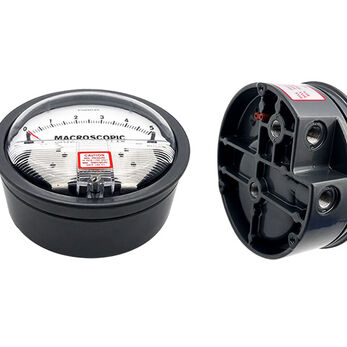
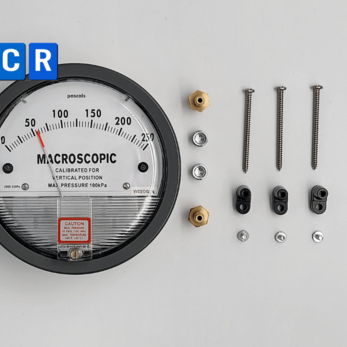
Accessories such as high and low pressure ports, pressure tubing, mounting parts, screws, brackets, or other components should also be checked. If accessories are missing, installation may be delayed or unsuitable replacement parts may be used, affecting reading reliability.
Check CO, CQ, and Accompanying Documents
CO stands for Certificate of Origin. CQ stands for Certificate of Quality. When buying genuine differential pressure gauges for cleanrooms, especially GMP factories, businesses should check whether CO and CQ are available if required by the project.
In addition to CO and CQ, catalogues, datasheets, installation manuals, warranty documents, VAT invoices, delivery records, and calibration certificates should be checked when needed. For electronic differential pressure gauges or sensors, wiring diagrams, power supply specifications, and 4-20mA or 0-10V output information should also be available.
Complete documentation supports acceptance, internal inspection, audits, and measuring equipment management. VCR Cleanroom Equipment can help customers check documentation requirements according to each brand, model, and project.
Check Calibration Capability
Differential pressure gauges used in cleanrooms should have suitable inspection and calibration capability. For important areas such as GMP cleanrooms, sterile rooms, filling rooms, laboratories, negative pressure rooms, HEPA Boxes, or AHU systems, calibration helps ensure reliable readings during operation.
When buying, businesses should ask whether the device can be calibrated, what calibration points are possible, whether an initial calibration certificate is required, and what internal calibration cycle may be expected. For critical measuring points, a calibration certificate may be mandatory for project acceptance.
CO and CQ should not be confused with calibration certificates. CO confirms origin, CQ confirms manufacturer quality, while calibration is related to measuring accuracy at the time of testing.
Check Accuracy and Protection Level
Accuracy should be checked in the datasheet or technical specifications. General cleanrooms may have different requirements from sterile rooms, critical GMP areas, or continuously monitored zones. Price should not be the only selection factor if accuracy and long-term stability are important.
If the gauge is installed in an area with humidity, cleaning chemicals, vibration, or technical space conditions, protection level, housing material, gauge face, pressure ports, and accessories should be considered. This helps the device operate more stably in real conditions.
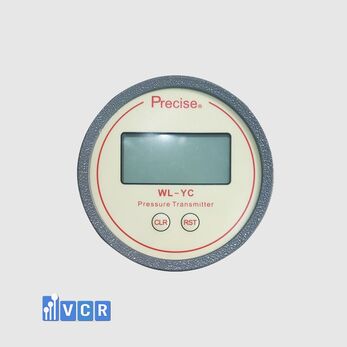
For electronic devices or sensors, power supply, output signal, display, alarm relay, BMS/EMS connection, and configuration instructions should also be checked. If the electrical specification is selected incorrectly, the device may not integrate with the monitoring system.
Check Suitability for Cleanroom Applications
A genuine gauge that is not suitable for the application can still create operational problems. Therefore, businesses should check whether the gauge is used for room pressure monitoring, HEPA filter monitoring, HEPA Boxes, AHU, FFU, Pass Boxes, Air Showers, Clean Booths, negative pressure rooms, or positive pressure rooms.
Room pressure monitoring usually requires a small and sensitive range. HEPA filter monitoring usually requires a higher range. Negative pressure rooms require negative or negative-positive ranges. Devices with 4-20mA output are suitable for areas requiring continuous monitoring or BMS/EMS connection.
Before buying, businesses should provide installation location, measurement purpose, reference area, desired pressure range, and documentation requirements. VCR Cleanroom Equipment can use this information to recommend a more suitable model.
Check Whether the Supplier Understands Cleanrooms
When buying genuine differential pressure gauges, businesses need not only the correct brand but also a supplier that understands cleanroom applications. A non-specialized seller may provide the model but may not advise correctly on measuring range, pressure tapping points, high-low port connection, calibration documents, or application suitability.
A cleanroom equipment specialist understands the relationship between differential pressure gauges, HVAC, HEPA filtration, buffer rooms, airlocks, pressure zoning, and cross-contamination control. This helps businesses avoid selecting the wrong device from the beginning.
VCR Cleanroom Equipment can advise based on actual applications, from mechanical gauges for local observation to differential pressure sensors with 4-20mA signal for BMS/EMS. VCR also supports customers with documentation, certificates, and selection plans according to project requirements.
Common Mistakes When Buying Genuine Differential Pressure Gauges
The first mistake is asking only for price without checking measuring range and application. Two gauges may look similar but different ranges create very different operating results.
The second mistake is confusing CO and CQ with calibration. CO and CQ are origin and quality documents, while calibration checks measuring accuracy. For critical positions, calibration certificate requirements should be clarified.
The third mistake is buying a genuine product that is unsuitable for the installation position. If a large range is used for room pressure monitoring, readings may be difficult to observe. If a small range is used for HEPA filters, the gauge may exceed scale.
The fourth mistake is not checking accessories and pressure tapping parts. Missing pressure tubing, connectors, or mounting accessories may delay installation and affect installation quality.
The fifth mistake is not checking after-sales support. In cleanroom applications, customers may later need support for installation, calibration, replacement, or abnormal readings. Therefore, a supplier with technical support capability should be selected.
Where to Buy Genuine Differential Pressure Gauges
Businesses should buy genuine differential pressure gauges from a cleanroom equipment specialist that can advise on the correct application, measuring range, installation position, documentation, and operating requirements. This is especially important for GMP factories, hospitals, laboratories, pharmaceutical, cosmetic, food, electronics, semiconductor, and medical device manufacturing.
VCR Cleanroom Equipment supplies and advises on differential pressure gauges for cleanrooms, HEPA Boxes, AHU - Air Handling Unit, FFU - Fan Filter Unit, Pass Boxes, Air Showers, Clean Booths, Weighing Booths, Dispensing Booths, buffer rooms, airlocks, clean corridors, positive pressure rooms, and negative pressure rooms.
When contacting VCR, businesses should provide desired range, installation position, measurement purpose, room or equipment type, CO and CQ requirements, calibration requirements, VAT invoice needs, 4-20mA signal needs if any, and required delivery time. VCR Cleanroom Equipment will support selection according to actual needs.
Frequently Asked Questions
What Should Be Checked First When Buying a Genuine Differential Pressure Gauge?
Businesses should first check the brand, model, measuring range, pressure unit, label, serial number, and product condition. These details should match the quotation, purchase order, and datasheet. Then, documents such as CO, CQ, catalogue, warranty, and calibration certificate if required should be checked. VCR Cleanroom Equipment can help verify models for specific cleanroom applications.
Are CO and CQ Enough to Prove a Gauge Is Genuine?
CO and CQ are important documents but not the only factors. Businesses should also check brand, model, label, serial number, datasheet, warranty documents, invoice, and supplier reliability. For critical measuring positions, calibration certificates should also be considered. CO confirms origin, CQ confirms quality, while calibration confirms measuring accuracy at the time of testing.
Does a Genuine Differential Pressure Gauge Need Calibration?
Yes, if the device is used at important positions in GMP cleanrooms, laboratories, hospitals, HEPA Boxes, AHU systems, or areas requiring measuring equipment records. Calibration helps ensure reliable pressure readings. Calibration frequency should be based on internal procedures, installation criticality, and acceptance or audit requirements.
How Can I Know Whether the Measuring Range Is Suitable?
The measurement purpose must be defined first. If measuring pressure between two rooms, a small and sensitive range should be selected. If monitoring HEPA filters, AHU, FFU, or HEPA Boxes, the range should match filter resistance. If monitoring negative pressure rooms, a negative or negative-positive range should be selected. VCR Cleanroom Equipment can advise based on actual installation positions.
Why Shouldn’t Businesses Choose Only by Low Price?
Businesses should not choose only by low price because a differential pressure gauge is related to pressure control, airflow, and cleanroom operating records. A low-cost device with the wrong range, missing documents, poor calibration capability, or unsuitable application may cost more later during installation, acceptance, or operation. The correct application and technical support are more important.
What Are the Benefits of Buying Genuine Gauges from VCR?
When buying from VCR Cleanroom Equipment, customers receive advice based on measurement purpose, measuring range, installation position, room type, equipment application, CO and CQ requirements, calibration, and documentation. VCR can support differential pressure gauges for cleanrooms, HEPA Boxes, AHU - Air Handling Unit, FFU - Fan Filter Unit, Pass Boxes, Air Showers, and cleanroom HVAC systems.
Conclusion
When buying a genuine differential pressure gauge, businesses should check the brand, model, measuring range, pressure unit, label, serial number, CO, CQ, calibration, accessories, and suitability for cleanroom applications. Proper checking from the beginning helps avoid wrong products, missing documentation, or acceptance difficulties.
If your business needs genuine differential pressure gauges for cleanrooms, HEPA Boxes, AHU, FFU, Pass Boxes, Air Showers, or cleanroom HVAC systems, contact VCR Cleanroom Equipment for support in selecting the correct range, application, and solution for actual operating needs.