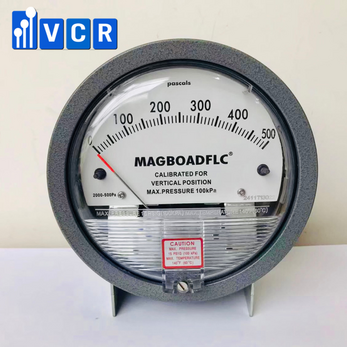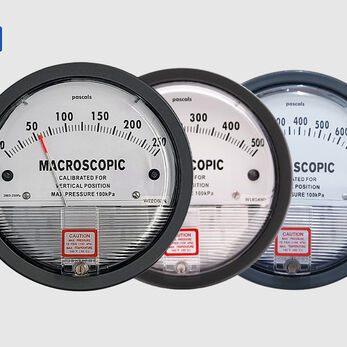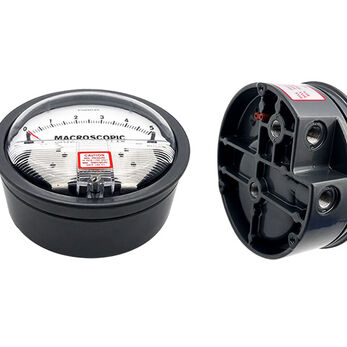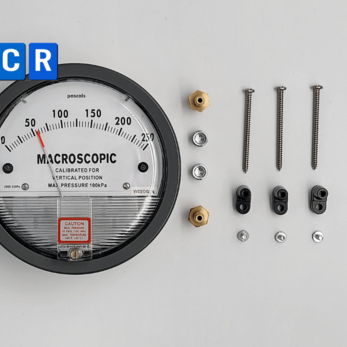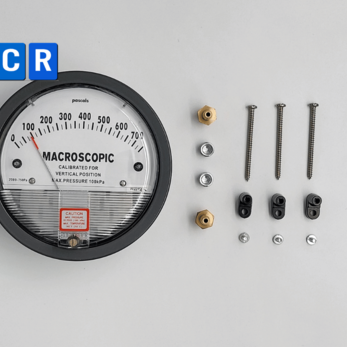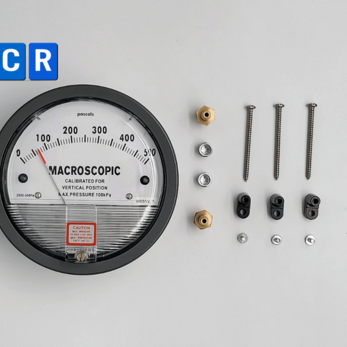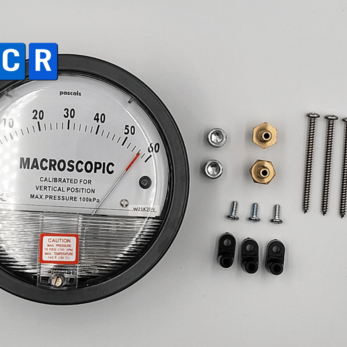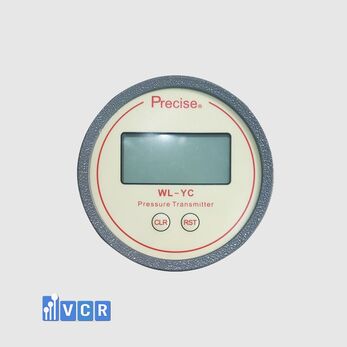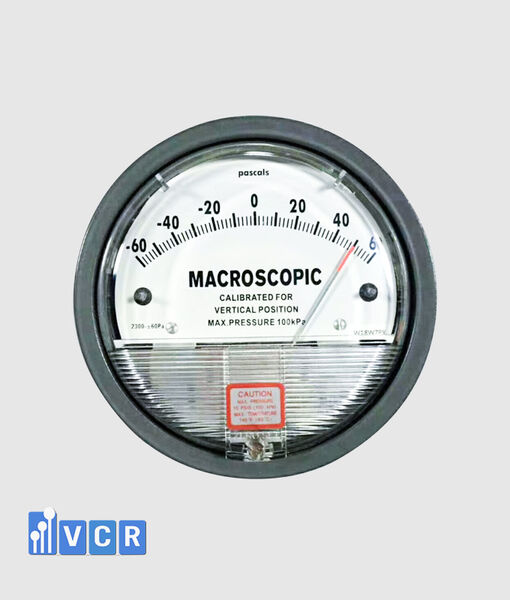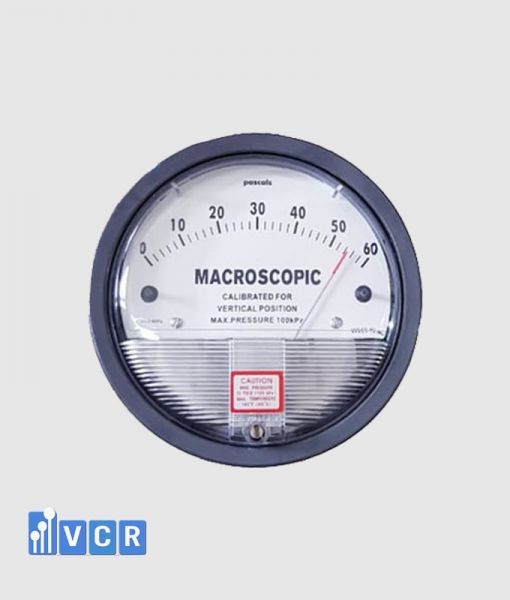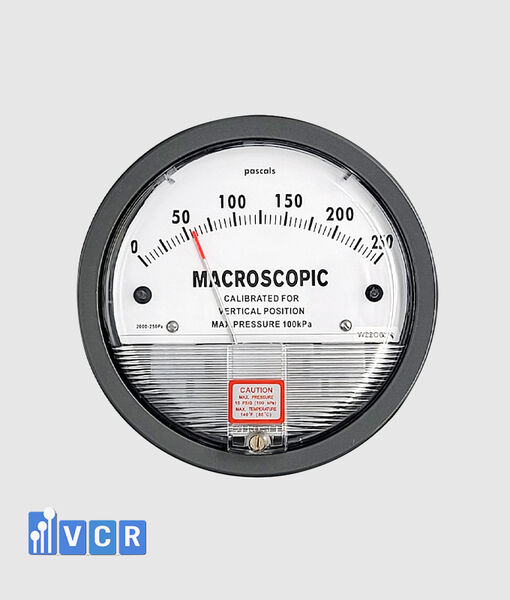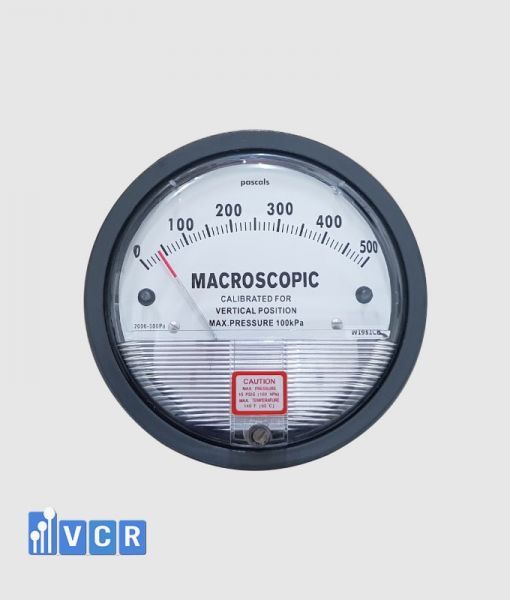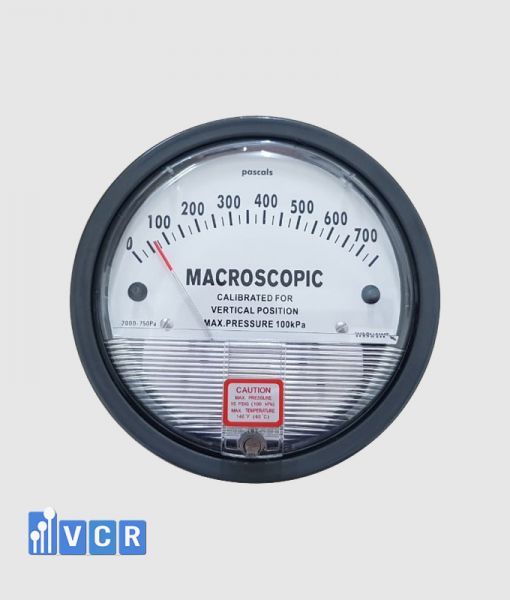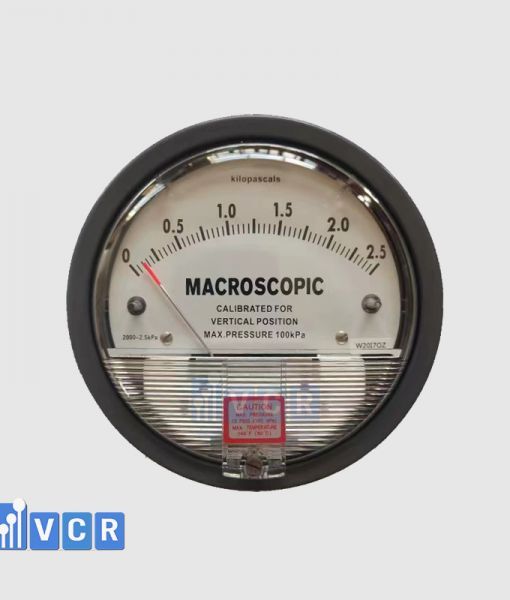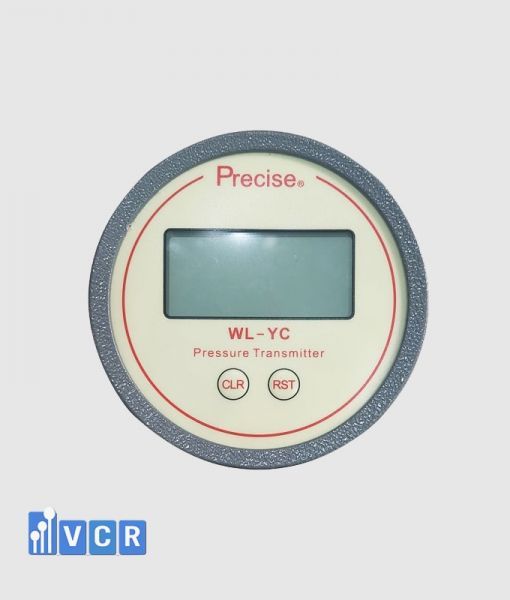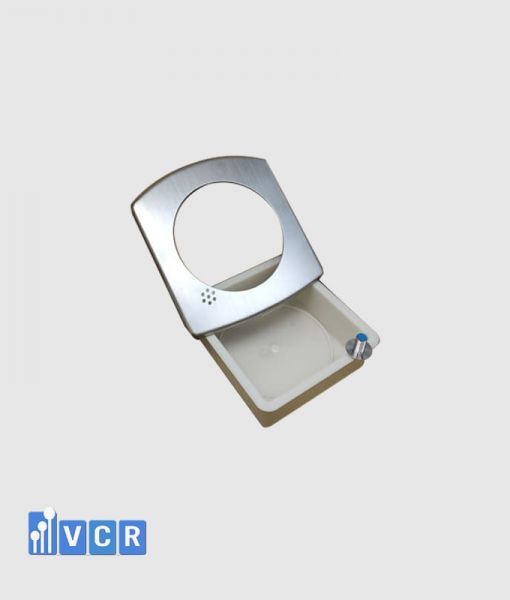

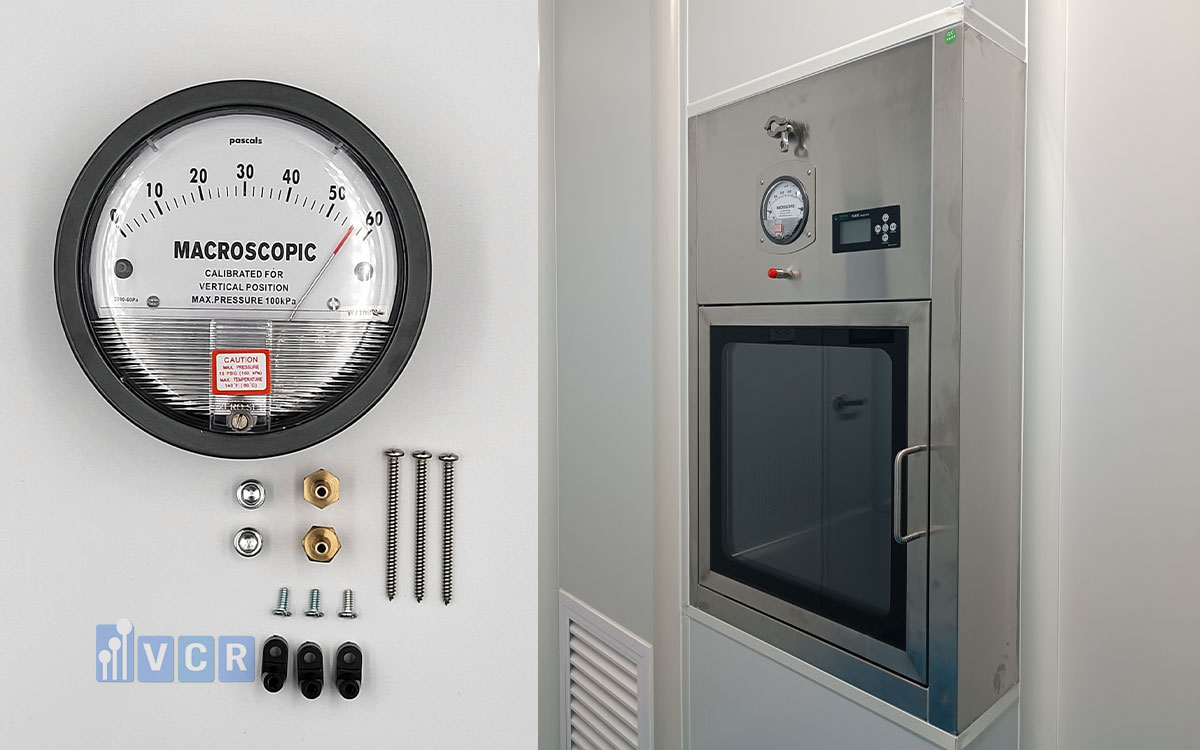
A differential pressure gauge catalogue provides essential information such as the model, measuring range, accuracy, pressure limits, operating conditions, process connections, dimensions, and output options. Understanding the catalogue helps users select the correct gauge for cleanrooms, HVAC systems, AHUs, Pass Boxes, and Dispensing Booths.
- What Is a Differential Pressure Gauge Catalogue?
- What Information Is Included in a Differential Pressure Gauge Catalogue?
- Product Name, Brand, and Model
- Differential Pressure Measuring Range
- Unit of Measurement
- Accuracy
- Resolution and Scale Division
- Zero Adjustment
- Maximum Working Pressure and Overpressure Limit
- Compatible Media
- Operating Temperature and Humidity
- Pressure Connection Type
- Construction Materials and Ingress Protection
- Mounting Method and Dimensions
- Power Supply, Output Signals, and Alarms
- Standards, Approvals, and Supporting Documents
- Standard and Optional Accessories
- Ordering Code
- Is the Catalogue an Equipment Acceptance Document?
- How to Review a Catalogue Before Purchasing a Differential Pressure Gauge
- What Information Should Be Provided When Purchasing from VCR Cleanroom Equipment?
- Conclusion
- FAQ: What Information Is Included in a Differential Pressure Gauge Catalogue?
- What Are the Most Important Specifications in a Differential Pressure Gauge Catalogue?
- Can a Catalogue Replace a Calibration Certificate?
- Why Is the Ordering Code Important?
- Does the Catalogue Show Whether the Gauge Has a 4–20 mA Output?
- What Should Be Checked for a Cleanroom Differential Pressure Gauge?
What Is a Differential Pressure Gauge Catalogue?
A differential pressure gauge catalogue is a technical document issued by a manufacturer or distributor to describe the product’s features, specifications, configurations, and applications.
It may be published as a general catalogue covering an entire product series, a datasheet for a specific model, or an ordering guide used to configure the required device.
In cleanroom and HVAC applications, the catalogue helps users determine whether the gauge is suitable for the installation location, expected pressure differential, accuracy requirement, and actual operating conditions.
However, a catalogue only presents specifications declared by the manufacturer. It does not replace a calibration certificate, Certificate of Quality, inspection report, or acceptance documentation for the supplied device.
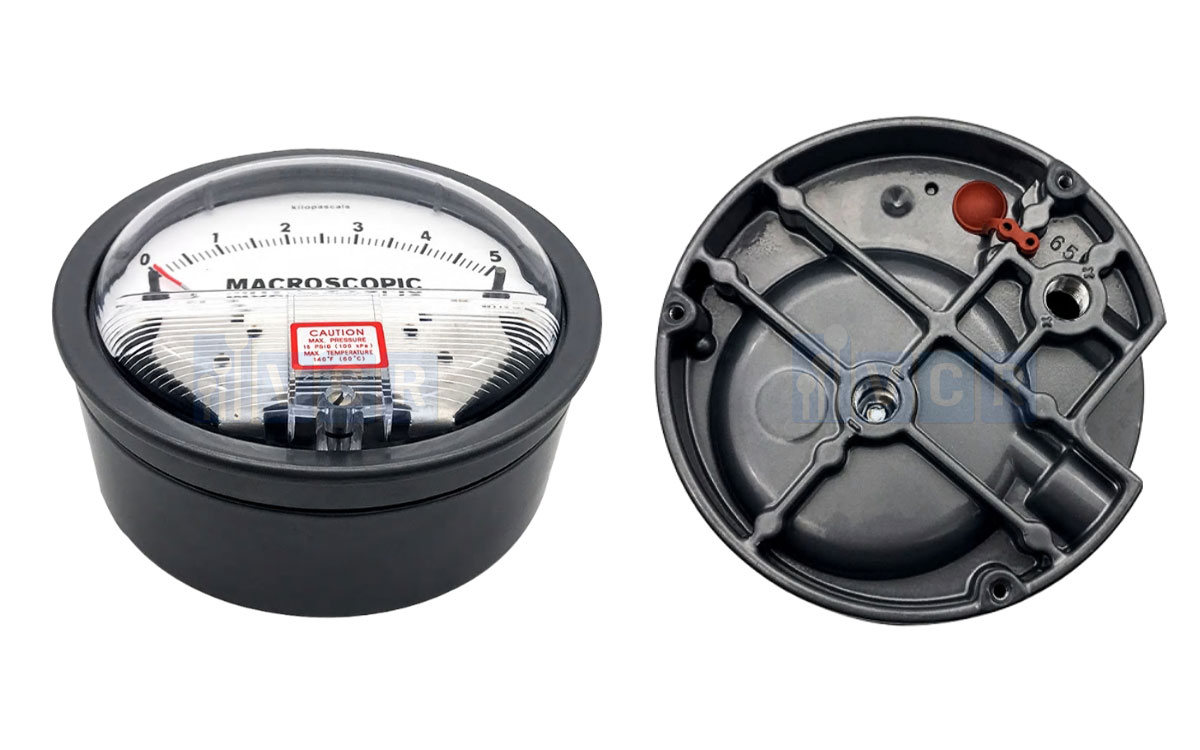
What Information Is Included in a Differential Pressure Gauge Catalogue?
A comprehensive catalogue normally includes the following information:
-
Product name and brand.
-
Product series or model.
-
Operating principle.
-
Differential pressure measuring range.
-
Unit of measurement.
-
Accuracy.
-
Resolution.
-
Zero adjustment method.
-
Maximum working pressure.
-
Overpressure limit.
-
Compatible media.
-
Operating temperature and humidity.
-
Pressure connection type.
-
Construction materials.
-
Ingress protection rating.
-
Mounting method.
-
Dimensions and weight.
-
Power supply for electronic models.
-
Output signals.
-
Alarm functions.
-
Applicable standards and approvals.
-
Standard and optional accessories.
-
Ordering code.
-
Model selection instructions.
Not every catalogue contains all of these details. Buyers may need to review the model-specific datasheet, user manual, installation guide, or technical drawing.
Product Name, Brand, and Model
The first section of a catalogue normally presents the brand, product name, series, model, and product image.
The model is particularly important because devices with similar external appearances may have completely different measuring ranges, accuracy levels, outputs, or operating conditions.
A purchasing specification should clearly state:
Product name.
Brand.
Product series.
Exact model.
Option code.
Complete ordering code.
It is not advisable to specify only “differential pressure gauge,” because the supplier may provide another model in the same series that does not meet the project requirements.
Differential Pressure Measuring Range
The measuring range is one of the most important specifications in the catalogue. It defines the minimum and maximum differential pressure that the device can display or transmit.
Common measuring ranges may include:
0–30 Pa.
0–60 Pa.
0–100 Pa.
0–125 Pa.
0–250 Pa.
0–500 Pa.
0–750 Pa.
0–1,000 Pa.
Minus 30 to plus 30 Pa.
Minus 60 to plus 60 Pa.
For cleanrooms, the range is normally selected according to the designed pressure differential between adjacent areas.
For HEPA filters, AHUs, and ventilation systems, the range is selected based on the expected filter resistance or duct pressure loss.
The selected range should not be excessively higher than the actual value being monitored. For example, if the normal differential pressure is only 10–20 Pa, a 0–1,000 Pa gauge may make small pressure changes difficult to observe.
Unit of Measurement
The catalogue should clearly identify the unit of measurement.
Common units include:
Pa.
kPa.
mbar.
mmH₂O.
inWC.
psi.
Pa is widely used for monitoring room pressure differentials in cleanroom facilities. For AHUs and air filters, both Pa and mmH₂O may be used depending on the project design.
Buyers should check the actual dial or display unit, not only the general specification. Some product series are available with different dial scales while using the same catalogue image.
Accuracy
Accuracy indicates the allowable difference between the displayed value and the actual differential pressure.
A catalogue may specify accuracy as:
A percentage of full scale.
A percentage of reading.
A fixed error in Pa.
A combination of percentage of reading and percentage of full scale.
For example, an accuracy of ±2% of full scale means the error is calculated based on the entire measuring range, not the displayed value.
If a gauge has a range of 0–250 Pa and an accuracy of ±2% of full scale, the declared permissible error may be as high as ±5 Pa.
For low-pressure applications, buyers should review how the accuracy is calculated rather than considering only the percentage value.
Resolution and Scale Division
For mechanical gauges, the catalogue normally indicates the smallest division on the dial.
For digital gauges, the catalogue may specify a display resolution such as 0.1 Pa or 1 Pa.
High resolution does not necessarily mean high accuracy. A device may display values to 0.1 Pa while its actual measurement error is considerably higher.
The following parameters should be evaluated together:
Measuring range.
Accuracy.
Resolution.
Display readability.
Actual viewing distance.
Zero Adjustment
The zero point is the displayed value when the pressure at the high-pressure and low-pressure ports is equal.
The catalogue should indicate whether the zero point can be adjusted using a mechanical screw, push button, digital menu, or automatic zero function.
Zero adjustment is important after transportation, installation, or maintenance. If the gauge does not return to zero when the two pressure ports are balanced, the measurement may be inaccurate.
However, zero adjustment is not a substitute for calibration. Zero adjustment corrects the starting point, while calibration evaluates measurement errors at several points throughout the measuring range.
Maximum Working Pressure and Overpressure Limit
The differential pressure range is not the same as the maximum static pressure that the gauge can withstand.
For example, a gauge with a range of 0–250 Pa may be used in a system with much higher static pressure, provided that the differential pressure between the two ports does not exceed the specified limit.
A catalogue may distinguish between:
Maximum working pressure.
Maximum static pressure.
Overpressure limit.
Burst pressure.
If these limits are ignored, the internal diaphragm or sensor may be permanently damaged when abnormal pressure occurs.
Compatible Media
The catalogue should indicate whether the gauge is suitable for air, non-combustible gases, non-corrosive gases, liquids, or other specific media.
Most differential pressure gauges used in cleanrooms are designed for clean, non-combustible, and non-corrosive air or gas.
A standard gauge should not be used for solvent vapour, corrosive gas, toxic gas, or liquid unless the manufacturer confirms compatibility.
The compatibility of the diaphragm, seals, pressure tubing, and process connections should also be considered.
Operating Temperature and Humidity
A catalogue normally specifies:
Operating temperature.
Storage temperature.
Permissible humidity.
Temperature effect on accuracy.
Condensation limitations.
Normal cleanroom conditions are generally within the operating range of most gauges. However, additional attention is needed when the device is installed near an AHU, cooling coil, heat source, or high-humidity area.
Condensation inside the pressure tubing or sensor ports can affect measurements and may damage the sensing element.
Pressure Connection Type
The catalogue should identify the location, size, and type of the high-pressure and low-pressure connections.
Common connection types include:
Flexible tubing connections.
Internal or external threaded connections.
Rear pressure connections.
Side pressure connections.
Connections mounted on the housing.
Quick-connect fittings.
The high-pressure port is generally marked with a plus symbol or the word High. The low-pressure port is marked with a minus symbol or the word Low.
Reversing the two connections may cause the pointer to move in the wrong direction, display a negative value, or activate an incorrect alarm.
Construction Materials and Ingress Protection
The catalogue may provide information about the materials used for:
Housing.
Lens.
Diaphragm.
Seals.
Pressure connections.
Wetted parts.
The selected materials should be suitable for the installation environment, particularly in areas exposed to chemicals, high humidity, or strict cleaning requirements.
For electronic gauges, the IP rating should also be checked. The IP rating indicates the level of protection against dust and water, but it does not automatically mean that the device is suitable for every washdown or cleaning process.
Mounting Method and Dimensions
The catalogue normally includes dimensional drawings for panel fabrication, hole cutting, and installation planning.
Important dimensions include:
Dial diameter.
Panel cut-out diameter.
Depth behind the panel.
Mounting hole spacing.
Required mounting orientation.
Clearance for pressure tubing.
Some mechanical differential pressure gauges must be installed vertically to maintain the declared accuracy. Mounting the gauge horizontally or at an angle may affect its performance.
Power Supply, Output Signals, and Alarms
For electronic differential pressure gauges, the catalogue should specify:
Power supply voltage.
Power consumption.
4–20 mA output.
0–10 V output.
Modbus communication.
Relay contacts.
Number of alarm setpoints.
Alarm delay or hysteresis.
Local display.
Connection to BMS, PLC, or HMI systems.
If remote monitoring is required, the buyer must confirm whether the device is only a local indicator or also functions as a pressure transmitter.
A digital display does not automatically mean that the device includes a 4–20 mA output or alarm relay.
Standards, Approvals, and Supporting Documents
The catalogue may refer to standards and approvals such as:
CE.
RoHS.
UKCA.
ATEX for hazardous areas.
Electrical safety approvals.
Electromagnetic compatibility requirements.
Information printed in the catalogue does not replace the actual approval certificate. If a project requires a specific certification, the buyer should request the certificate applicable to the relevant product series or model.
The catalogue also does not replace the CO, CQ, or calibration certificate.
Standard and Optional Accessories
A differential pressure gauge installation may require the following accessories:
Pressure tubing.
Pressure pickup ports.
Tube connectors.
Mounting brackets.
Fixing screws.
Panel cutting template.
Equalizing valve.
Three-way valve.
Protective enclosure.
The catalogue should indicate which accessories are included as standard and which must be ordered separately.
Failure to confirm the accessories may result in the device being delivered without the tubing, fittings, or brackets required for installation.
Ordering Code
Many manufacturers use an ordering code to identify:
Measuring range.
Unit of measurement.
Mounting method.
Construction material.
Output signal.
Power supply.
Alarm functions.
Calibration certificate.
Accessories.
Each character in the ordering code should be reviewed carefully. A single different character may change the range, signal output, power supply, or device configuration.
The complete ordering code should be stated in the purchase specification instead of using only the product series name.
Is the Catalogue an Equipment Acceptance Document?
The catalogue is part of the technical documentation, but it is not the complete equipment acceptance package.
It only demonstrates the specifications declared by the manufacturer for the product series. It does not prove that the actual supplied device has been tested, calibrated, or correctly matched to the specified model.
Additional acceptance documents may include:
Certificate of Origin or equivalent origin documentation.
Certificate of Quality or Certificate of Conformity.
Calibration certificate.
Visual inspection record.
Zero-point inspection record.
Post-installation inspection record.
Model and serial number list.
Operating instructions.
Handover record.
How to Review a Catalogue Before Purchasing a Differential Pressure Gauge
Before placing an order, buyers should:
Identify the measurement location.
Determine the normal differential pressure.
Determine the low and high alarm limits.
Select an appropriate measuring range.
Check the accuracy.
Check the display unit.
Check the maximum static pressure.
Check the compatible media.
Check the operating temperature.
Check the mounting dimensions.
Check the output signal.
Check the power supply.
Check the required accessories.
Verify the complete ordering code.
Confirm the calibration certificate requirement.
This process helps prevent incorrect model selection and reduces the risk of additional costs after delivery.
What Information Should Be Provided When Purchasing from VCR Cleanroom Equipment?
When requesting a quotation from VCR Cleanroom Equipment, customers should provide the application, measuring range, unit, accuracy, display type, installation dimensions, and output requirements.
For cleanroom applications, the designed room pressure differential and alarm limits should be provided.
For HEPA Boxes, AHUs, or air filters, the initial pressure drop and the filter replacement limit should be identified.
For devices connected to PLC, HMI, or BMS systems, the customer should specify whether 4–20 mA, 0–10 V, Modbus, or relay contact output is required.
VCR Cleanroom Equipment can use this information to review the catalogue, select the appropriate model, and prepare the documentation required by the project.
Conclusion
A differential pressure gauge catalogue should clearly present the model, measuring range, unit, accuracy, resolution, pressure limits, compatible media, operating conditions, process connections, dimensions, and optional outputs.
Buyers should not select a gauge based only on its appearance or product name. The complete ordering code and the specifications of the exact quoted model must be reviewed.
The catalogue is an important document for product selection and technical approval, but it does not replace a calibration certificate, CO, CQ, or equipment acceptance documentation.
FAQ: What Information Is Included in a Differential Pressure Gauge Catalogue?
What Are the Most Important Specifications in a Differential Pressure Gauge Catalogue?
The most important specifications are the measuring range, unit, accuracy, maximum static pressure, compatible media, and operating conditions. Buyers should also review the dimensions, pressure connections, and complete ordering code. VCR Cleanroom Equipment normally recommends selecting a range close to the actual operating pressure so that small changes in differential pressure can be detected more clearly.
Can a Catalogue Replace a Calibration Certificate?
No. A catalogue only shows the general specifications declared by the manufacturer for a product series. A calibration certificate records the actual test results for an individual device or serial number. For GMP projects, VCR Cleanroom Equipment recommends requesting a separate calibration certificate rather than using the catalogue as the only acceptance document.
Why Is the Ordering Code Important?
The ordering code identifies the exact measuring range, unit, power supply, output signal, alarm functions, and optional features. Two products from the same series may look identical but have different functions. VCR Cleanroom Equipment uses the complete ordering code to verify that the quoted configuration matches the technical requirements and to reduce the risk of supplying the wrong model.
Does the Catalogue Show Whether the Gauge Has a 4–20 mA Output?
The catalogue normally includes an output specification or electrical specification section. However, a 4–20 mA output may only be available for certain versions or option codes. VCR Cleanroom Equipment recommends checking the complete model number and wiring diagram before confirming that the device can be connected to a PLC, HMI, or BMS system.
What Should Be Checked for a Cleanroom Differential Pressure Gauge?
For cleanroom use, buyers should check the low measuring range, accuracy, resolution, zero adjustment, mounting orientation, and Pa display unit. If remote monitoring is required, the output signal and alarm functions must also be reviewed. VCR Cleanroom Equipment can assist in comparing the catalogue specifications with the designed room pressure differential and project acceptance requirements.