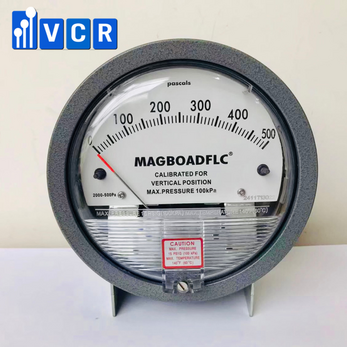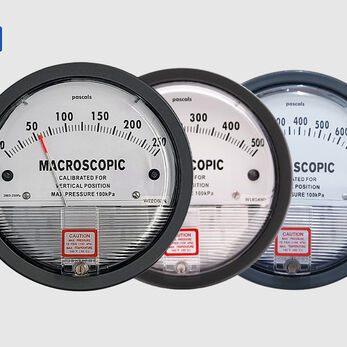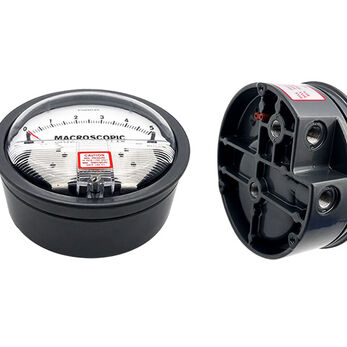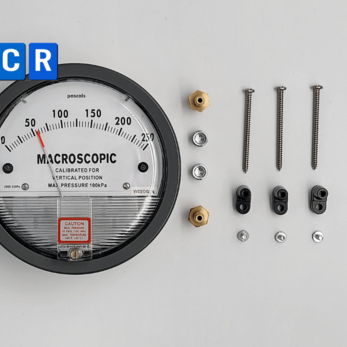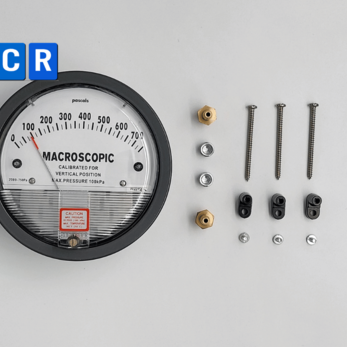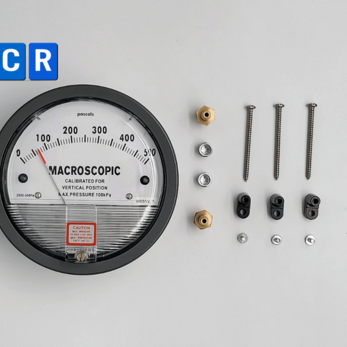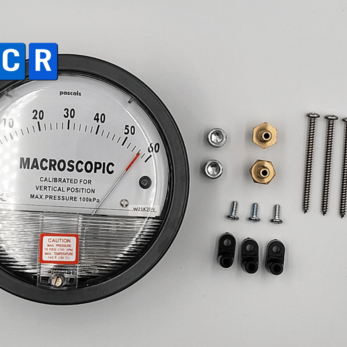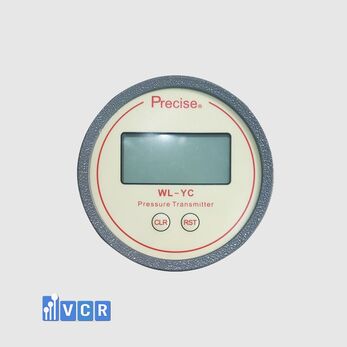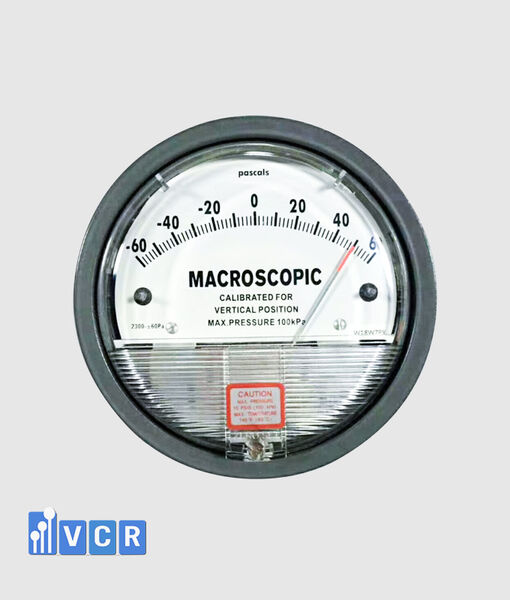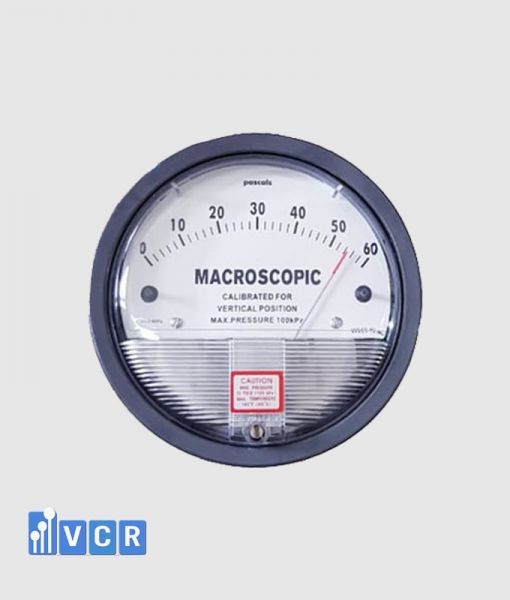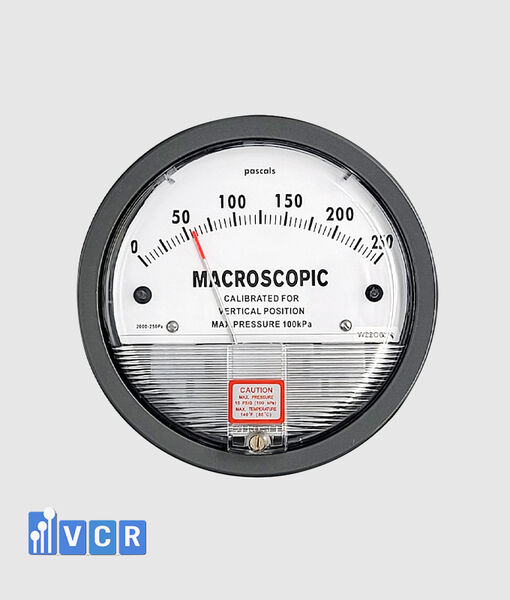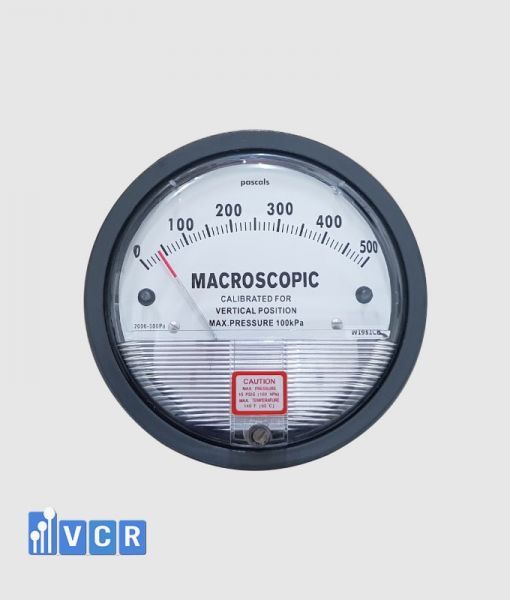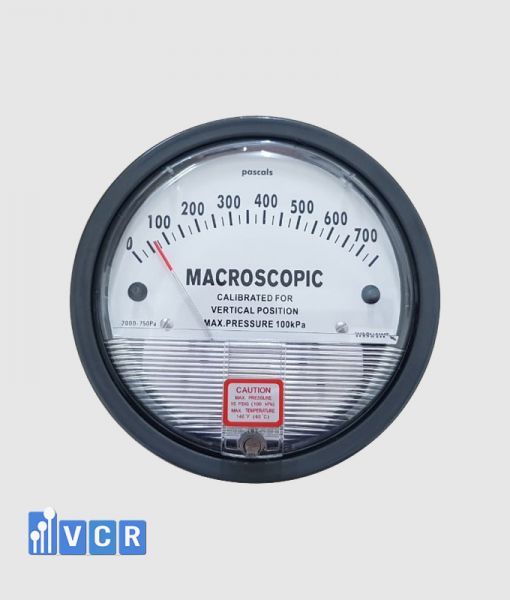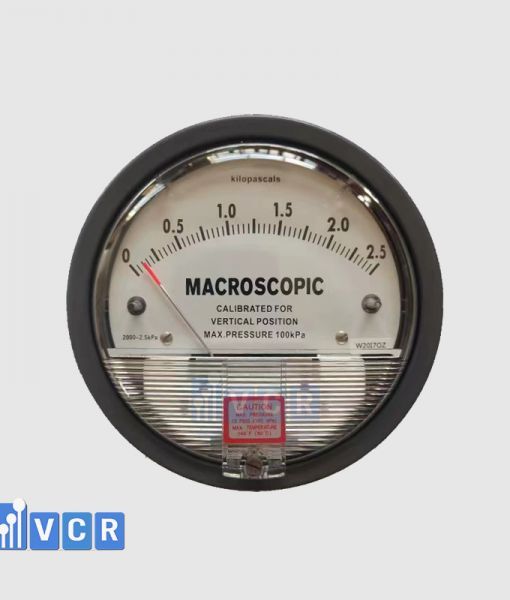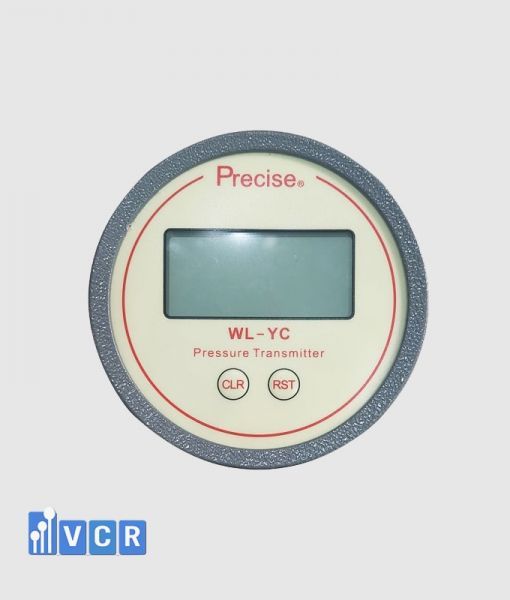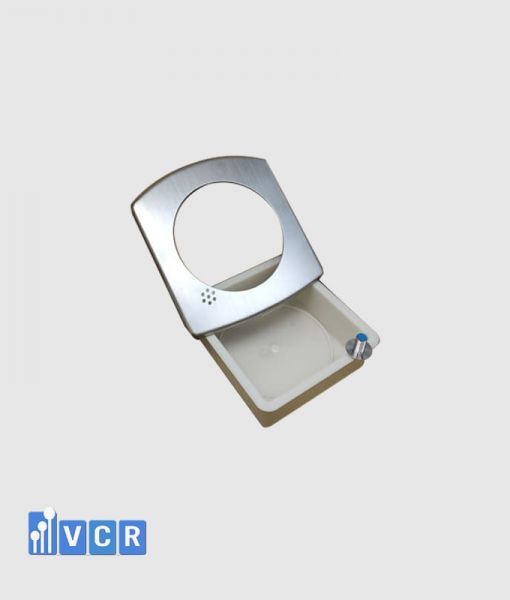

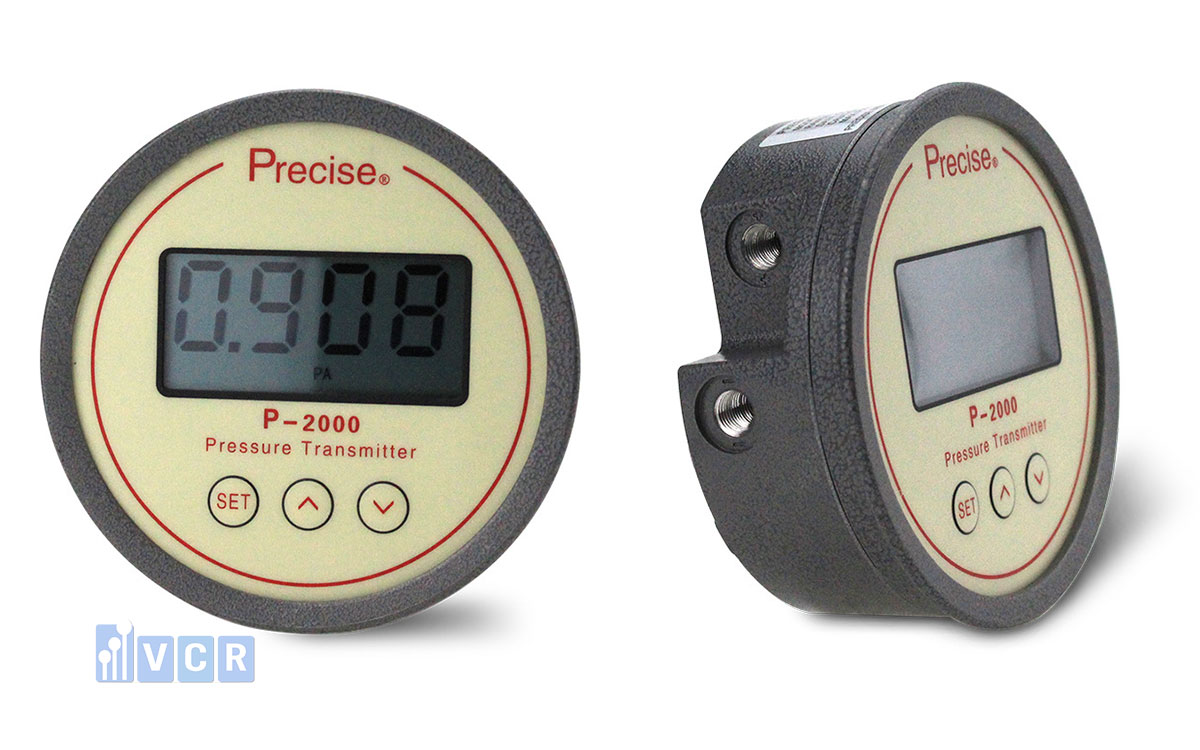
The price of an electronic differential pressure gauge with 4–20 mA output is usually higher than a mechanical gauge and depends on measuring range, brand, display, alarm relay, power supply, documentation, and BMS/EMS integration requirements. It is suitable for GMP cleanrooms, negative pressure rooms, sterile rooms, laboratories, and areas requiring continuous pressure monitoring.
- How Much Is an Electronic Differential Pressure Gauge with 4–20 mA Output?
- Why Is the 4–20 mA Type More Expensive Than Mechanical Gauges?
- What Applications Is the 4–20 mA Type Suitable For?
- What Factors Affect the Price?
- What Should Be Checked Before Buying a 4–20 mA Type?
- Where to Buy Electronic Differential Pressure Gauges with 4–20 mA Output?
- Frequently Asked Questions
- Conclusion
How Much Is an Electronic Differential Pressure Gauge with 4–20 mA Output?
The price of an electronic differential pressure gauge with 4–20 mA output is usually quoted according to the specific configuration. Compared with a mechanical gauge for local display, the electronic 4–20 mA type is usually more expensive because it includes a sensor, signal processing circuit, display, analog output, optional alarm functions, and BMS/EMS connection capability.
For cleanroom applications, businesses should understand that price depends not only on the device itself but also on measuring range, accuracy, power supply, signal type, calibration requirement, CO/CQ, VAT invoice, installation accessories, and order quantity. Therefore, correct application information should be provided before requesting a quotation.
VCR Cleanroom Equipment can advise and supply electronic differential pressure gauges with 4–20 mA output for GMP cleanrooms, sterile rooms, negative pressure rooms, airlocks, buffer rooms, laboratories, HEPA Boxes, AHU - Air Handling Unit, FFU - Fan Filter Unit, and cleanroom HVAC systems.

Why Is the 4–20 mA Type More Expensive Than Mechanical Gauges?
A mechanical differential pressure gauge is mainly used for local reading. Operators look directly at the gauge face to check whether the pressure between two areas or across a filter is stable.
An electronic differential pressure gauge with 4–20 mA output can convert pressure values into analog signals and transmit them to BMS/EMS or a central monitoring system. This allows the factory to monitor pressure continuously, record data, set alarms, and trace operating history.
Because it includes signal transmission, data processing, alarms, and system integration capabilities, the 4–20 mA type is usually more expensive. However, for critical GMP areas, this cost is reasonable because it improves control capability and reduces risk when pressure exceeds limits.
What Applications Is the 4–20 mA Type Suitable For?
Electronic differential pressure gauges with 4–20 mA output are suitable for areas requiring continuous monitoring, automatic alarms, or operating data logging. Common applications include sterile rooms, filling rooms, negative pressure rooms, raw material weighing rooms, formulation rooms, critical airlocks, laboratories, microbiology rooms, and testing centers.
In cleanroom HVAC systems, the 4–20 mA type may also be used to monitor differential pressure across HEPA Boxes, AHU - Air Handling Unit, FFU - Fan Filter Unit, HEPA filters, or areas requiring signal transmission to the central control room.
If only local reading is required, a mechanical gauge may be more cost-effective. If data management, alarms, and BMS/EMS integration are required, the electronic 4–20 mA type is more suitable.
What Factors Affect the Price?
The first factor is measuring range. Small ranges such as 0–60 Pa and 0–125 Pa are commonly used for room pressure monitoring. Larger ranges such as 0–250 Pa, 0–500 Pa, and 0–750 Pa are commonly used for HEPA filters, HEPA Boxes, AHU, FFU, or HVAC equipment. Different ranges may affect model selection and price.
The second factor is device configuration. Some models provide only 4–20 mA output, while others include LCD/LED display, alarm relay, setting buttons, Auto-Zero, RS485, or Modbus communication. More functions usually mean different pricing.
The third factor is brand and origin. Different brands may vary in accuracy, stability, finishing quality, protection rating, and warranty policy.
The fourth factor is documentation. If the project requires CO, CQ, calibration certificate, catalogue, datasheet, VAT invoice, or complete acceptance documents, cost and preparation time may differ from a standard order.
What Should Be Checked Before Buying a 4–20 mA Type?
When buying an electronic differential pressure gauge with 4–20 mA output, businesses should check measuring range, pressure unit, accuracy, power supply, signal type, wiring diagram, display, alarm relay, and compatibility with the existing BMS/EMS.
It is important to check whether the 4–20 mA signal is 2-wire or 3-wire, what VDC power supply is required, how the signal is scaled to the pressure range, and whether an additional display is needed. If configured incorrectly, the values displayed on BMS/EMS may not match actual pressure.
Businesses should also check CO/CQ if required, calibration certificates if the installation point is critical, warranty documents, catalogues, datasheets, and installation accessories. In GMP cleanrooms, equipment documentation is very important for acceptance and quality inspection.
Where to Buy Electronic Differential Pressure Gauges with 4–20 mA Output?
Businesses can buy electronic differential pressure gauges with 4–20 mA output from VCR Cleanroom Equipment. VCR provides application-based consulting to help customers select the correct measuring range, signal configuration, installation position, and documentation requirements.
VCR Cleanroom Equipment supplies differential pressure gauges for GMP cleanrooms, sterile rooms, negative pressure rooms, buffer rooms, airlocks, laboratories, HEPA Boxes, AHU - Air Handling Unit, FFU - Fan Filter Unit, Pass Boxes, Air Showers, Clean Booths, Weighing Booths, and cleanroom HVAC systems.
When requesting a quotation, customers should provide desired measuring range, quantity, installation position, measurement purpose, 4–20 mA signal requirement, power supply, alarm requirement, display requirement, CO/CQ, calibration certificate, VAT invoice, and delivery time. From there, VCR can recommend a suitable option for actual operation needs.
Frequently Asked Questions
How Much Is an Electronic Differential Pressure Gauge with 4–20 mA Output?
The price of an electronic differential pressure gauge with 4–20 mA output is usually quoted according to configuration. It depends on measuring range, brand, display, alarm relay, power supply, accuracy, CO/CQ, calibration certificate, and order quantity. Customers should contact VCR Cleanroom Equipment for a quotation based on actual requirements.
What Is a 4–20 mA Differential Pressure Gauge Used For?
A 4–20 mA differential pressure gauge measures pressure difference and transmits the signal to BMS/EMS or a central monitoring system. It is suitable for GMP cleanrooms, sterile rooms, negative pressure rooms, airlocks, laboratories, HEPA Boxes, AHU, FFU, and areas requiring continuous pressure monitoring.
When Should a 4–20 mA Type Be Selected Instead of a Mechanical Gauge?
A 4–20 mA type should be selected when the area requires alarms, data logging, continuous monitoring, or BMS/EMS connection. If only local reading is needed, a mechanical gauge may be more cost-effective. For sterile rooms, negative pressure rooms, critical airlocks, or critical GMP areas, the electronic 4–20 mA type is often a better choice.
What Information Is Needed for a 4–20 mA Quotation?
Businesses should provide measuring range, installation position, measurement purpose, reference area, power supply requirement, 2-wire or 3-wire signal requirement, display requirement, alarm relay requirement, CO/CQ, calibration, quantity, and delivery time. This information helps VCR Cleanroom Equipment recommend the correct model and avoid wrong configuration.
Conclusion
The price of an electronic differential pressure gauge with 4–20 mA output depends strongly on technical configuration and project requirements. It is suitable for areas requiring continuous monitoring, alarms, data logging, and BMS/EMS integration in GMP cleanrooms, laboratories, and cleanroom HVAC systems.
If your business needs electronic differential pressure gauges with 4–20 mA output, contact VCR Cleanroom Equipment for support in selecting the correct measuring range, signal type, application, and operating solution.