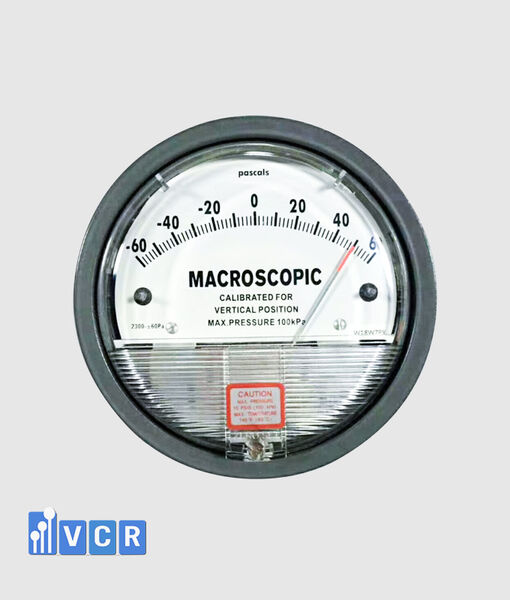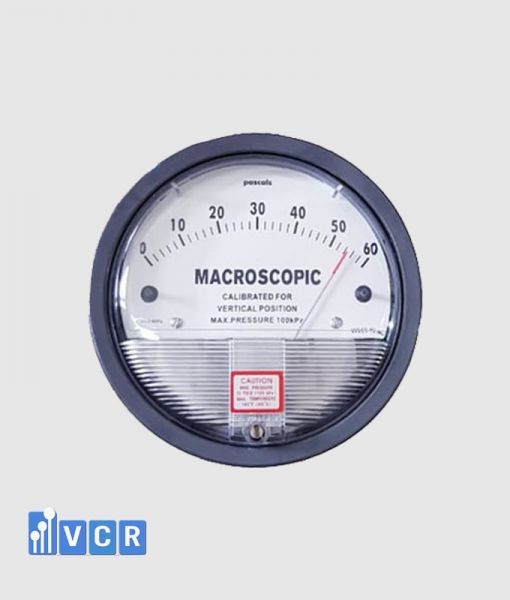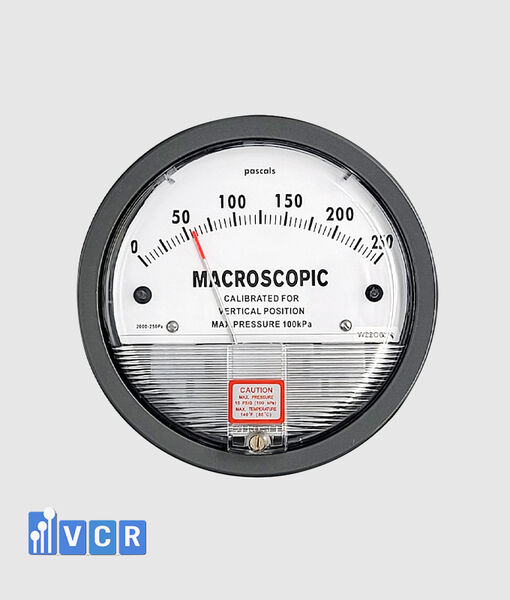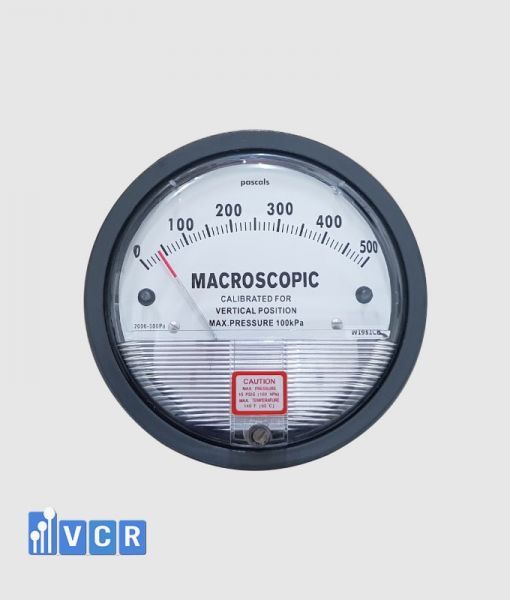

Grade B is the cleanroom background that protects Grade A during aseptic manufacturing. Selecting the correct differential pressure gauge helps maintain airflow direction, detect pressure loss and satisfy the continuous monitoring expectations of EU GMP Annex 1.
- What is Grade B under EU GMP Annex 1?
- Why is Grade B differential pressure important?
- What pressure differential does EU GMP require?
- Can a mechanical gauge be used in Grade B?
- When should an electronic transmitter be selected?
- Selecting the measuring range
- Accuracy, resolution and zero stability
- Establishing Grade B alarm limits
- Installation requirements
- Calibration and loop verification
- IQ, OQ and requalification
- Common selection and installation mistakes
- FAQ: Grade B differential pressure gauges
- Grade B differential pressure solutions from VCR Cleanroom Equipment
Grade B has a critical function in sterile pharmaceutical manufacturing. It commonly provides the controlled cleanroom background surrounding a Grade A critical zone where high-risk activities such as aseptic preparation, aseptic connections, filling, stopper handling and the processing of exposed products are performed.
If the pressure relationship between Grade B and adjacent areas is not maintained, air from a lower-grade space may enter the room and increase the risk of particulate or microbial contamination reaching the aseptic process.
A differential pressure gauge is therefore more than an HVAC indicator. It forms part of the facility contamination-control strategy, environmental monitoring programme and alarm system.
What is Grade B under EU GMP Annex 1?
EU GMP Annex 1 identifies Grade B as the background cleanroom for Grade A during aseptic preparation and filling when an isolator is not used. The Annex also states that air pressure differences associated with Grade B should be continuously monitored. A background lower than Grade B may be considered where isolator technology is used and the arrangement is supported by appropriate design and risk assessment.
In a conventional aseptic filling facility, Grade B does not replace Grade A conditions. Its purpose is to provide a controlled supporting environment that reduces the risk of contamination from personnel, material movement and the surrounding facility.
Typical differential pressure measurement points associated with Grade B include:
-
A Grade B room versus an adjacent Grade C corridor.
-
A Grade B room versus a personnel changing room.
-
A Grade B room versus a material airlock.
-
A RABS enclosure versus its Grade B background.
-
Different stages of the personnel entry sequence.
-
Grade B versus a containment room or adjacent technical space.
Each measurement point has a different control objective. One pressure setpoint or one measuring range should not automatically be applied throughout the facility.
Why is Grade B differential pressure important?
Differential pressure establishes the intended direction of air movement between rooms. Under a conventional positive-pressure cascade, the cleaner area is maintained at a higher pressure so air tends to move toward the lower-grade space through gaps or during controlled door opening.
The pressure gauge or transmitter allows operators to confirm whether the relationship remains within the qualified operating range. A falling value may indicate an imbalance between supply and extract airflow, a blocked filter, an open door, damaged seals, fan failure, damper movement or an HVAC power interruption.
Without continuous monitoring, a pressure failure may remain undetected until the next manual inspection. That approach is not suitable for pressure relationships identified as critical to the Grade B room and the Grade A zone it supports.
Pressure data are also valuable during deviation investigations. A time-stamped trend can show when the pressure began to deteriorate, how long an excursion lasted and whether it coincided with door activity, maintenance or a process intervention.
What pressure differential does EU GMP require?
EU GMP Annex 1 provides a minimum air pressure difference of 10 Pa as a guidance value between adjacent rooms of different cleanliness grades. Cleanrooms should receive filtered air that maintains positive pressure and/or appropriate airflow relative to a lower-grade background under operational conditions.
The 10 Pa value is not a universal setpoint for every Grade B installation. A facility may operate a particular pressure relationship at 10 Pa, 15 Pa, 20 Pa or another justified value depending on:
-
Room construction and leakage.
-
The cleanliness grade of adjacent areas.
-
Door-opening frequency.
-
Personnel and material movement.
-
HVAC supply, return and exhaust airflow.
-
Product-protection or containment requirements.
-
Airflow visualization results.
-
The facility Contamination Control Strategy.
Where pathogenic, toxic, radioactive or biologically active material must be contained, the pressure cascade may require modification. In such cases, the airflow source, room classification and contamination-control measures should be assessed so that containment does not compromise protection of the critical process.
Can a mechanical gauge be used in Grade B?
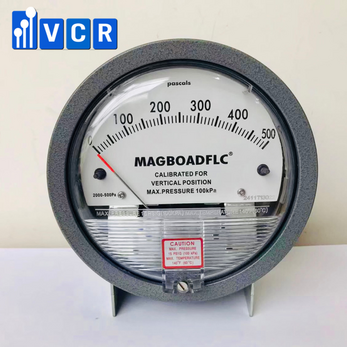
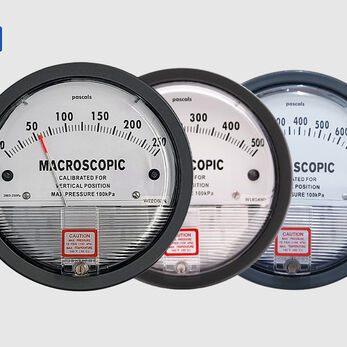
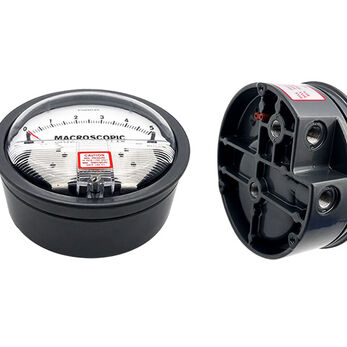
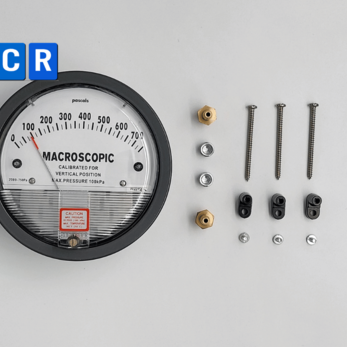
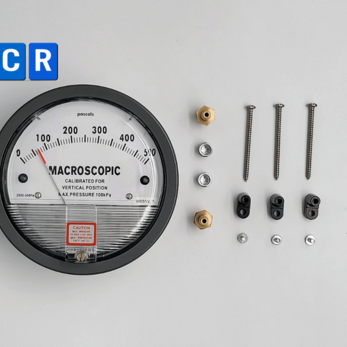
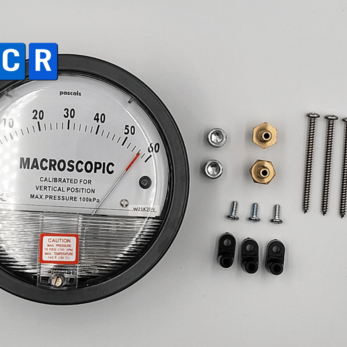
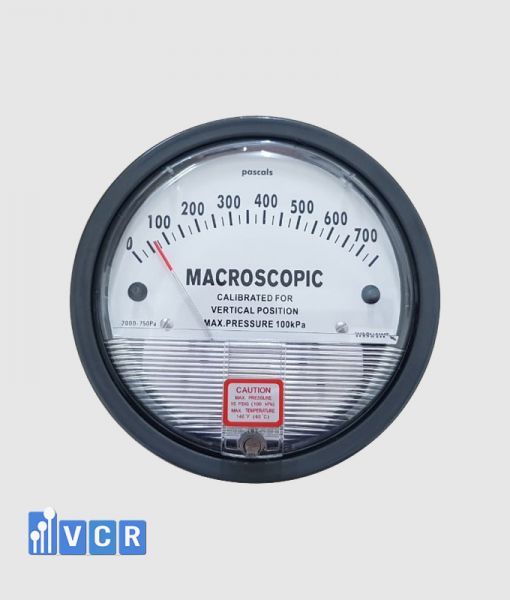
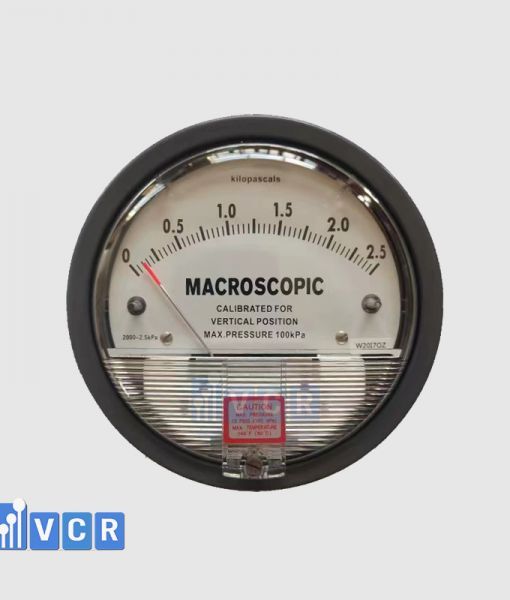
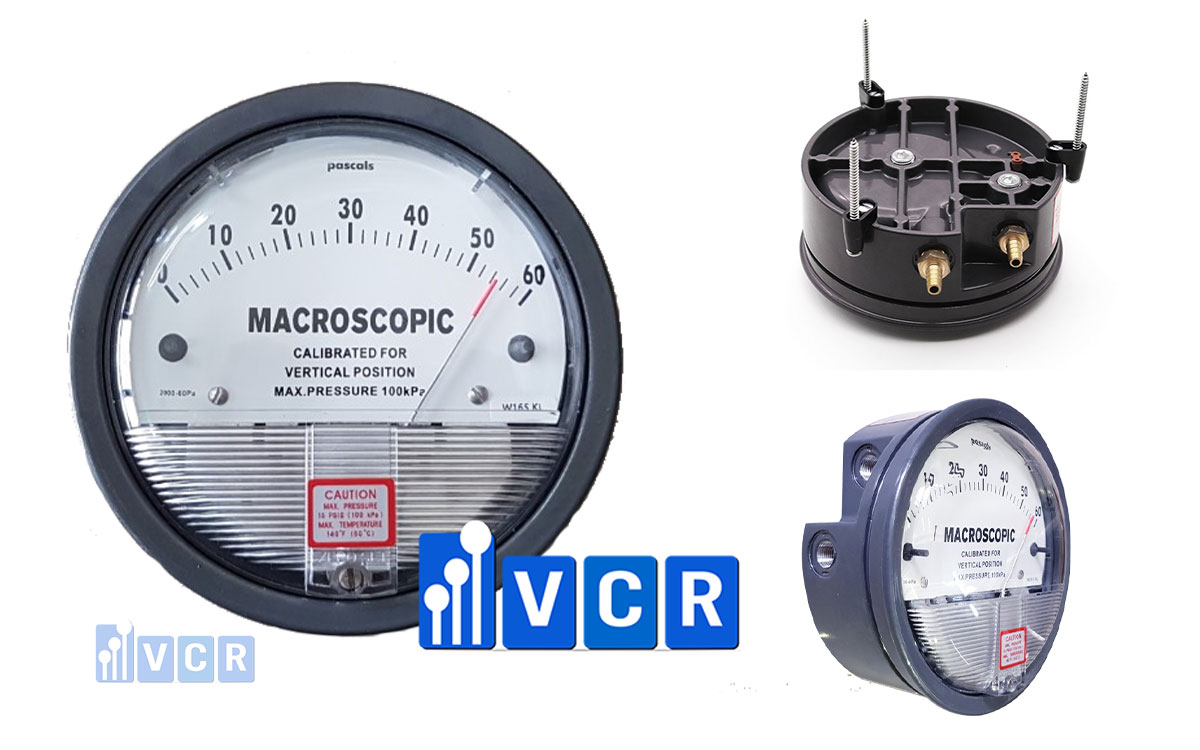
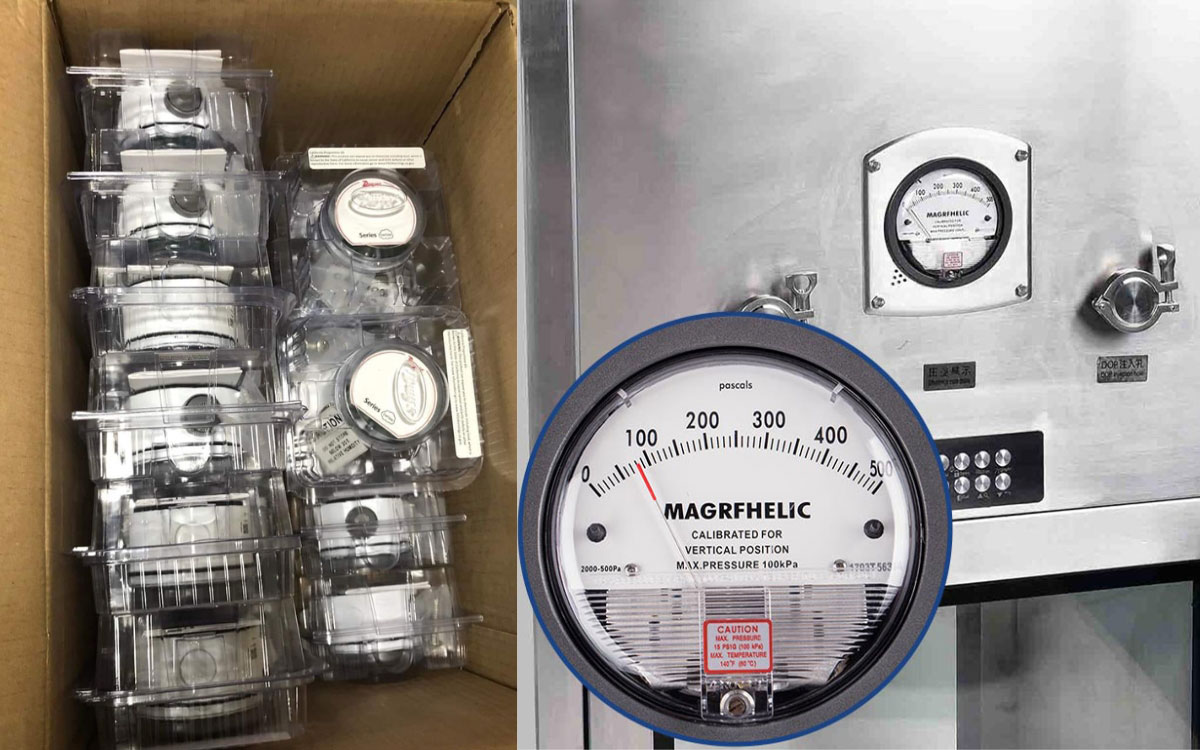
A mechanical differential pressure gauge provides a clear local indication, requires no electrical power and is convenient for routine visual checks.
However, a basic mechanical gauge does not normally transmit data, store historical records or generate a remote alarm. Because Grade B pressure differences require continuous monitoring, a stand-alone mechanical gauge will generally not be sufficient for a critical monitoring point unless it is supplemented by an appropriate transmitter or switching system.
A common arrangement is to install an electronic transmitter with a local display and connect it to the central monitoring system. A separate mechanical gauge may also be installed as an independent local indication.
Where two devices are used, their pressure taps, tubing and calibration status should be controlled. Differences between the two readings should be investigated rather than assumed to be normal.
When should an electronic transmitter be selected?
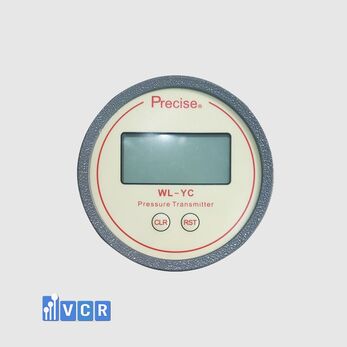
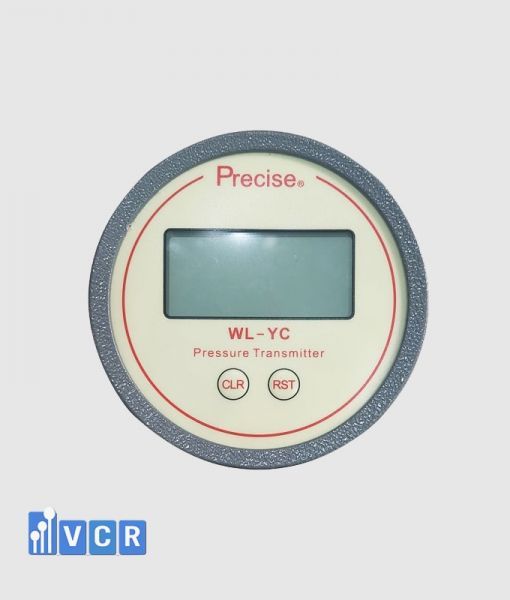
An electronic differential pressure transmitter or digital gauge should normally be selected when the measurement affects contamination control, room release, alarm response or GMP records.
Depending on the model, an electronic device can provide a local display, analog output, alarm relay and digital communication. Common outputs include 4–20 mA, 0–10 V, Modbus RTU, Modbus TCP and BACnet.
A 4–20 mA output is frequently used because it can be integrated with a PLC, BMS or EMS and is suitable for signal transmission over practical cable distances.
A suitable monitoring system should be capable of:
-
Displaying the current pressure.
-
Recording time-based data.
-
Generating low and high alarms.
-
Recording alarm time stamps.
-
Restricting changes to authorized users.
-
Preserving historical alarm events.
-
Displaying pressure trends.
-
Supporting deviation investigation.
Where pressure records form part of the GMP documentation, the system design should also consider audit trails, user access, backup, time synchronization and controlled configuration changes.
Selecting the measuring range
The measuring range should be based on the design pressure and qualified operating range.
An excessively wide span makes small changes around the normal operating value more difficult to detect. A span that is too narrow may overrange during door opening, HVAC start-up or temporary system imbalance.
For a Grade B room operating around 10–15 Pa relative to an adjacent area, a 0–25 Pa or 0–50 Pa instrument may be considered. These are engineering examples rather than mandatory EU GMP ranges.
A bidirectional range such as ±25 Pa or ±50 Pa may be appropriate where pressure reversal is possible or where positive and negative operating modes are used.
A gauge selected for room differential pressure should not automatically be used for HEPA filter differential pressure. Pressure loss across a filter is normally much higher and generally requires a different measuring span.
The normal operating point should be easy to read and should leave enough headroom for credible abnormal conditions.
Accuracy, resolution and zero stability
EU GMP Annex 1 does not prescribe one accuracy class for all Grade B differential pressure gauges. Accuracy should be selected according to the intended use and the separation between the operating target, alert level and action limit.
For example, where a room normally operates at 15 Pa and the action limit is 10 Pa, measurement error must be small enough to distinguish reliably between the two conditions.
Instrument evaluation should not rely only on percentage-of-full-scale accuracy. The following characteristics may be equally important:
-
Zero stability.
-
Repeatability.
-
Long-term drift.
-
Temperature effect.
-
Overpressure resistance.
-
Calibration uncertainty.
-
Performance around the alarm point.
Zero drift is especially significant for low-range pressure sensors. A shift of only a few pascals can represent a major proportion of the measured room pressure.
A display resolution of 0.1 Pa or 1 Pa may be appropriate depending on the span and criticality. Additional decimal places do not necessarily indicate better accuracy.
Establishing Grade B alarm limits
Annex 1 requires pressure differences identified as critical to be continuously monitored and recorded. A warning system should immediately indicate air-supply failure or a reduction below the established limit. Any alarm delay should be assessed and justified in the CCS.
The 10 Pa guidance value should not automatically become the low alarm for every room. If a Grade B room is designed to operate at 15 Pa, the alert level may need to be above 10 Pa so deterioration is identified before the qualified action limit is reached.
A practical alarm strategy normally includes:
-
A target operating value.
-
A normal operating range.
-
An alert level.
-
An action limit.
-
An alarm delay.
-
Reset hysteresis.
-
A defined operator-response procedure.
The delay should prevent nuisance alarms caused by acceptable short door openings, but it must not be so long that a genuine loss of room segregation is hidden.
Alarm acknowledgement should not remove the event history. Disabling or overriding an alarm should require assessment, authorization and documentation.
Installation requirements
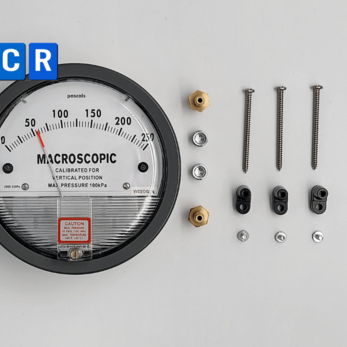
The high- and low-pressure ports must be connected to the correct spaces. Pressure tubing should be leak-tight and protected against kinking, crushing and liquid accumulation.
Pressure taps should not be positioned directly in a supply-air jet, close to a high-velocity diffuser or immediately beside a frequently opened door. These locations may introduce dynamic-pressure effects that do not represent the room static pressure.
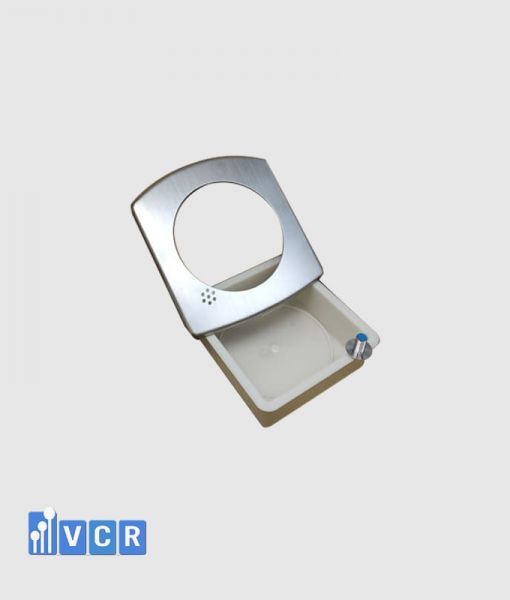
The visible face should preferably be flush or nearly flush with the cleanroom wall panel. This reduces ledges and gaps that are difficult to clean.
The housing, front membrane, seals and exposed materials should be compatible with the cleaning agents, disinfectants and sporicidal products used in Grade B.
For airlocks leading to Grade A or Grade B, EU GMP Annex 1 requires an interlocking system so the entry and exit doors are not opened simultaneously. Door-interlock logic, time delays and pressure recovery should therefore be considered together during system design and qualification.
Calibration and loop verification
Calibration should cover the actual operating range rather than checking only the zero point. Test points should include the normal operating value, alert level and action limit.
For a 4–20 mA transmitter, the complete measurement loop should be verified from the applied pressure through to:
-
The local display.
-
Output current.
-
Controller input.
-
HMI, BMS or EMS display.
-
Alarm relay status.
-
Historical data record.
The calibration interval should reflect instrument criticality, manufacturer recommendations, operating conditions and historical drift.
Where repeated out-of-tolerance results occur, the facility should consider a shorter calibration interval and investigate whether the model, installation or environmental conditions are suitable.
IQ, OQ and requalification
EU GMP Annex 15 states that Installation Qualification should verify correct installation against drawings and specifications, collect supplier instructions, confirm materials of construction and include calibration of instrumentation. Operational Qualification should demonstrate operation as designed and test upper, lower and relevant worst-case conditions.
The Grade B pressure-monitoring qualification package should normally include the model, serial number, range, location, pressure-tap diagram, calibration certificate, signal verification, alarm testing, power-failure response and comparison between the local and central values.
Annex 1 also specifies a maximum six-month interval for periodic requalification of Grade A and Grade B areas. Requalification includes verification of room-to-room air pressure differences together with cleanroom classification, final-filter integrity and airflow-volume measurement.
Common selection and installation mistakes
A common mistake is specifying one wide range for every cleanroom. Although this simplifies procurement, it may reduce useful sensitivity at low-pressure measurement points.
Another error is installing only a mechanical gauge where the URS requires continuous recording and alarms.
Some facilities install electronic transmitters but do not verify the complete signal loop or challenge the alarms during OQ.
Other problems include reversed pressure ports, poorly located taps, leaking or kinked tubing, excessive alarm delays and uncontrolled changes to alarm settings.
When an instrument fails calibration, the investigation should also assess whether historical pressure records and affected manufacturing periods remain reliable.
FAQ: Grade B differential pressure gauges
Does Grade B require continuous differential pressure monitoring?
Yes. EU GMP Annex 1 states that air pressure differences for Grade B, when it serves as the background for Grade A during aseptic preparation and filling, should be continuously monitored.
Must Grade B always operate at exactly 10 Pa?
No. Ten pascals is a guidance value for adjacent rooms of different cleanliness grades. The actual operating target and alarm limits should be based on HVAC design, the CCS, risk assessment and qualification results.
Should Grade B use a mechanical or electronic gauge?
A mechanical gauge is suitable for local indication. Critical points requiring continuous monitoring, alarms and historical records should normally use an electronic transmitter or digital gauge connected to a central system.
Should the 4–20 mA signal be tested at the BMS?
Yes. Qualification should verify the relationship between applied pressure, transmitter output, the value displayed by the BMS and the associated alarm response.
Grade B differential pressure solutions from VCR Cleanroom Equipment
VCR Cleanroom Equipment supplies and supports the selection of differential pressure gauges, transmitters and monitoring solutions for Grade B, Grade A, RABS, isolators, airlocks, Pass Boxes, Dispensing Booths and cleanroom HVAC systems.
VCR can assist with measuring-range selection, accuracy requirements, 4–20 mA output, Modbus communication, alarm settings, calibration documents and qualification records for EU GMP projects.
Hotline: 090.123.9008
Email: [email protected]
Website: vietnamcleanroom.com