
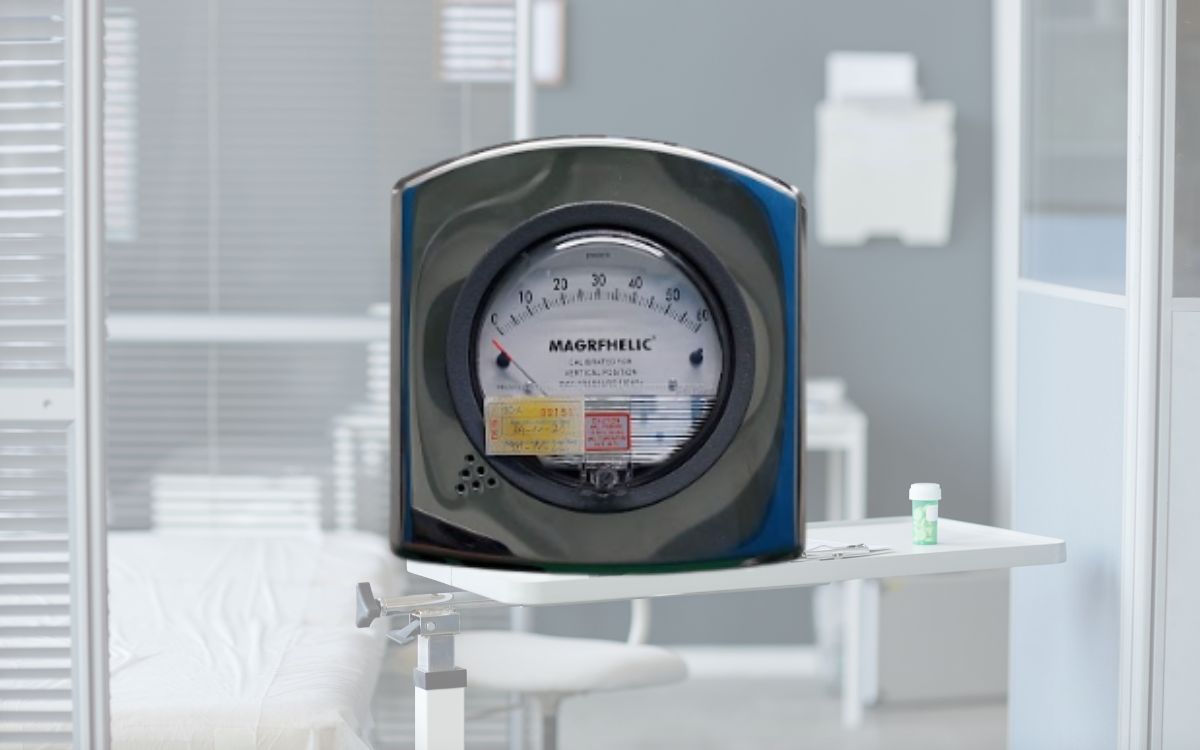
In medical isolation rooms, maintaining a stable pressure differential is a key factor in preventing cross-infection. The differential pressure gauge helps monitor and control the pressure between zones accurately, ensuring the isolation environment operates safely and meets CDC and GMP standards.
- 1. What is a differential pressure gauge?
- 2. Why is pressure differential control needed in medical isolation rooms?
- 3. The specific role of the differential pressure gauge in an isolation room
- 4. Common types of differential pressure gauges used in healthcare
- 5. Criteria for selecting a differential pressure gauge for an isolation room
- 6. Installation and maintenance: important notes
- 7. Frequently Asked Questions (FAQ)
This article by VCR will help you clarify the question “Differential pressure gauge and its role in medical isolation rooms” from the concept of the gauge, the reason for controlling pressure in medical environments, to how to select and apply this device to ensure biosafety in certified isolation zones.
1. What is a differential pressure gauge?
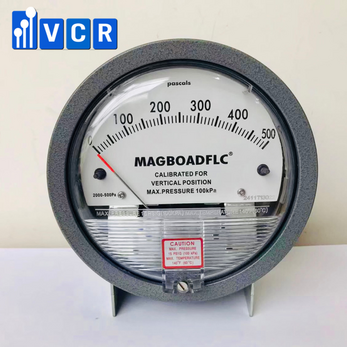
A differential pressure gauge is a device used to measure the pressure difference between two separate areas, for example between the inside and outside of a clean room, an isolation room or an HVAC system. It plays a crucial role in ensuring the environment is controlled to the correct pressure standards, helping to limit the risk of cross-infection or the escape of hazardous air.
Some other names:
-
Differential Pressure Gauge
-
Two-port pressure gauge
-
Pressure gauge with two inlets
-
Differential pressure meter
Basic operating principle:
Depending on the type of device, the differential pressure gauge can operate on two main principles: -
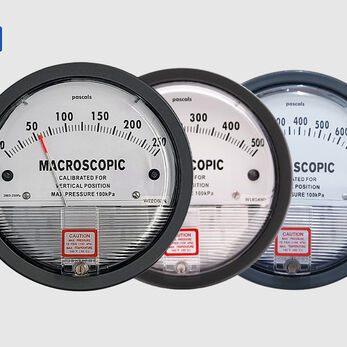
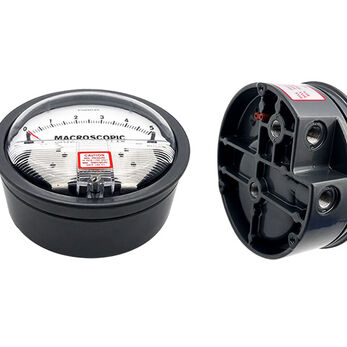
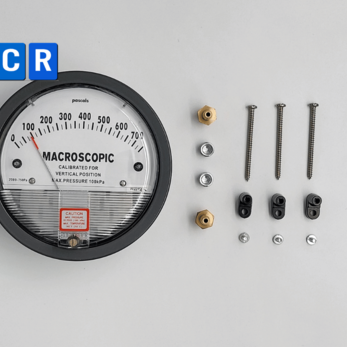
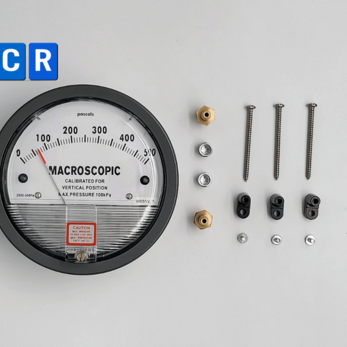
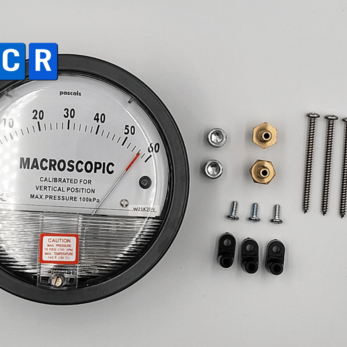
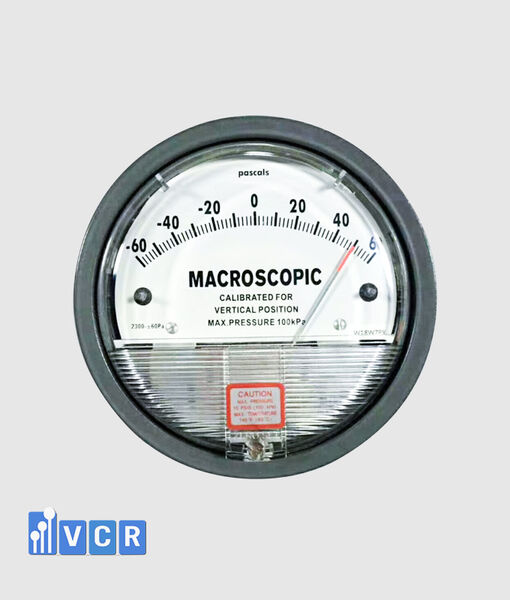
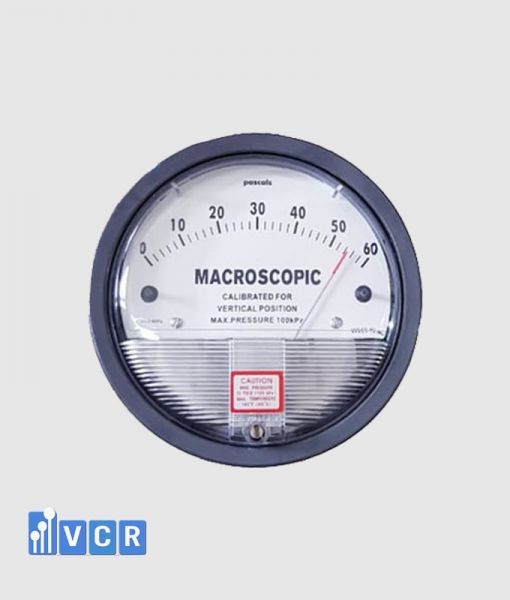
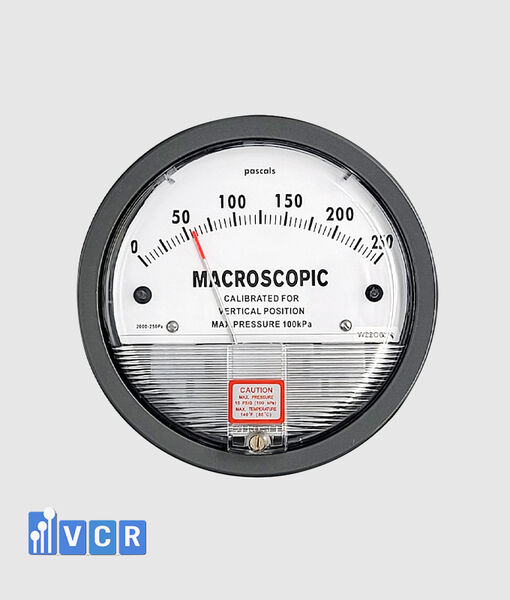
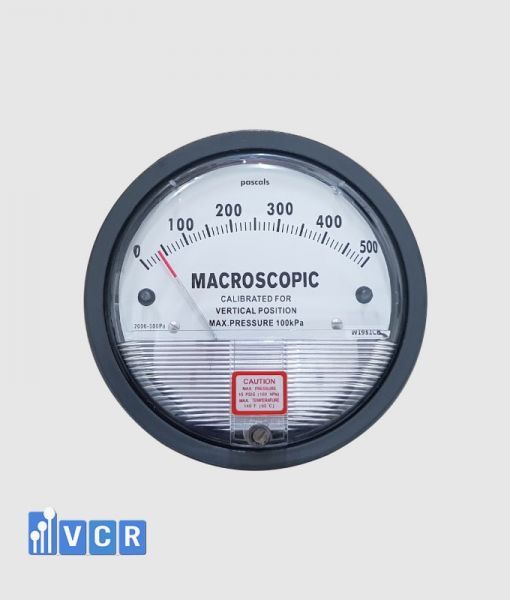
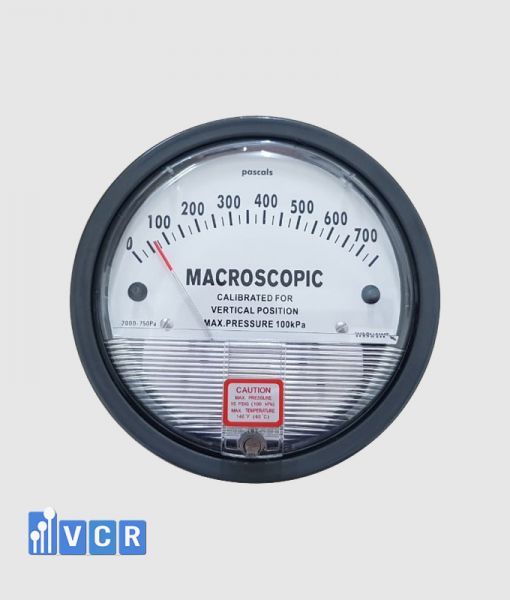
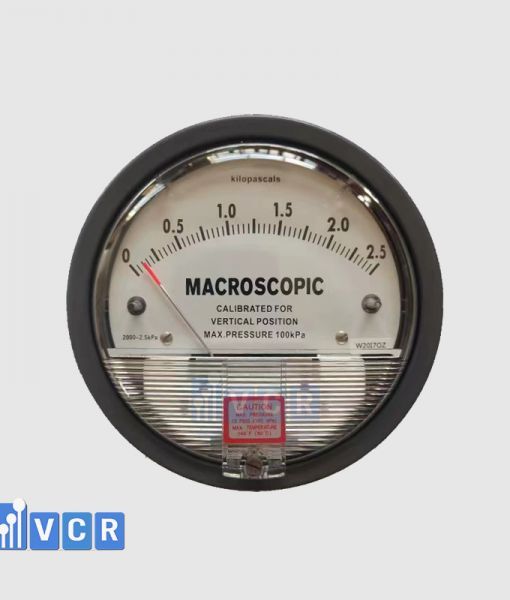
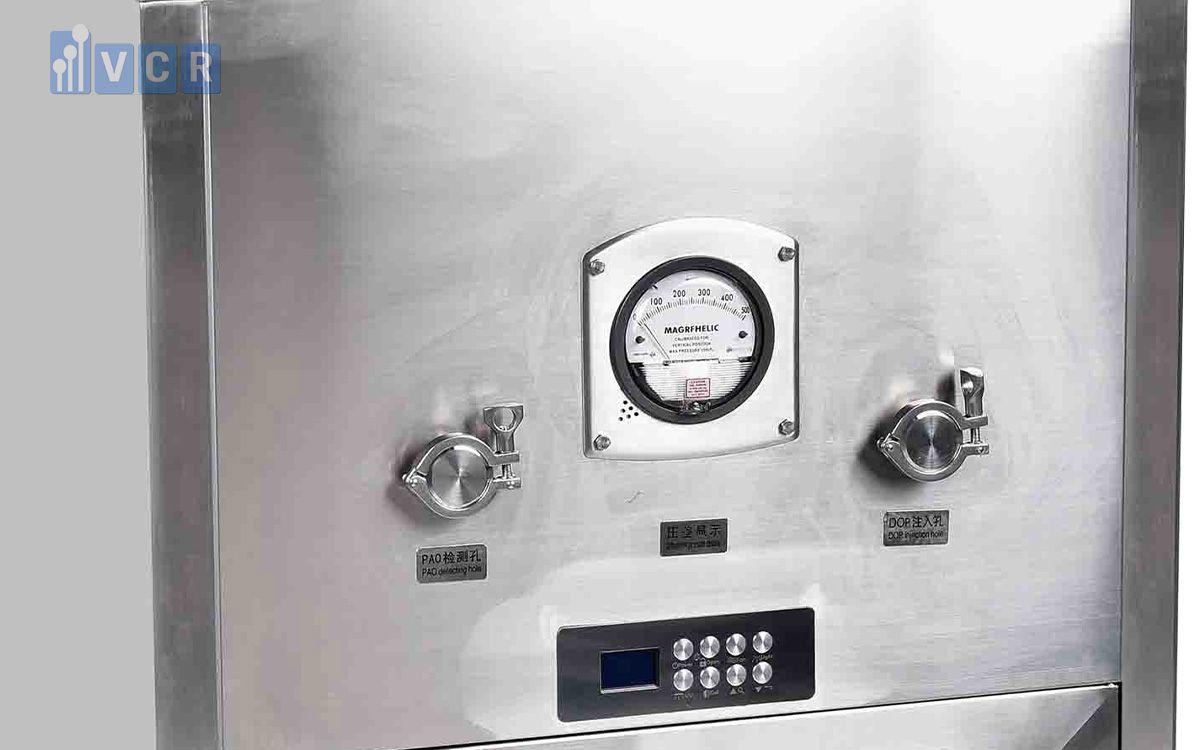
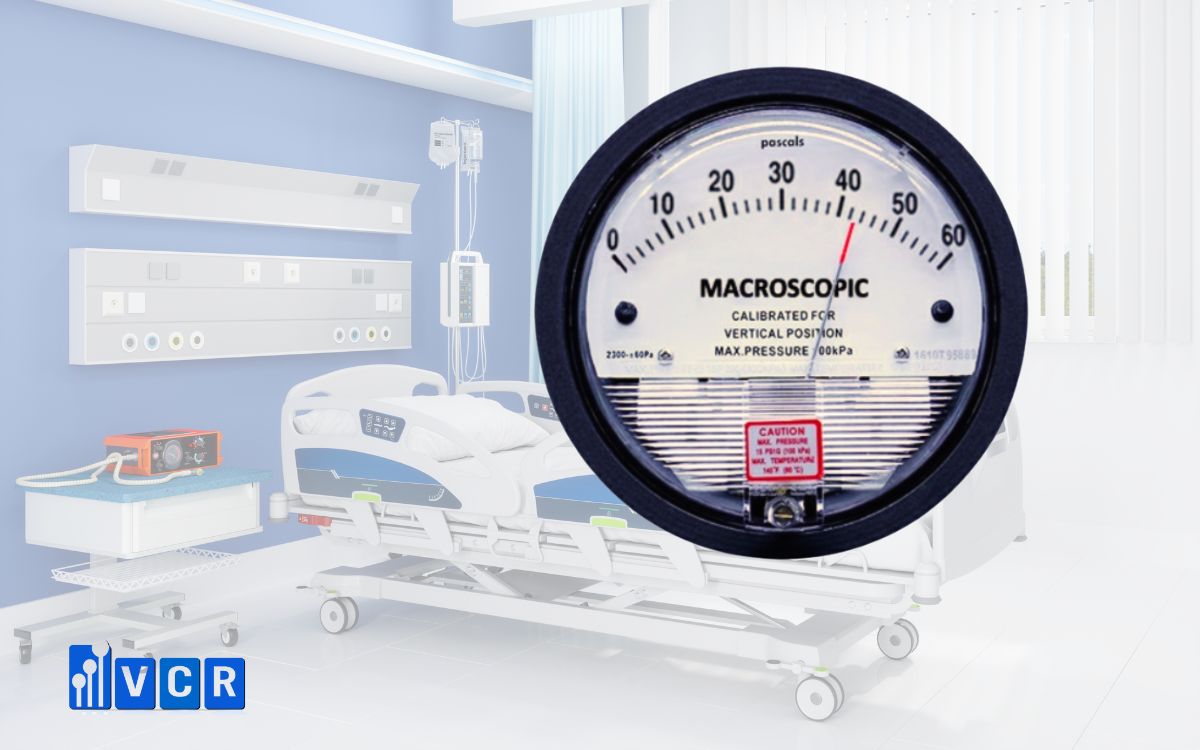
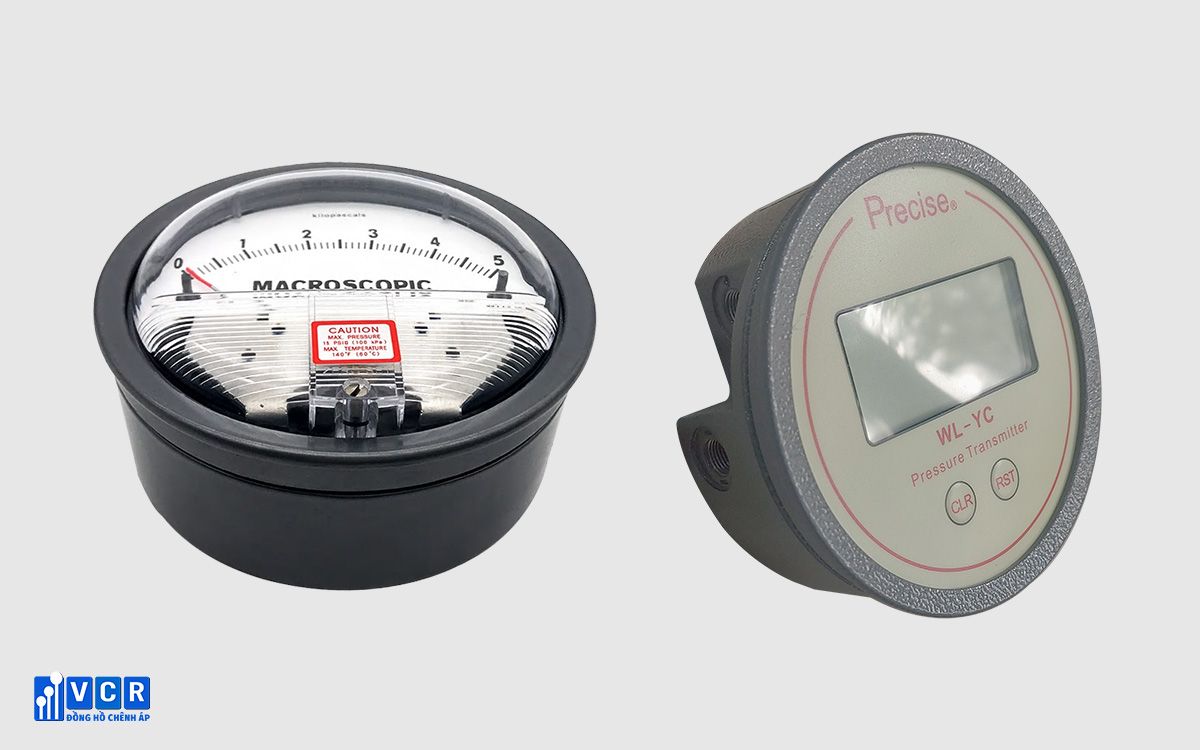
Mechanical (analog) type: Uses a diaphragm or Bourdon tube to measure the pressure difference between the two inputs. When there is a difference, the diaphragm deforms and drives the needle to display the value. This type needs no power supply, is easy to install and very durable.
-
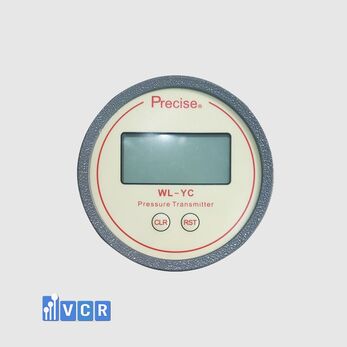
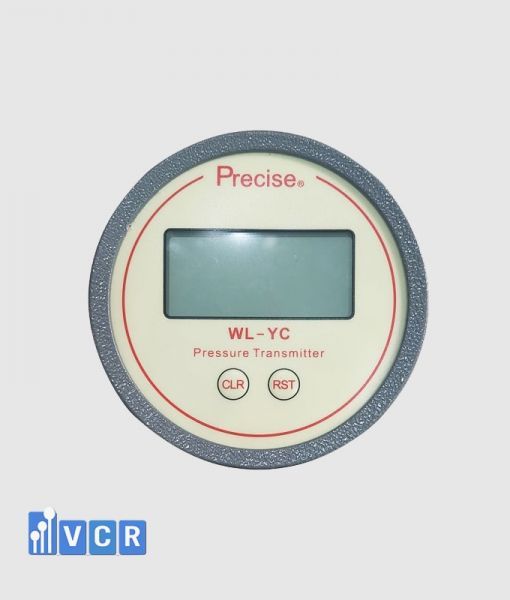
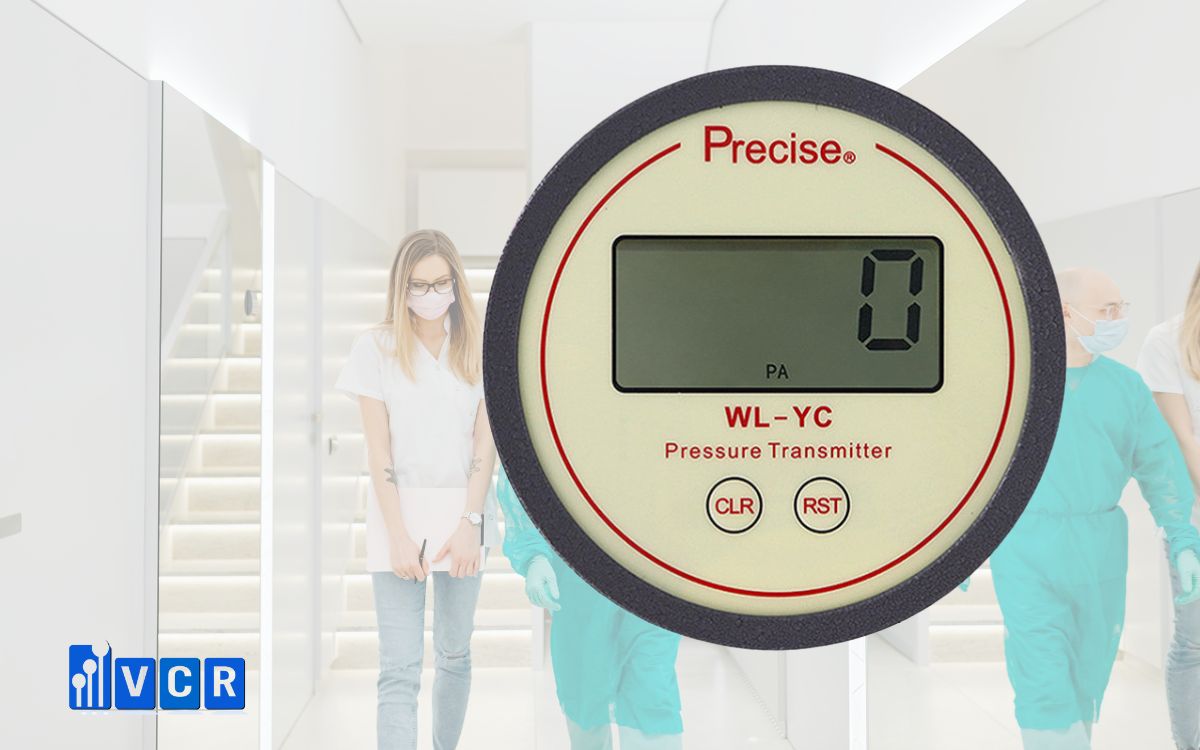
Electronic (digital) type: Integrated pressure sensors convert the differential pressure signal into an electronic signal, then display the data on an LCD or LED screen. This type often includes alarm functions, data logging, and remote monitoring connection.
Depending on usage needs and budget, users can choose the suitable type for the system and environment.
Read more: Selecting the Perfect Differential Pressure Gauge for Your Cleanroom
2. Why is pressure differential control needed in medical isolation rooms?
In the healthcare field, especially in hospitals, intensive care centers or infectious-disease treatment areas, maintaining a stable pressure difference between zones is essential for controlling airborne cross-infection. This is why isolation room systems are always designed with negative pressure or positive pressure — and must be continuously monitored by a differential pressure gauge.
Negative-pressure rooms - prevent contaminated air from escaping.
These rooms are designed to keep the pressure inside lower than in the corridor or surrounding zones. When the door is opened, outside air flows in rather than contaminated air flowing out. This protects medical staff, accompanying persons and the community from infection risk.
Positive-pressure rooms - protect patients from polluted air.
Conversely, positive pressure rooms are used to protect patients with weakened immune systems, such as post-bone-marrow-transplant patients, cancer patients or neonates. The pressure inside is higher than the surrounding environment, creating an airflow that pushes outward when the door is opened. The air inside the room is filtered through HEPA filters and maintained at a high cleanliness grade. This prevents bacteria, mould or very fine dust particles from entering and causing infections in patients.
Risks when pressure differential is not properly controlled:
-
Increased risk of cross-infection in hospitals.
-
Loss of ability to protect clean zones or isolation zones.
-
Affects clean room certification and violates operating standards.
-
Fails to meet biosafety requirements of the Ministry of Health, CDC, WHO.
Read more: Digital Differential Pressure Gauge Installation: A Comprehensive Guide
3. The specific role of the differential pressure gauge in an isolation room
Continuous monitoring of pressure differential between two zones (inside-outside).
In medical environments, particularly in clean medical rooms, maintaining stable pressure between two zones is vital for infection control. The differential pressure gauge serves as a 24/7 monitoring device, allowing medical staff to know exactly the pressure difference between the room interior and the adjacent corridor or area. Continuous monitoring helps ensure that the negative (or positive) pressure is at the ideal level as per the design, and not suddenly changed by door openings, HVAC failures or system leaks.
Timely warning when pressure exceeds permissible limits.
Some modern differential pressure gauges are integrated with audible alarms, indicator lights or signals to the control centre. When the pressure difference falls outside the safe range (typically ±10-15 Pa depending on standards), the system will issue an immediate alert. This feature is especially important in emergencies, helping staff respond quickly to prevent the spread of pathogens or infiltration of hazardous agents into the room.
Supports quality certification of clean rooms per standards such as ISO 14644, GMP, CDC…
The differential pressure gauge is one of the devices inspected and recorded in the evaluation of clean rooms and isolation rooms. International standards like:
-
ISO 14644 (clean room management)
-
GMP (Good Manufacturing Practice in pharmaceuticals)
-
CDC Guidelines (for infection control in the U.S.),
all require a pressure differential monitoring system and operational data logging. Using a certified differential pressure gauge helps hospitals and medical facilities prove compliance during inspections.
Data supports traceability when infection incidents occur.
In the event an infection or suspected biological leak is discovered, the logged data from the differential pressure gauge can be used to investigate the cause. Having a time-recorded pressure differential log makes incident tracing easier, identifying when the environment became uncontrolled and thereby implementing remedial measures. With integrated central monitoring systems (BMS), the data can be stored and analysed long-term, serving not only for incident tracing but also optimizing clean room operations.
Read more: Differential Pressure Gauge Costs: A Guide for Vietnamese Cleanrooms
4. Common types of differential pressure gauges used in healthcare
Depending on monitoring needs and system scale, medical isolation rooms may use various types of differential pressure gauges. Here are the 3 most common:
Analog mechanical differential pressure gauge
- Features: Operates purely mechanically, needs no power. Simple construction, easy to install and maintain. Cost-effective and easy to replace.
- Application: Suitable for small-scale independent isolation rooms. Use in provincial-level hospitals, laboratories, home-care F0 isolation rooms.
- Note: Lacks automatic alarm features. Requires manual visual monitoring by staff.
Digital differential pressure gauge
- Features: Measures pressure accurately to the Pascal. Includes LED numeric display, easy reading. Can set alarm thresholds via sound and LED.
- Application: Suited for large hospitals, centralised isolation zones, ICU rooms, operating theatres. Helps quickly detect abnormal pressure changes, ensuring biosafety.
- Advantages: Meets strict standards such as CDC, WHO. May store measured data for verification when needed.
Differential pressure gauge with remote monitoring integration
- Features: Connects to a BMS (Building Management System). Supports communication protocols like Modbus, RS485. Enables long-term data storage and analysis.
- Application: Used in large hospital systems, research institutes, large medical centres. Suitable for clean room systems requiring 24/7 monitoring.
- Notable benefits: Facility-wide pressure differential monitoring from one control centre. Supports instant alerts via software or internal email.
Read more: Provider of Differential Pressure Gauges for Electronic Component Manufacturing Cleanrooms
5. Criteria for selecting a differential pressure gauge for an isolation room
When designing or operating a medical isolation room, selecting the appropriate differential pressure gauge needs to follow strict technical criteria to ensure safe environmental control. Important factors include:
High accuracy (±1% or better).
Isolation rooms require high precision pressure control to avoid contaminated air leaks. Even a small error may lead to environmental loss of control. Therefore, the gauge should have a minimum accuracy of ±1% full scale. Some high-end models even have lower error tolerance, suitable for sensitive zones like ICUs or operating theatres.
Capability to measure negative or positive pressure as required.
Depending on the usage, the isolation room may maintain negative pressure (to isolate infectious patients) or positive pressure (to protect patients). The measuring device must be compatible with this specific operational pressure range, typically between ±10 Pa to ±60 Pa. Some gauges allow flexible configuration to switch between modes.
Audible and visual alarm.
To promptly detect pressure loss or leakage, the differential pressure gauge should integrate alarm systems with LED lights and buzzer when thresholds are exceeded. This is especially important during night shifts or in environments with unsupervised operation. Modern devices also allow integration with central alarm systems.
Ease of calibration and regular recalibration capability.
Maintaining gauge accuracy depends on regular calibration. The device should have a dedicated calibration port, be easy to operate, and come with supporting guidance or software. Prefer brands offering on-site calibration services or send-back calibration support.
Compliance with medical and technical standards.
Measurement equipment used in isolation rooms must comply with international and national standards such as:
- ASHRAE 170 - ventilation systems in healthcare facilities
- ISO 14644 - clean rooms, contamination & microbial control
- Vietnam’s Ministry of Health standards - regulations for negative pressure isolation room equipment.
Complying with these standards helps ensure operational legality, safety and easier passage through healthcare inspections.
Read more: Workings of Differential Pressure Gauges: A Guide to Function, Calibration, and Maintenance
6. Installation and maintenance: important notes
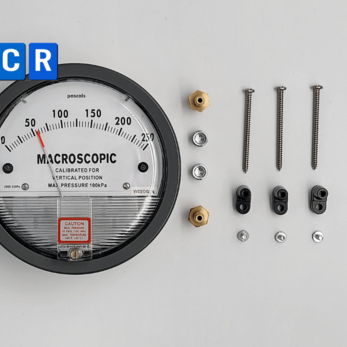
Correct installation and maintenance of differential pressure gauges not only ensure device accuracy but also guarantee effective pressure control in medical isolation rooms. Key points include:
Ideal mounting position.
The gauge should be installed in easy-to-observe locations, typically near doorways, partitions, or transition areas between two rooms with different pressures. Avoid locations with strong disturbed airflow or unusually high humidity (to prevent sensor errors). If using a digital display type, it should be mounted at the operator’s eye level for easy observation.
Ensuring airtight connections during installation.
A common mistake is leaving air leaks at the tubing connections or around the device, leading to measurement error or false alarms. Use specialized pressure-resistant tubing and ensure tightening meets standards. Before operation, check static pressure and verify no air leakage around the system.
Routine inspection and calibration.
In medical environments, differential pressure gauges especially need periodic calibration every 6 to 12 months depending on usage frequency and quality management system (ISO 14644, GMP…). Calibration ensures the device keeps correct measurement and does not drift over time. Use professional calibration services with certificates (CO/CQ).
Monitoring and logging operation.
Each isolation room should have its own operation log, recording differential pressure parameters daily or per shift. In case of an incident (pressure not achieved), this log will serve as the basis for tracing and timely corrective action. Some digital differential pressure gauges can automatically log data or connect to a building management system (BMS), optimising the monitoring process.
Read more: A Guide to Differential Pressure Gauge Calibration
7. Frequently Asked Questions (FAQ)
Is a differential pressure gauge necessary for all isolation rooms?
Yes. Whether it is an isolation room in a provincial hospital, a treatment centre or the ICU of a major hospital, monitoring differential pressure is mandatory to ensure high-level biosafety. This device helps detect potential deviations in the pressure system early, thereby preventing cross-infection between clean and contaminated zones, particularly in environments with microorganisms, pathogens or hazardous chemicals.
How to know if the pressure differential has reached the standard?
Operators can check the displayed value on the gauge. According to recommendations from the CDC and ASHRAE 170, the ideal differential pressure levels are:
-
Negative pressure room: −12.5 Pascal (Pa) relative to the outside area → prevents contaminated air escaping.
- Positive pressure room: +12.5 Pascal (Pa) relative to the corridor or uncontrolled area → prevents dust and bacteria from entering.
Some modern gauges also provide visual alarms or audible signals if the differential pressure exceeds permissible limits.
Can a differential pressure gauge be integrated into a BMS?
Yes. Many digital differential pressure gauges now support Modbus RTU, Modbus TCP or RS485 communication protocols, allowing direct connection to the building management system (BMS). This enables hospitals or medical centres to:
-
Monitor remotely via centralised software.
-
Automatically log data for analysis.
-
Send instant alerts via email or SMS when there is a pressure instance.
How often should the device be calibrated?
Calibration frequency depends on the operational standard requirements and usage environment. Generally:
-
Every 6 months for isolation rooms with high use frequency or strict environment (ICU, infectious disease).
-
Every 12 months for rooms with less use or only periodic monitoring.
Additionally, calibration should be done immediately if: -
HVAC system changes.
-
The gauge shows incorrect readings.
-
A regulatory inspection is required by the medical authority.
Are you designing or operating a medical isolation room and need an accurate, stable pressure monitoring solution?
The VCR technical team is ready to assist you with:
-
Consulting on selecting the right type of differential pressure gauge (mechanical - electronic - BMS-integrated).
Installation guidance compliant with ASHRAE 170 and ISO 14644 standards.
Calibration and periodic verification services in accordance with GMP and Ministry of Health requirements.
Contact us:
Hotline: 090.123.9008
Email: [email protected]
Website: https://donghochenhap.com/
Dat VCR