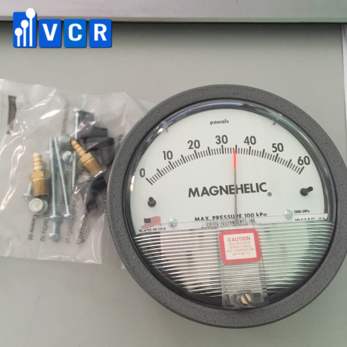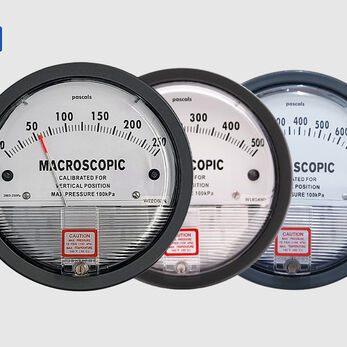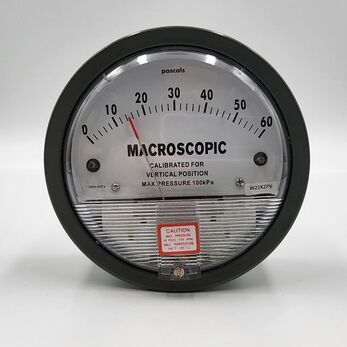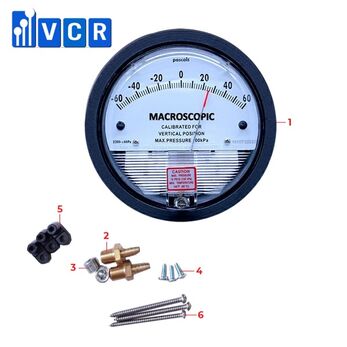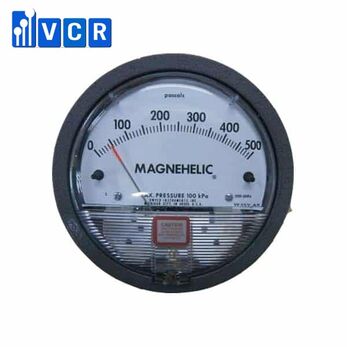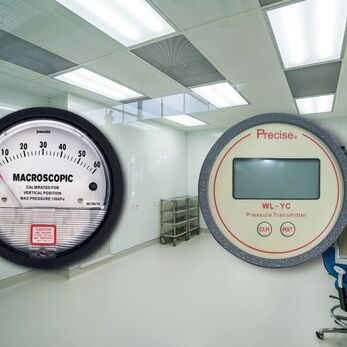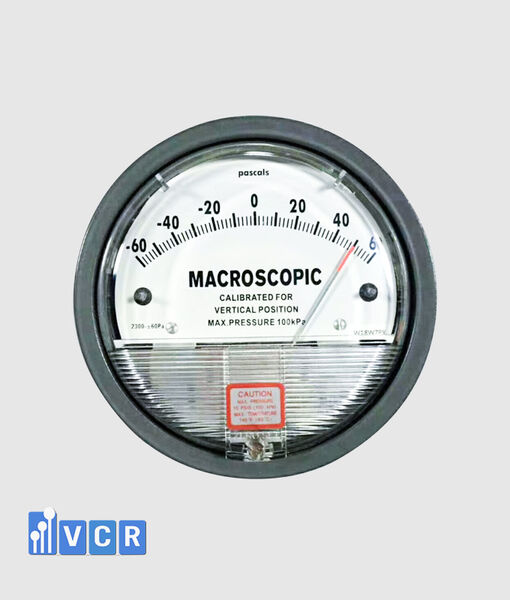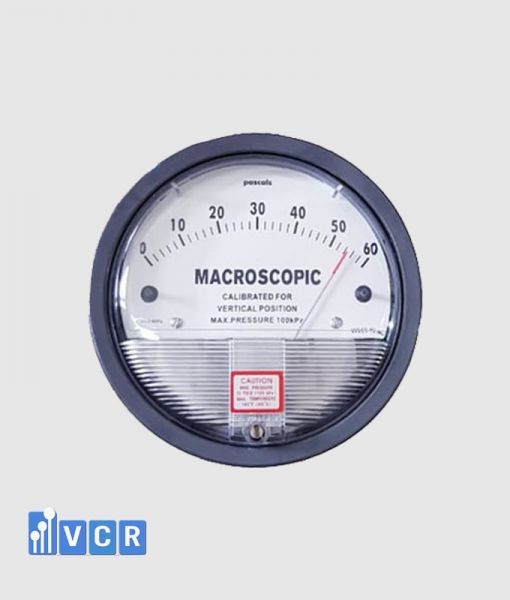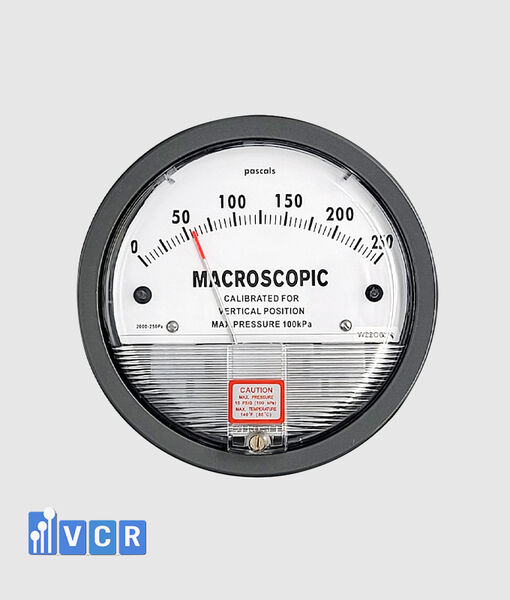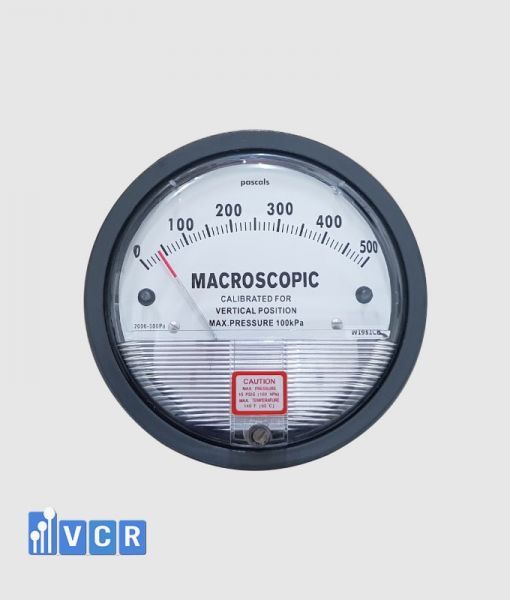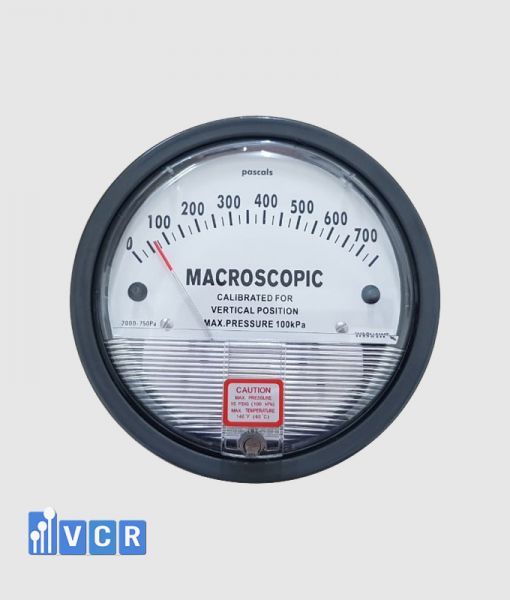

Differential air pressure gauges are widely used in cleanrooms to monitor pressure differences between areas and to measure filter resistance in AHUs, FFUs, HEPA Boxes, LAF units, Dispensing Booths, Dynamic Pass Boxes, and many other cleanroom systems. Understanding the correct measurement location helps operators detect abnormalities early and maintain stable system performance.
- What is a differential air pressure gauge?
- AHUs are among the most common users of differential air pressure gauges
- HEPA Boxes use differential pressure gauges to monitor HEPA filter resistance
- Do FFUs use differential air pressure gauges?
- LAF units commonly use differential pressure gauges to monitor HEPA filters
- Dispensing Booths require close monitoring of filter pressure differentials
- Sampling Booths also use differential pressure gauges
- Does a Dynamic Pass Box use a differential pressure gauge?
- Air Showers may use differential pressure gauges for HEPA monitoring
- Isolators and RABS require more continuous pressure monitoring
- Dust Collectors also use differential air pressure gauges
- How are differential pressure gauges used between cleanrooms and airlocks?
- How should a differential air pressure gauge be selected for cleanroom equipment?
- Frequently Asked Questions About Differential Air Pressure Gauges in Cleanrooms
- Conclusion
What is a differential air pressure gauge?
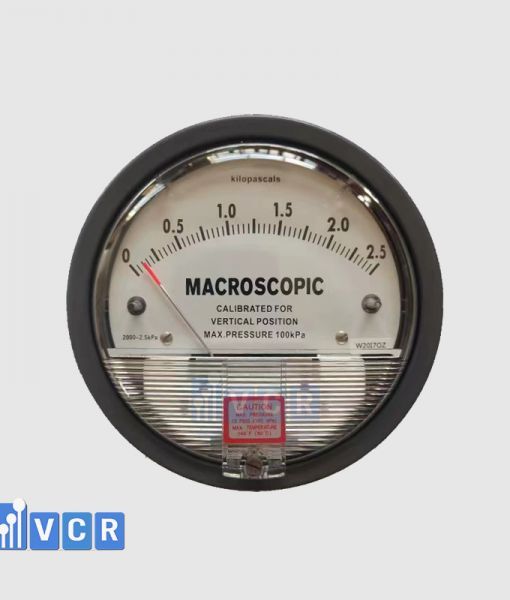
A Differential Pressure Gauge is an instrument used to measure the difference in air pressure between two points. It is widely used in cleanrooms because many cleanroom systems contain fans and filters, while the cleanroom itself requires controlled airflow direction between different areas.
The gauge normally has two pressure ports, commonly identified as High and Low. These ports are connected to the two locations being compared, and the gauge displays the pressure difference between them.
In cleanroom applications, differential pressure gauges generally perform two main functions. The first is measuring the pressure drop across filters to monitor changes in the resistance of pre-filters, medium filters, or HEPA filters. The second is measuring the pressure difference between rooms or spaces to verify that the designed pressure cascade is being maintained.
For example, when a gauge is installed across a HEPA filter, an increasing pressure differential may indicate that the filter resistance is rising because of dust accumulation. When the gauge is installed between a cleanroom and a corridor, it helps operators determine whether the cleanroom is maintaining a higher or lower pressure than the surrounding area.
Therefore, the same type of differential pressure gauge can serve very different purposes on an AHU, LAF unit, or cleanroom wall.
AHUs are among the most common users of differential air pressure gauges
An AHU – Air Handling Unit is one of the cleanroom systems that commonly uses multiple differential pressure gauges.
A cleanroom AHU may include several filtration stages such as a pre-filter, medium filter, and, in some configurations, a HEPA filter. Each filter creates a certain resistance to airflow.
A differential pressure gauge is connected upstream and downstream of each filter stage to measure the pressure drop across the filter.
When a filter is new, the differential pressure is generally relatively low. As the system operates, particles accumulate on and within the filter media, increasing resistance. The differential pressure reading therefore gradually rises.
What matters is not only the pressure value at a particular moment but also the trend over time. A gradual increase over several months may simply indicate normal dust loading. A rapid increase over only a few days may require investigation of the incoming dust load, airflow rate, filter condition, or another system abnormality.
For this reason, differential pressure gauges are valuable tools for AHU preventive maintenance.
HEPA Boxes use differential pressure gauges to monitor HEPA filter resistance
A HEPA Box, also known as a Terminal HEPA Box, is normally installed at the final air-supply point before clean air enters the cleanroom.
A HEPA filter creates greater airflow resistance than many coarse filtration stages. As particles accumulate in the filter media, the pressure drop increases, and the fan must produce greater pressure to maintain the same airflow.
If the AHU does not automatically compensate for the increased filter resistance, the airflow supplied to the cleanroom may gradually decrease. This can affect ACH – Air Changes per Hour, room pressure differential, and potentially the ability to maintain the required cleanroom classification.
A differential air pressure gauge allows technicians to monitor this change.
However, it is important to understand that HEPA differential pressure does not directly indicate filtration efficiency. A HEPA filter may show a normal pressure differential while still having a gasket leak or localized damage.
Therefore, a differential pressure gauge cannot replace a HEPA integrity test. Differential pressure primarily indicates how the airflow resistance of the filter is changing.
Do FFUs use differential air pressure gauges?
An FFU – Fan Filter Unit combines a fan with a HEPA or ULPA filter in a single module. FFUs are commonly used in semiconductor, electronics, pharmaceutical, and other high-classification cleanrooms.
An FFU can be equipped with a differential pressure gauge to monitor filter resistance, but not every FFU requires an individual gauge.
For a small system, installing a gauge on each FFU may make filter inspection and maintenance convenient. However, in a large cleanroom containing hundreds or thousands of FFUs, installing an analog gauge on every unit may not be the most practical solution.
Some systems instead provide pressure ports so that technicians can measure the pressure differential during scheduled maintenance. More advanced FFU systems may use differential pressure sensors or transmitters connected to a centralized monitoring and control system.
Whether an FFU should have a dedicated pressure gauge therefore needs to be defined in the URS – User Requirement Specification during the design stage.
LAF units commonly use differential pressure gauges to monitor HEPA filters
An LAF – Laminar Air Flow unit uses a fan and HEPA filter to create a clean working zone with controlled unidirectional airflow.
On an LAF unit, a differential air pressure gauge is commonly installed to monitor the pressure difference across the HEPA filter.
As the HEPA filter becomes loaded with particles, its resistance increases and the fan must work harder to maintain the same air velocity. If the system does not automatically compensate for the additional resistance, the air velocity in the work zone may decrease.
Therefore, when the pressure differential rises significantly, technicians should also check air velocity rather than relying only on the gauge reading.
For LAF equipment used in GMP environments or highly controlled areas, HEPA differential pressure is only one of several parameters that should be monitored together with air velocity, airflow pattern, and HEPA filter integrity.
Dispensing Booths require close monitoring of filter pressure differentials
A Dispensing Booth, also known as a Weighing Booth in many pharmaceutical applications, is one of the cleanroom devices where differential pressure monitoring is particularly important.
The booth may contain several filtration stages, such as a pre-filter, medium filter, and HEPA filter. Depending on the design, each filtration stage may have its own differential pressure gauge or an electronic sensor connected to an HMI.
For a Dispensing Booth, filter monitoring is particularly important because airflow may serve not only to create a clean work zone but also to provide containment, limiting the spread of powder into the operator's breathing zone or the surrounding environment.
If one filter becomes heavily loaded, airflow may decrease and the airflow characteristics within the booth may change. This can affect the booth's ability to control airborne powder.
For this reason, differential air pressure is an important operating parameter for Dispensing Booths.
For applications involving HPAPI – Highly Potent Active Pharmaceutical Ingredients, monitoring requirements may be more stringent and can include electronic pressure transmitters, alarms, and data transmission to a centralized monitoring system.
Sampling Booths also use differential pressure gauges
A Sampling Booth generally uses a filtration and airflow configuration similar to a Dispensing Booth.
During material sampling, opening a bag, drum, or container may generate airborne powder. The airflow system is designed to capture this powder while maintaining appropriate conditions in the operator's working zone.
If filter resistance becomes excessively high, airflow inside the Sampling Booth may decrease. A differential pressure gauge helps technicians recognize this trend before system performance deteriorates significantly.
Depending on the configuration, a Sampling Booth may use one pressure gauge for the HEPA filter or multiple gauges for the pre-filter, intermediate filter, and HEPA filter.
Does a Dynamic Pass Box use a differential pressure gauge?
A Dynamic Pass Box contains a fan and HEPA filtration system and can therefore use a differential pressure gauge to monitor HEPA filter resistance.
The HEPA filter provides clean airflow or a purge cycle inside the transfer chamber. As filter resistance increases, the recirculating airflow may change.
The differential pressure gauge allows operators to identify increasing HEPA filter resistance and investigate the system before airflow falls outside the intended operating range.
In contrast, a Static Pass Box normally has no recirculating fan or HEPA filtration system. Therefore, it typically does not require a differential pressure gauge for filter monitoring.
This distinction is important when preparing the technical specification for a Pass Box. A differential pressure gauge should not automatically be specified for every Pass Box.
Air Showers may use differential pressure gauges for HEPA monitoring
An Air Shower uses fans, HEPA filters, and high-velocity air nozzles to remove loose particles from personnel or materials before they enter a cleaner area.
Some Air Showers are equipped with differential pressure gauges to monitor the HEPA filters.
As a HEPA filter accumulates particles, its resistance increases and the velocity at the air nozzles may eventually decrease. If the differential pressure increases while nozzle velocity decreases, technicians have additional information for investigating the filter, fan, or airflow path.
However, a differential pressure gauge is not mandatory on every Air Shower. Whether it is required depends on the technical specification and maintenance strategy of the project.
Isolators and RABS require more continuous pressure monitoring
Isolators and RABS – Restricted Access Barrier Systems generally require more sophisticated pressure monitoring than many conventional cleanroom devices.
In these systems, differential pressure may be monitored not only across HEPA filters but also between the internal controlled environment and the surrounding cleanroom.
For an aseptic isolator, pressure may be controlled to protect the sterile product. For a containment isolator, the pressure strategy may instead be designed to prevent hazardous pharmaceutical materials from escaping into the surrounding environment.
Because the pressure differential can be a critical operating parameter, these systems commonly use differential pressure transmitters or electronic monitoring devices capable of providing alarms, trend data, and signals to PLC, BMS, or EMS platforms rather than relying solely on mechanical gauges.
Dust Collectors also use differential air pressure gauges
A Dust Collector is another system that commonly uses differential pressure monitoring.
Inside the unit, filtration may be provided by filter cartridges or bag filters. As dust accumulates on the filter media, airflow resistance increases and the differential pressure rises.
The pressure reading helps operators monitor the dust-loading condition of the filters. In some designs, the differential pressure signal can also be used to trigger a pulse-cleaning system, where compressed air removes accumulated dust from the filter surface.
If differential pressure remains high even after the cleaning cycle, technicians may need to inspect the filters, compressed-air system, or other potential blockages.
How are differential pressure gauges used between cleanrooms and airlocks?
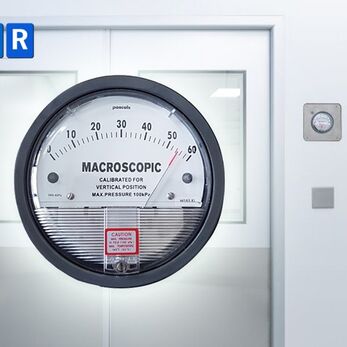
Beyond individual equipment, one of the most common applications of differential air pressure gauges is measuring the pressure difference between cleanrooms.
The gauge is usually mounted on a cleanroom wall or panel. One pressure port is connected to the cleanroom, while the other is connected to a corridor or adjacent space.
In many cleanroom designs, a cleaner area is maintained at a higher pressure than a less-clean area in order to establish the intended airflow direction and reduce the risk of contamination entering the cleaner space.
For containment areas, the pressure strategy may be reversed. A room handling hazardous materials may be maintained at a lower pressure than adjacent spaces to help prevent contaminants from escaping.
Airlocks also commonly use differential pressure monitoring to help maintain the intended pressure cascade between areas.
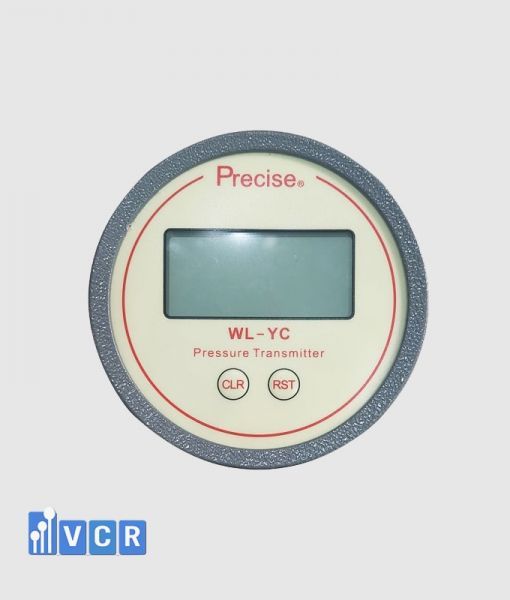
If local indication is sufficient, a mechanical differential pressure gauge may be an effective solution. When alarms, continuous monitoring, historical trends, or integration with BMS/EMS are required, an electronic pressure transmitter is generally more suitable.
How should a differential air pressure gauge be selected for cleanroom equipment?
The most important consideration is selecting the correct measurement range for the intended application.
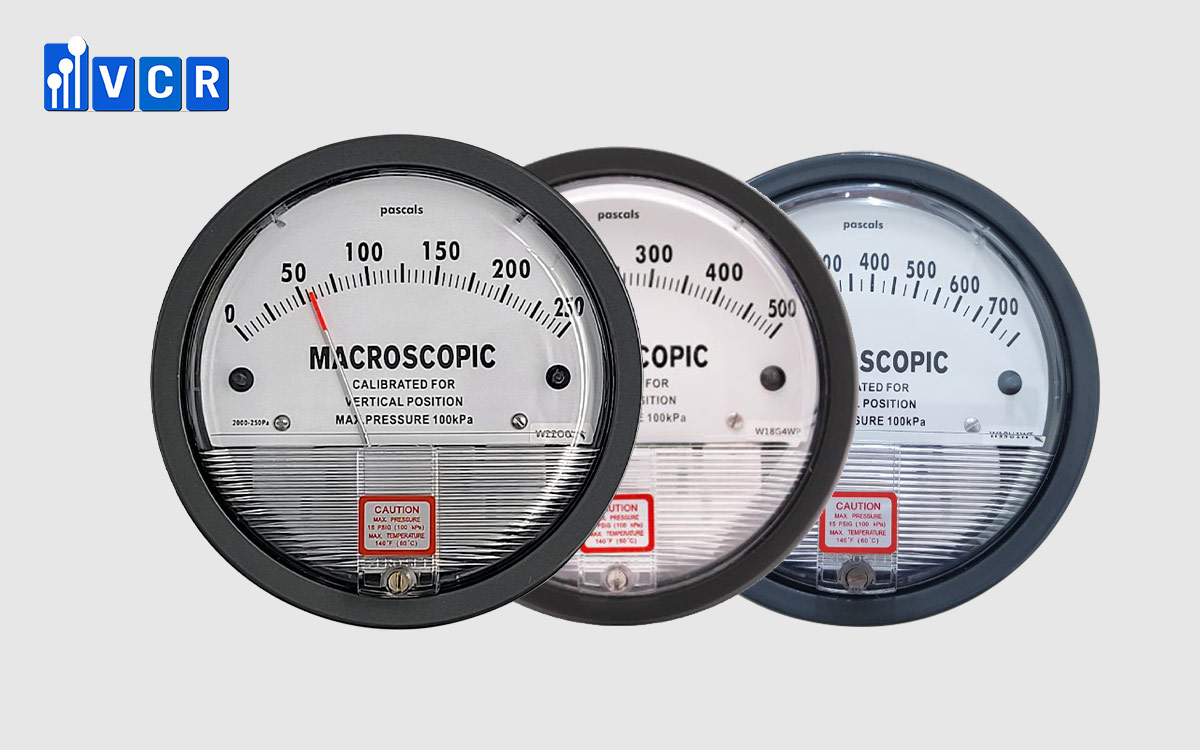
A gauge used to measure pressure between two cleanrooms normally requires a much lower range than a gauge monitoring the pressure drop across a HEPA filter or an AHU filtration stage.
If the range is too wide, small pressure changes may be difficult to observe accurately. If the range is too narrow, the gauge may exceed its measurement limit as filter resistance rises.
Other important factors include accuracy, resolution, calibration capability, display units, stability, and installation conditions.
In GMP environments, the URS should also determine whether the differential pressure is considered a critical parameter. If continuous recording, alarms, and historical data are required, an electronic transmitter connected to an EMS, BMS, or PLC may be more appropriate than a purely mechanical gauge.
However, this does not mean electronic instruments are always better. Mechanical differential pressure gauges remain valuable because they are simple, easy to read, require no electrical power, and are suitable for many local-indication applications.
Vietnam Cleanroom Equipment (VCR Cleanroom) supplies cleanroom equipment for cleanroom contractors and manufacturing facilities, including FFUs, HEPA Boxes, LAF units, Dispensing Booths, Sampling Booths, Dynamic Pass Boxes, Air Showers, HEPA filters, and differential air pressure gauges. The measuring range, pressure tapping locations, and monitoring method should be defined during the design stage so that the system is suitable for installation, operation, maintenance, and future qualification requirements.
Frequently Asked Questions About Differential Air Pressure Gauges in Cleanrooms
Which cleanroom equipment commonly uses differential air pressure gauges?
Common applications include AHUs, HEPA Boxes, FFUs, LAF units, Dispensing Booths, Sampling Booths, Dynamic Pass Boxes, Air Showers, isolators, RABS, and Dust Collectors. Differential pressure gauges are also widely used between cleanrooms and airlocks.
What is the purpose of a differential pressure gauge across a HEPA filter?
The gauge monitors the pressure drop across the HEPA filter and helps operators identify increasing airflow resistance as the filter becomes loaded with particles.
Does high HEPA differential pressure mean the filter is damaged?
No. High differential pressure usually indicates increased airflow resistance. A HEPA filter leak or integrity failure must be evaluated using an appropriate HEPA integrity test.
Does every FFU need a differential pressure gauge?
No. Depending on the URS, an FFU may have a mechanical gauge, an electronic sensor, or only pressure ports for periodic measurement.
How many differential pressure gauges does a Dispensing Booth need?
The number depends on the filtration configuration. Some systems monitor the pre-filter, medium filter, and HEPA filter separately, while others use electronic sensors integrated into the HMI.
Does a Dynamic Pass Box need a differential pressure gauge?
It may be required when the unit uses a fan and HEPA filter and the project requires filter-condition monitoring. A conventional Static Pass Box generally does not need a filter differential pressure gauge.
What is the difference between a mechanical differential pressure gauge and a pressure transmitter?
A mechanical gauge mainly provides local indication. A transmitter can send pressure signals to PLC, BMS, or EMS platforms for alarms, trend monitoring, and data storage.
Can a differential pressure gauge replace a HEPA integrity test?
No. Differential pressure monitoring evaluates filter resistance, while a HEPA integrity test is used to detect leaks and verify the integrity of the filtration system. These are two different functions.
Conclusion
Differential air pressure gauges are simple instruments, but they are used throughout many cleanroom systems. On AHUs, FFUs, HEPA Boxes, LAF units, Dispensing Booths, Sampling Booths, Dynamic Pass Boxes, Air Showers, and Dust Collectors, they are mainly used to monitor filter resistance. In cleanrooms, airlocks, isolators, and RABS, differential pressure is also used to control airflow direction between spaces.
The value of a differential pressure gauge is not limited to a single pressure reading. Its greater value lies in helping operators monitor trends and identify abnormal changes before they develop into larger system problems. Differential pressure should therefore be evaluated together with airflow, air velocity, fan condition, filter condition, and actual operating data.
Selecting the correct pressure range, pressure tapping points, and monitoring method during the design stage helps make the differential air pressure gauge an effective tool for long-term cleanroom operation, maintenance, and environmental control.